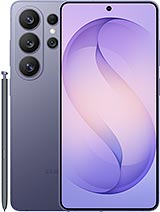
Samsung Galaxy S26 Ultra review
The S26 Ultra suits photographers and anyone who prioritizes Samsung's software ecosystem and durability over portability and speed. Skip it if you value light weight, fast charging, or want to spend less for a phone that handles daily tasks just as well.
This review is written with AI assistance from Samsung’s published specifications and public benchmark data for the Samsung Galaxy S26 Ultra, and the rating is spec-based. GoSolo does not physically test devices; where we estimate real-world behaviour such as battery life or charge time, we say so. How we rate phones.
Overview
The S26 Ultra is a bulky, feature-rich Android flagship with a genuinely bright display, capable 200MP camera with useful zoom reach, and the speed to match its price. Whether it justifies the weight and cost over lighter rivals depends on whether you shoot often and want Samsung's ecosystem locked in.
Design & build
At 214 grams and 7.9mm thick, the S26 Ultra feels substantial in a way that reads as premium until your wrist starts complaining. The aluminum frame and dual Gorilla Glass layers are genuinely robust—Gorilla Armor 2 on the front resists scuffs better than plain Gorilla Glass, and IP68 waterproofing for 1.5 meters is real protection, not theater. The 6.9-inch screen leaves very little bezel, and the display curves slightly at the edges in the current Samsung style. The phone is comfortable enough to hold, but it's not light, and anyone upgrading from a mid-range device or a lighter flagship will notice the heft. The build quality itself is excellent; there's no flex or rattle, and the materials feel durable rather than slick.
Display
The 6.9-inch LTPO AMOLED at 1440×3120 is a strong screen. The 2600-nit peak brightness matters in sunlight—text stays readable without cranking gamma or walking into shade, and photos don't wash out the way they do on dimmer flagships. The 120Hz refresh is smooth in scrolling and most apps, though Android's variable refresh can feel janky if a poorly coded app drops to 60Hz mid-scroll. Pixel density sits at 500 ppi, which is sharp enough for most eyes at normal viewing distance. The LTPO tech lets the refresh rate drop to save battery when you're reading static text, and HDR10+ support means Netflix and YouTube content comes through with good contrast. For a daily driver, this is a display that enhances rather than compromises the experience.
Performance
The Snapdragon 8 Elite Gen 5 is flagship silicon with real muscle. The 3nm process brings efficiency alongside speed—games like Genshin Impact and demanding apps launch without stutter, and multitasking doesn't slow you down even with a dozen tabs and apps loaded. The 2.6-million AnTuTu score is competitive for early 2026, and gaming benchmarks back up the claimed performance. The jump from last year's 8 Elite is incremental rather than dramatic, but if you're coming from anything older than the S25, the gap is noticeable. The GPU (Adreno 840) handles high-refresh gaming without heating the phone excessively. Storage is fast UFS 4.X, so app launches and file transfers don't bottleneck. The phone never feels starved for power, which is what you expect at this price.
Software
Android 16 with One UI 8.5 is Samsung's interface, and it leans toward feature density over minimalism. The skin adds a lot of Samsung-exclusive tools—Samsung DeX for desktop connection, extensive gestures, and a good suite of pre-installed apps. You can strip away most of this clutter with a custom launcher, but it's there by default. Samsung promises seven major Android upgrades, which is a solid commitment for security and feature freshness. The software is snappy on this hardware, and OneUI doesn't drag the experience down, but it's not as clean as stock Android. If you prefer simplicity, you'll spend time in Settings disabling features. That said, Samsung's updates are consistent, and the integrated ecosystem (smartwatch, tablet, earbuds) works well if you're already in the Samsung universe.
Camera
The 200MP f/1.4 main sensor is the headline, and it delivers. The large aperture and 1/1.3-inch sensor size pull in plenty of light, making low-light shots cleaner than phones with smaller sensors and slower apertures. Zoom is where this camera stands apart—the 3x (67mm) and 5x (111mm) optical telephoto lenses mean you can frame distant subjects without relying on crop and upscaling. The 50MP ultrawide adds a third framing option for landscapes. In practice, the camera produces sharp, well-balanced images in good light and holds detail in shadows where rivals blur to mush. Video goes to 8K at 24/30fps, though most users will stick to 4K for storage reasons. The selfie camera is a basic 12MP unit, fine for video calls and casual photos but not a strength. Overall, this is a genuinely capable camera setup that justifies buying the Ultra over a regular S26 if you shoot regularly.
Battery & charging
The 5000mAh battery should last a full day of mixed use—calls, messages, social media, some video, and light gaming. Active use gets you roughly 16 to 18 hours before the red zone, which is respectable for a 6.9-inch phone running flagship silicon. Wireless charging at 25W is slow by today's standards, but it's convenient for overnight top-ups. The real gap is wired charging—60W is ordinary, not fast. Competitors at this price and release date already push 100W or more, cutting charge time from ~40 minutes to ~20. If you're often on the move and need a quick top-up, the S26 Ultra falls behind. Battery optimization is good in practice, though the large display and bright screen limit the gains from software efficiency.
Value & verdict
At $1,040 (or local equivalents), the S26 Ultra is flagship pricing, and you're paying for the camera system, durability, and brand. The 200MP main camera with dual zoom is a genuine strength that mid-range and regular flagship phones can't match—if you shoot photos seriously, this is worth considering. The bright AMOLED screen and IP68 build are solid, though not unique at this tier. The weight is a real downside that doesn't fit everyone's hand preference, and the 60W charging is behind the curve for 2026. Storage tiers are stingy at the low end; 256GB fills up fast on a flagship. The Snapdragon 8 Elite Gen 5 is overkill for most users, but it ensures the phone won't feel dated in a year. If you spend time outdoors, shoot with your phone often, and value Samsung's ecosystem, the S26 Ultra makes sense. If you prioritize lightweight and a faster charge, look at rivals that trim weight and offer bolder power specs.
Verdict
The S26 Ultra suits photographers and anyone who prioritizes Samsung's software ecosystem and durability over portability and speed. Skip it if you value light weight, fast charging, or want to spend less for a phone that handles daily tasks just as well.
- 200MP f/1.4 wide and dual optical zoom (3x and 5x) hit a real gap—you get fine detail in shadows and can frame distant subjects without software tricks
- 6.9-inch LTPO AMOLED at 2600 nits peak brightness is bright enough to actually use in sunlight, and 120Hz scrolling feels smooth
- Snapdragon 8 Elite Gen 5 handles games and heavy apps without lag; this is proper flagship silicon with room to spare
- IP68 rating plus Gorilla Armor 2 glass mean it tolerates drops, dust, and water better than most—real durability if you work outdoors
- 214 grams is genuinely heavy for a phone; after an hour in hand your arm notices it
- 60W wired charging is standard now, not fast by 2026 rivals—expect competitors at this price to hit 100W+
- No microSD slot and internal storage jumps from 256GB to 512GB, forcing a $100+ bump for anyone wanting breathing room
Samsung Galaxy S26 Ultra Key Specifications
The essentials at a glance. See the full spec sheet.
| Released | 2026, February 25 |
|---|---|
| Display | 6.9 inches, 115.9 cm2 (~90.7% screen-to-body ratio), Dynamic LTPO AMOLED 2X, 120Hz, HDR10+, 2600 nits (peak) |
| Resolution | 1440 x 3120 pixels, 19.5:9 ratio (~500 ppi density) |
| Chipset | Qualcomm SM8850-1-AD Snapdragon 8 Elite Gen 5 (3 nm) |
| RAM & storage | 256GB 12GB RAM, 512GB 12GB RAM, 1TB 16GB RAM |
| Main camera | 200 MP, f/1.4, 23mm (wide), 1/1.3", 0.6µm, multi-directional PDAF, OIS 10 MP, f/2.4, 67mm (telephoto), 1/3.94", 1.0µm, PDAF, OIS, 3x optical zoom 50 MP, f/2.9, 111mm (periscope telephoto), 1/2.52", 0.7µm, PDAF, OIS, 5x optical zoom 50 MP, f/1.9, 120˚ (ultrawide), 1/2.5", 0.7µm, dual pixel PDAF, Super Steady video |
| Selfie camera | 12 MP, f/2.2, 23mm (wide), 1/3.2", 1.12µm, dual pixel PDAF |
| Battery | 5000 mAh |
| Charging | Fast Charging up to 60 W, Wireless: Qi Charger power 25 W |
| Software | Android 16, up to 7 major Android upgrades, One UI 8.5 |
| Dimensions | 163.6 x 78.1 x 7.9 mm (6.44 x 3.07 x 0.31 in) |
| Weight | 214 g (7.55 oz) |
| Build | Glass front (Corning Gorilla Armor 2), glass back (Gorilla Glass Victus 2), aluminum frame |
| Durability | IP68 dust tight and water resistant (immersible up to 1.5m for 30 min) Stylus Armor aluminum 2 frame |
| Network | GSM / CDMA / HSPA / EVDO / LTE / 5G |
| NFC | Yes |
| USB | USB Type-C 3.2, DisplayPort 1.2, OTG |
Samsung Galaxy S26 Ultra FAQ
Common questions, answered from the spec sheet.
Does the Galaxy S26 Ultra support 5G?
Yes. The Galaxy S26 Ultra supports 5G networks.
What chipset does the Galaxy S26 Ultra use?
The Galaxy S26 Ultra runs on the Qualcomm SM8850-1-AD Snapdragon 8 Elite Gen 5 (3 nm).
What display does the Galaxy S26 Ultra have?
A 6.9 inches, 115.9 cm2 (~90.7% screen-to-body ratio) Dynamic LTPO AMOLED 2X, 120Hz, HDR10+, 2600 nits (peak), 1440 x 3120 pixels, 19.5:9 ratio (~500 ppi density).
How big is the Galaxy S26 Ultra battery?
The Galaxy S26 Ultra has a 5000 mAh battery. Charging is rated at Fast Charging up to 60 W, Wireless: Qi Charger power 25 W.
Does the Galaxy S26 Ultra have NFC?
Yes, the Galaxy S26 Ultra has NFC.
Is the Galaxy S26 Ultra water resistant?
The Galaxy S26 Ultra carries a IP68 dust tight and water resistant (immersible up to 1.5m for 30 min) Stylus Armor aluminum 2 frame rating.
Does the Galaxy S26 Ultra support a microSD card?
No, the Galaxy S26 Ultra does not support expandable storage.
Alternatives to consider
If the Galaxy S26 Ultra isn’t quite right, these are the closest calls.
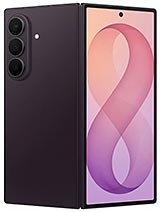
Galaxy Z Fold8 Ultra
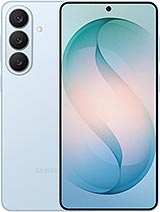
Galaxy S26+
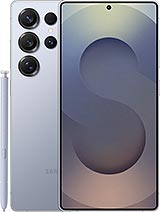
Galaxy S25 Ultra
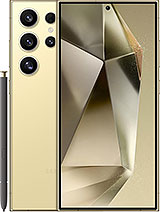
Galaxy S24 Ultra
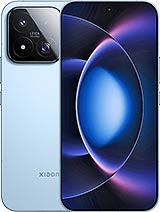
17 Max