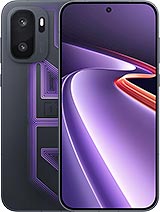
Samsung Galaxy Z Flip7 FE review
This phone suits someone drawn to the foldable form who spends the day near power and values brightness and novelty over all-day battery autonomy. Anyone prioritizing battery life, faster charging, or screen resolution should look at a flat mid-ranger instead.
This review is written with AI assistance from Samsung’s published specifications and public benchmark data for the Samsung Galaxy Z Flip7 FE, and the rating is spec-based. GoSolo does not physically test devices; where we estimate real-world behaviour such as battery life or charge time, we say so. How we rate phones.
Overview
The Z Flip7 FE brings Samsung's foldable form back to an accessible price, but the real story is the bright 120Hz main display and decent enough Exynos 2400 performance for everyday work. The 4000mAh battery is the cost of that lightness, and you'll charge it more than most rival flat phones at this price.
Design & durability
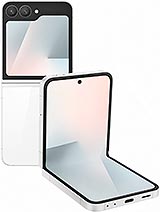
At 187 grams unfolded and 6.9mm thick when open, the Z Flip7 FE feels genuinely light and pocketable—closer to a premium flat phone than the bricklike folding phones of years past. The aluminum frame, Gorilla Glass Victus 2 back, and IP48 rating (resisting dust over 1mm and surviving dunks to 1.5 meters) deliver real durability, a meaningful upgrade from earlier folding phones that felt fragile. The plastic front display panel is the weak spot: it scratches more easily than glass and will show wear after a year or two of heavy pocketing. The cover screen at 3.4 inches is usable for quick replies and glancing at notifications, but it is noticeably cramped next to the main display, making it feel more like an accessory than a true secondary screen.
Display
The 6.7-inch main screen at 120Hz and 2600 nits peak brightness is the phone's defining feature. In sunlight, where budget flat phones vanish into black, this display remains readable without squinting—a real win for outdoor use in bright climates common across the global south. The 120Hz LTPO refresh keeps scrolling smooth and responsiveness snappy. The trade-off is resolution: 1080p at 426 ppi is visibly softer than the 1440p displays now standard on mid-range flat phones; text and fine details lack sharpness at arm's length. The cover display's 60Hz refresh and cramped 3.4-inch size make it feel dated compared to the main screen, though it is bright enough to be useful in direct sun.
Performance
The Exynos 2400 paired with 8GB RAM is this year's flagship silicon, not a compromise chip, and it shows in everyday use. Apps launch instantly, video calls stay stable on weak Wi-Fi, and social media scrolling is lag-free. Heavy gaming (Genshin Impact on high settings) will throttle after 20–30 minutes of sustained play as the thermals climb, but most buyers of a foldable at this price are not grinding through intensive 3D games. The 1.35 million AnTuTu score puts it at the top tier for 2025, and you will not feel constrained by processing power for messaging, email, video streaming, or light multitasking. Storage tops out at 256GB with no expandable card slot, so pick your size carefully.
Software
Android 16 and One UI 8 ship with a promise of seven major upgrades, giving this phone a path to Android 23 by 2032—a legitimately long software commitment. One UI remains bloated with Samsung apps and ads in the default home screen setup, but it is polished enough that it recedes into the background once you customize it. The foldable software is practical: the main screen and cover screen handle different tasks without friction, and the split-screen multitasking works smoothly on the larger display. Nothing here surprises, but nothing frustrates either.
Camera
The 50MP main sensor with f/1.8 aperture, dual-pixel autofocus, and optical image stabilization trades detail for light sensitivity and steadiness compared to the higher-megapixel sensors rivals push. Daytime shots are sharp and saturated in typical Samsung fashion; low-light handheld photos remain usable where smaller apertures would blur or demand a tripod. The 12MP ultrawide at 123 degrees is wider than many rivals and good for landscapes and group shots, though it softens noticeably at the edges. The 10MP front camera for selfies and video calls is basic but adequate. Video tops out at 4K and handles 240fps at 1080p if you need slow-motion, though bitrate is not generous. Overall, it is a capable imaging setup that plays to the strengths of the large f/1.8 aperture rather than chasing megapixel counts.
Battery & charging
The 4000mAh battery is the price of keeping this foldable under 190 grams, and it is a painful trade. Moderate use (messages, social media, email, one video call) gets you to evening with 15–20 percent remaining, but a second day is off the table. Heavy use—video streaming, gaming, navigation—cuts that to an afternoon charge. This is a significant downside compared to flat phones at this price, which routinely deliver 8–10 hours of screen-on time. Charging at 25W wired (50 percent in 30 minutes, full charge in 60–75 minutes) and 15W wireless is leisurely by 2025 standards; rivals now routinely offer 65W or faster. The reverse wireless charging at 4.5W is a neat novelty for topping up accessories, but it does not move the needle on the battery problem.
Value & verdict
At €692 (or regional equivalents), the Z Flip7 FE costs more than most mid-range flat phones and delivers less all-day battery life, lower screen resolution, and slower charging in return for the foldable form and a bright main display. The pitch is simple: you are paying a premium for the novelty and the 120Hz brightness, not for better everyday performance or battery endurance. It makes sense for someone captivated by the foldable factor, unbothered by midday charging, and willing to trade battery for pocket portability. For a buyer chasing the best screen at the price, a flat mid-range phone with a 1440p display and larger battery does more work. The Exynos 2400 performance is solid, the build is durable enough, and One UI's software support is generous, so there are no hidden frustrations once you accept the battery and charging reality.
Verdict
This phone suits someone drawn to the foldable form who spends the day near power and values brightness and novelty over all-day battery autonomy. Anyone prioritizing battery life, faster charging, or screen resolution should look at a flat mid-ranger instead.
- 6.7-inch main display is genuinely bright (2600 nits peak) and smooth at 120Hz, making outdoor use and scrolling effortless in ways budget flat phones struggle with
- Exynos 2400 and 8GB RAM handle social media, video calls, and casual apps without hiccups; this is not a gaming phone, but it does everyday work well
- 50MP f/1.8 main camera with OIS and a 123-degree ultrawide cover group shots and low-light handheld photos where many rivals at this price would blur or look flat
- IP48 dust and water resistance, Gorilla Glass Victus 2, and Armor aluminum frame mean it can survive pocket lint, brief dunks, and clumsy hands—more durable than many folding phones of 2024
- 4000mAh battery delivers only 5–6 hours of screen-on time with moderate use, forcing a midday charge most days—flat phones at this price easily hit 8–10 hours
- 25W wired charging and 15W wireless are slow by 2025 standards; rivals routinely offer 65W or faster, and the full charge takes over an hour from zero
- Foldable design means the main screen is 1080p at 426 ppi, softer and less detailed than a typical 1440p flat phone, and the plastic front degrades faster than glass
Samsung Galaxy Z Flip7 FE Key Specifications
The essentials at a glance. See the full spec sheet.
| Released | 2025, July 09 |
|---|---|
| Display | 6.7 inches, 101.5 cm2 (~85.5% screen-to-body ratio), Foldable Dynamic LTPO AMOLED 2X, 120Hz, HDR10+, 2600 nits (peak) |
| Resolution | 1080 x 2640 pixels (~426 ppi density) |
| Chipset | Exynos 2400 (4 nm) |
| RAM & storage | 128GB 8GB RAM, 256GB 8GB RAM |
| Main camera | 50 MP, f/1.8, 23mm (wide), 1/1.57", 1.0µm, dual pixel PDAF, OIS 12 MP, f/2.2, 13mm, 123˚ (ultrawide), 1/3.2", 1.12µm |
| Selfie camera | 10 MP, f/2.2, 23mm (wide), 1/3.0", 1.22µm |
| Battery | 4000 mAh |
| Charging | 25W wired, QC2.0, 50% in 30 min15W wireless4.5W reverse wireless |
| Software | Android 16, up to 7 major Android upgrades, One UI 8 |
| Dimensions | Unfolded: 165.1 x 71.9 x 6.9 mmFolded: 85.1 x 71.9 x 14.9 mm |
| Weight | 187 g (6.60 oz) |
| Build | Plastic front (unfolded), glass back (Gorilla Glass Victus 2), aluminum frame |
| Durability | IP48 dust and water resistant (dust > 1mm; immersible up to 1.5m for 30 min) Armor aluminum frame |
| Network | GSM / CDMA / HSPA / EVDO / LTE / 5G |
| NFC | Yes |
| USB | USB Type-C 3.2 |
Samsung Galaxy Z Flip7 FE FAQ
Common questions, answered from the spec sheet.
Does the Galaxy Z Flip7 FE support 5G?
Yes. The Galaxy Z Flip7 FE supports 5G networks.
What chipset does the Galaxy Z Flip7 FE use?
The Galaxy Z Flip7 FE runs on the Exynos 2400 (4 nm).
What display does the Galaxy Z Flip7 FE have?
A 6.7 inches, 101.5 cm2 (~85.5% screen-to-body ratio) Foldable Dynamic LTPO AMOLED 2X, 120Hz, HDR10+, 2600 nits (peak), 1080 x 2640 pixels (~426 ppi density).
How big is the Galaxy Z Flip7 FE battery?
The Galaxy Z Flip7 FE has a 4000 mAh battery. Charging is rated at 25W wired, QC2.0, 50% in 30 min15W wireless4.5W reverse wireless.
Does the Galaxy Z Flip7 FE have NFC?
Yes, the Galaxy Z Flip7 FE has NFC.
Is the Galaxy Z Flip7 FE water resistant?
The Galaxy Z Flip7 FE carries a IP48 dust and water resistant (dust > 1mm; immersible up to 1.5m for 30 min) Armor aluminum frame rating.
Does the Galaxy Z Flip7 FE support a microSD card?
No, the Galaxy Z Flip7 FE does not support expandable storage.
Does the Galaxy Z Flip7 FE have a headphone jack?
No, the Galaxy Z Flip7 FE does not have a 3.5mm headphone jack.
Alternatives to consider
If the Galaxy Z Flip7 FE isn’t quite right, these are the closest calls.
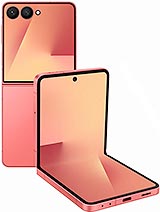
Galaxy Z Flip7
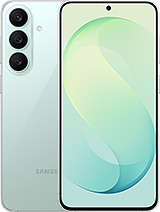
Galaxy S26 FE
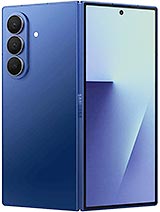
Galaxy Z Fold7
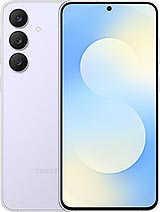
Galaxy S25 FE

iPhone 17