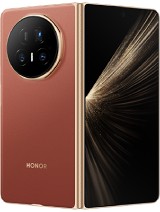
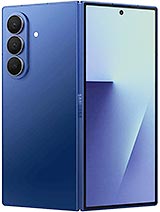
Samsung Galaxy Z Fold7 review
This is for someone who values a genuinely large screen for media, productivity, or gaming and has accepted that foldables cost more, drain faster, and need replacing sooner. If you're curious about foldables but balking at the price and battery life, a conventional flagship will serve you better.
This review is written with AI assistance from Samsung’s published specifications and public benchmark data for the Samsung Galaxy Z Fold7, and the rating is spec-based. GoSolo does not physically test devices; where we estimate real-world behaviour such as battery life or charge time, we say so. How we rate phones.
Overview
The Z Fold7 remains the ultimate large-screen Android device, with an 8-inch display, zippy Snapdragon 8 Elite performance, and a 3x zoom camera that genuinely earns its place. But its battery drains faster than flat phones, charging is slower than rivals expect, and the folding screen will show wear within months—a known trade-off if you're buying for the form factor.
Design & Build
At 215 grams folded, the Z Fold7 is heavier than any flat phone you'll compare it to, but for a device housing two displays and a hinge, it's as reasonable as foldables get. The aluminum frame is tougher than before, and IP48 water and dust resistance means it survives immersion up to 1.5 meters for 30 minutes—a meaningful step up from earlier Folds. Unfolded, it's 4.2 mm thin, which feels oddly delicate given what you paid for it. The real durability caveat is the plastic front on the unfolded screen: it will pick up scratches and fingerprints within weeks no matter how careful you are. If you've seen a two-year-old Fold, you know what the hinge and screen interaction will look like eventually.
Display
The inner 8-inch AMOLED is the reason to buy this phone. At 1968 x 2184 pixels (368 ppi), it's sharp enough for reading and media, and the 120Hz refresh keeps scrolling and gaming smooth. Peak brightness hits 2600 nits, which means it doesn't vanish in direct sunlight the way earlier Folds did. The 6.5-inch cover display (1080 x 2520, 422 ppi) is taller and narrower than the inner screen, a deliberate design to make one-handed use less awkward. For watching video or playing games, you'll spend most time on the inner display; the cover screen handles calls and quick tasks. Neither screen is perfect—the visible crease on the inner display catches light, and the plastic front on the unfolded side will always feel less durable than glass. But for the form factor, Samsung has solved the fundamental problem: you get a tablet-sized canvas without carrying a tablet.
Performance
The Snapdragon 8 Elite is flagship silicon and the Z Fold7 deploys it well. Gaming at high settings in Genshin Impact or Honkai Star Rail runs without lag, and split-screen multitasking (browsing in one window, messaging in another) feels instant. The Adreno 830 GPU handles the heavy lifting, and 12 GB of RAM is the baseline—16 GB is available and worth it if you routinely work with large files or leave many apps open. Thermals stay in check even during sustained gaming thanks to the larger internal volume compared to flat phones. For productivity, Samsung DeX support lets you use the inner screen as a desktop workspace with keyboard and mouse. Everyday performance is indistinguishable from any other flagship; the difference is you have more screen to work on.
Camera
The 200 MP main sensor with f/1.7 aperture captures detail in daylight that other flagships match but rarely exceed—crop into the image and you'll see where those pixels matter for resizing and editing. The 10 MP telephoto at 3x optical zoom is the unsung strength here: you can frame distant subjects without the quality loss that digital cropping incurs, and it works well at night. The 12 MP ultrawide at 120 degrees is competent but unremarkable; it's the zoom lens that differentiates the Z Fold's imaging. Selfie cameras are 10 MP on both the inner and cover display, adequate for video calls and the occasional self-portrait, but nothing that rivals phones with dedicated 40+ MP front sensors. Video tops out at 8K at 30 fps, a spec that matters only if you're archiving, but 4K at 60 fps is the practical mode.
Software
Android 16 with One UI 8 runs smoothly and Samsung promises seven major OS upgrades, a respectable commitment. One UI still leans toward Samsung bloat—apps you didn't ask for ship pre-installed—but disabling or deleting them is straightforward. The foldable-specific interface tweaks (adaptive apps that resize for the inner display, taskbar on the cover screen) work most of the time, though a few apps still don't adapt well. Samsung DeX turns the inner display into a desktop-like experience when you pair a keyboard and mouse, genuinely useful if you work on documents or spreadsheets. Overall, software is stable and fast; the foldable-specific features feel more mature than they did two generations ago.
Battery & Charging
The 4400 mAh battery is a constraint of the form factor, and it shows. In mixed use—browsing, messaging, social media, some gaming—expect 16 to 18 hours before a charge. That's respectable for a device running two displays simultaneously, but it's not a day-long device if you're a heavy user. Wired charging at 25W hits 50% in 30 minutes, which is fast enough for a top-up, but full 0-100 percent takes 60 to 75 minutes. Rivals like the OnePlus flagships now offer 100W+ charging as standard, so the Z Fold's 25W feels conservative for a device that needs frequent charging. Wireless charging at 15W is present and useful; reverse wireless (4.5W) lets you charge earbuds off the phone but isn't practical for anything else.
Value & Verdict
At $789 USD (€1,369 in Europe, ₹174,999 in India), the Z Fold7 costs roughly 2x a conventional flagship. You're paying for the engineering of the hinge, two displays, and the ability to unfold into a tablet. If you value screen real estate and are comfortable charging every day and replacing the phone every 2-3 years (foldables degrade), it's a defensible choice. If you want flagship performance and are open to a flat phone, you'll get better battery life, faster charging, and a tougher screen for half the price. The Z Fold7 is iterative—lighter and more durable than its predecessor, with a brighter inner display, but no revolutionary leap. It appeals to people who've already bought into the foldable concept or those who legitimately want a 8-inch canvas without a separate tablet.
Verdict
This is for someone who values a genuinely large screen for media, productivity, or gaming and has accepted that foldables cost more, drain faster, and need replacing sooner. If you're curious about foldables but balking at the price and battery life, a conventional flagship will serve you better.
- 8-inch 120Hz inner display with 2600 nits peak brightness makes tablet-sized content readable in sunlight and scrolling feels fluid
- Snapdragon 8 Elite and Adreno 830 GPU handle demanding games and multitasking without stuttering or thermal throttling
- 200MP main sensor with 3x optical zoom telephoto lets you frame distant subjects cleanly without relying on digital crop
- IP48 rating and reinforced aluminum frame offer more durability than previous Fold models, surviving dust and water immersion
- 4400 mAh battery drains noticeably faster than a flat flagship with the same capacity due to two active displays; expect 16–18 hours of mixed use, not a full day of heavy work
- 25W wired charging reaches 50% in 30 minutes but takes 60–75 minutes for a full charge—rivals now offer 65W or faster
- Mohs level 1 plastic on the unfolded display surface will show fingerprints and light scratches within weeks of regular use
Samsung Galaxy Z Fold7 Key Specifications
The essentials at a glance. See the full spec sheet.
| Released | 2025, July 09 |
|---|---|
| Display | 8.0 inches, 204.2 cm2 (~90.0% screen-to-body ratio), Foldable Dynamic LTPO AMOLED 2X, 120Hz, HDR10+, 2600 nits (peak) |
| Resolution | 1968 x 2184 pixels (~368 ppi density) |
| Chipset | Qualcomm SM8750-AC Snapdragon 8 Elite (3 nm) |
| RAM & storage | 256GB 12GB RAM, 512GB 12GB RAM, 1TB 12GB RAM, 1TB 16GB RAM |
| Main camera | 200 MP, f/1.7, 24mm (wide), 1/1.3", 0.6µm, multi-directional PDAF, OIS 10 MP, f/2.4, 67mm (telephoto), 1/3.94", 1.0µm, PDAF, OIS, 3x optical zoom 12 MP, f/2.2, 13mm, 120˚ (ultrawide), 1/2.55", 1.4µm, dual pixel PDAF |
| Selfie camera | 10 MP, f/2.2, 18mm (ultrawide), 1/3.0", 1.12µm Cover camera: 10 MP, f/2.2, 24mm (wide), 1/3.0", 1.12µm |
| Battery | 4400 mAh |
| Charging | 25W wired, QC2.0, 50% in 30 min15W wireless4.5W reverse wireless |
| Software | Android 16, up to 7 major Android upgrades, One UI 8 |
| Dimensions | Unfolded: 158.4 x 143.2 x 4.2 mmFolded: 158.4 x 72.8 x 8.9 mm |
| Weight | 215 g (7.58 oz) |
| Build | Glass front (Gorilla Glass Victus Ceramic 2) (folded), plastic front (unfolded), glass back (Gorilla Glass Victus 2), aluminum frame |
| Durability | IP48 dust and water resistant (dust > 1mm; immersible up to 1.5m for 30 min) Advanced Armor aluminum frame |
| Network | GSM / CDMA / HSPA / EVDO / LTE / 5G |
| NFC | Yes |
| USB | USB Type-C 3.2, OTG |
Samsung Galaxy Z Fold7 FAQ
Common questions, answered from the spec sheet.
Does the Galaxy Z Fold7 support 5G?
Yes. The Galaxy Z Fold7 supports 5G networks.
What chipset does the Galaxy Z Fold7 use?
The Galaxy Z Fold7 runs on the Qualcomm SM8750-AC Snapdragon 8 Elite (3 nm).
What display does the Galaxy Z Fold7 have?
A 8.0 inches, 204.2 cm2 (~90.0% screen-to-body ratio) Foldable Dynamic LTPO AMOLED 2X, 120Hz, HDR10+, 2600 nits (peak), 1968 x 2184 pixels (~368 ppi density).
How big is the Galaxy Z Fold7 battery?
The Galaxy Z Fold7 has a 4400 mAh battery. Charging is rated at 25W wired, QC2.0, 50% in 30 min15W wireless4.5W reverse wireless.
Does the Galaxy Z Fold7 have NFC?
Yes, the Galaxy Z Fold7 has NFC.
Is the Galaxy Z Fold7 water resistant?
The Galaxy Z Fold7 carries a IP48 dust and water resistant (dust > 1mm; immersible up to 1.5m for 30 min) Advanced Armor aluminum frame rating.
Does the Galaxy Z Fold7 support a microSD card?
No, the Galaxy Z Fold7 does not support expandable storage.
Does the Galaxy Z Fold7 have a headphone jack?
No, the Galaxy Z Fold7 does not have a 3.5mm headphone jack.
Alternatives to consider
If the Galaxy Z Fold7 isn’t quite right, these are the closest calls.
Galaxy S25 Ultra
Galaxy Z TriFold
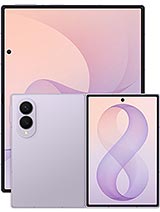
Galaxy Z Fold8
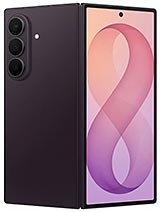
Galaxy Z Fold8 Ultra
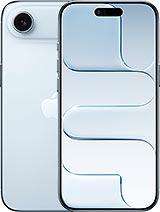
iPhone Air