Sharp Aquos R10 review
The Aquos R10 suits travelers, photographers who shoot in bright conditions, and anyone in a market where Sharp's regional pricing advantage makes the trade-offs worthwhile. It is less a good fit for people who rely on mobile gaming, zoom photography, or rapid charging as daily necessities.
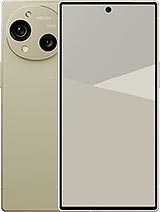
This review is written with AI assistance from Sharp’s published specifications and public benchmark data for the Sharp Aquos R10, and the rating is spec-based. GoSolo does not physically test devices; where we estimate real-world behaviour such as battery life or charge time, we say so. How we rate phones.
Overview
The Sharp Aquos R10 leans hard into its 240Hz OLED display and IP68 durability, but the 1080p resolution and mid-range Snapdragon chip feel at odds with those headline features. It is a sharp design for Japan-focused buyers who value a bright screen and water resistance above raw performance or photo quality.
Design & build
At 197g and 8.9mm thick, the Aquos R10 is one of the lighter and thinner Android phones you can buy today, with glass front and back wrapped in aluminum that feels solid without being heavy. The dual-glass construction (Gorilla Glass 5 up front, Victus 2 on back) is standard for this segment, and the IP68 rating with MIL-STD-810H compliance is genuine durability—not theater. Unlike some phones that claim waterproofing but feel fragile, this one sits on a shelf with industrial certification behind it. The side-mounted fingerprint sensor is reliable and tactile. For daily carry and travel, especially in climates where rain or dust is a concern, the build quality justifies itself.
Display
The 240Hz LTPO OLED is the star: scrolling through apps and social feeds is visibly smoother than a 120Hz panel, and the 3000-nit peak brightness handles direct sunlight without retreating into illegibility. Dolby Vision and HDR support round out the feature set. The catch is the 1080p resolution across a 6.5-inch screen, which yields a 396ppi density—passable but not sharp. Text in apps and web pages lacks the crispness of higher-res rivals at the same price. This is not a dealbreaker for casual use, but side-by-side with a 1440p phone, small details feel slightly soft. The 88.6% screen-to-body ratio is respectable, and the 19.5:9 aspect ratio means a tall, narrow viewing area that suits mobile content well.
Performance
The Snapdragon 7+ Gen 3 with 12GB RAM handles everyday work, messaging, streaming, and light gaming without stutter. Social media, email, and productivity apps run smoothly. Where it shows limits is in demanding mobile games at high settings—you will see frame dips and thermal throttling if you push hard. For a phone released in mid-2025, a mid-range chip here is a mismatch with the flagship-class display and build quality. The Adreno 732 GPU is competent but not a match for what flagships from the same era deliver. If you are not a mobile gamer, this is a non-issue; if you play demanding titles, you will notice the compromise.
Software
Android 15 out of the box with a promise of three major Android upgrades is respectable for the price tier. Sharp's software skin (if applied) tends to be minimal and close to stock Android, which means less bloat and faster updates compared to heavier overlays. Support duration is solid without being exceptional—three OS versions is standard for flagship-class devices but above what many mid-range competitors offer.
Camera
The dual rear setup pairs a 50.3MP f/1.9 wide with OIS against a 50.3MP f/2.2 ultrawide; the Leica lens partnership and color spectrum sensor suggest tuning for accurate color rendition rather than oversaturation. In good light, the setup should deliver balanced, natural-looking shots. The wide camera's larger sensor (1/1.55 inch) and f/1.9 aperture help with low-light capture. However, matching the ultrawide aperture (f/2.2) to the main camera's f/1.9 means the ultrawide collects less light and will struggle more in evening or indoor scenes. The 50.3MP selfie camera is more than sufficient for video calls and self-portraits. No telephoto lens is a notable omission for this price tier in 2025; rivals often pack a 3x or 5x zoom. Video tops out at 4K@30fps on the rear, which is workable but a generation behind 4K@60fps becoming standard on competitive phones.
Battery & charging
The 5000mAh battery with a 240Hz display running at full brightness will net you around 5-7 hours of screen-on time in a stress test; realistic mixed use (moderate brightness, adaptive refresh) should stretch a full day. The charging spec is listed as 36W, which is slow by current standards—expect around 90 minutes to a full charge, while rivals at similar price points now offer 65W, 100W, or faster. There is no mention of wireless charging, which would have helped offset the slower wired pace. The battery capacity itself is not the issue; the charging speed is.
Value & verdict context
The Aquos R10 is a regional specialist: Sharp phones sell strongest in Japan, and this device is made for that market (model numbers SH-51F, SH-M31). If you live in a market where it is readily available and affordable, it offers a genuine niche: a compact, light, durable phone with an excellent bright display and clean software. For the price, the 1080p resolution, mid-range chip, and slow charging are compromises you will actively notice against better-rounded competitors. If you value screen smoothness, durability, and a slim form factor above processing power or camera zoom, the Aquos R10 delivers. If you want flagship performance, sharp text, or fast charging, look elsewhere.
Verdict
The Aquos R10 suits travelers, photographers who shoot in bright conditions, and anyone in a market where Sharp's regional pricing advantage makes the trade-offs worthwhile. It is less a good fit for people who rely on mobile gaming, zoom photography, or rapid charging as daily necessities.
- 240Hz OLED screen with 3000-nit peak brightness makes scrolling visibly smooth and sunlight readability solid
- IP68 durability and MIL-STD-810H rating mean real-world ruggedness without the marketing exaggeration
- Leica-tuned dual cameras with color spectrum sensor add a thoughtful touch to the optical setup
- Compact and light at 197g and 8.9mm, fitting comfortably in one hand for extended use
- 1080p resolution on a 6.5-inch screen leaves text and fine detail softer than rivals charging similar prices
- Snapdragon 7+ Gen 3 is solid for everyday work but throttles in demanding games; no true flagship performance
- 36W charging (implied from battery spec) is slow by 2025 standards, leaving the 5000mAh battery needing hours to fill
Sharp Aquos R10 Key Specifications
The essentials at a glance. See the full spec sheet.
| Released | 2025, May 29 |
|---|---|
| Display | 6.5 inches, 103.7 cm2 (~88.6% screen-to-body ratio), PRO IGZO LTPO OLED, 240Hz, Dolby Vision, HDR, 1500 nits (HBM), 3000 nits (peak) |
| Resolution | 1080 x 2340 pixels, 19.5:9 ratio (~396 ppi density) |
| Chipset | Qualcomm SM7675-AB Snapdragon 7+ Gen 3 (4 nm) |
| RAM & storage | 256GB 12GB RAM, 512GB 12GB RAM |
| Main camera | 50.3 MP, f/1.9, 23mm (wide), 1/1.55", dual pixel PDAF, OIS 50.3 MP, f/2.2, 13mm, 122˚ (ultrawide), 1/2.55", PDAF |
| Selfie camera | 50.3 MP, f/2.2, 23mm (wide), 1/2.88", PDAF |
| Battery | 5000 mAh |
| Software | Android 15, up to 3 major Android upgrades |
| Dimensions | 156 x 75 x 8.9 mm (6.14 x 2.95 x 0.35 in) |
| Weight | 197 g (6.95 oz) |
| Build | Glass front (Gorilla Glass 5), glass back (Gorilla Glass Victus 2), aluminum frame |
| Durability | IP68 dust tight and water resistant (immersible up to 1.5m for 30 min) MIL-STD-810H compliant |
| Network | GSM / HSPA / LTE / 5G |
| NFC | Yes |
| USB | USB Type-C 3.2, Display Port 1.4 |
Sharp Aquos R10 FAQ
Common questions, answered from the spec sheet.
Does the Aquos R10 support 5G?
Yes. The Aquos R10 supports 5G networks.
What chipset does the Aquos R10 use?
The Aquos R10 runs on the Qualcomm SM7675-AB Snapdragon 7+ Gen 3 (4 nm).
What display does the Aquos R10 have?
A 6.5 inches, 103.7 cm2 (~88.6% screen-to-body ratio) PRO IGZO LTPO OLED, 240Hz, Dolby Vision, HDR, 1500 nits (HBM), 3000 nits (peak), 1080 x 2340 pixels, 19.5:9 ratio (~396 ppi density).
How big is the Aquos R10 battery?
The Aquos R10 has a 5000 mAh battery.
Does the Aquos R10 have NFC?
Yes, the Aquos R10 has NFC.
Is the Aquos R10 water resistant?
The Aquos R10 carries a IP68 dust tight and water resistant (immersible up to 1.5m for 30 min) MIL-STD-810H compliant rating.
Does the Aquos R10 support a microSD card?
Yes, the Aquos R10 supports expandable storage (microSDXC).
Alternatives to consider
If the Aquos R10 isn’t quite right, these are the closest calls.
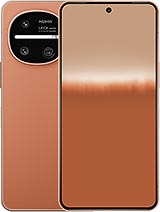
Aquos R11

Aquos Sense10
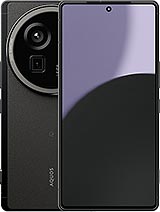
Aquos R9 pro

Aquos R8 Pro

Reno15