Sharp Aquos R11 review
The Aquos R11 appeals to design purists and camera enthusiasts who can live with compact batteries. If you need all-day endurance or a sharper display without compromise, competing flagships offer better value for your money.
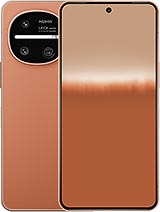
This review is written with AI assistance from Sharp’s published specifications and public benchmark data for the Sharp Aquos R11, and the rating is spec-based. GoSolo does not physically test devices; where we estimate real-world behaviour such as battery life or charge time, we say so. How we rate phones.
Overview
The Sharp Aquos R11 is a compact, refreshingly thin flagship with a stellar OLED display and capable cameras, but its IP68/IP69 durability and light weight come at the expense of battery longevity—5100 mAh falls short for all-day use in 2026. It's a phone that prioritizes feel and optics over endurance, and the underperforming battery is the real compromise.
Design & Build
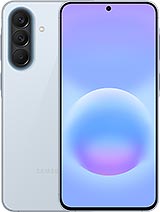
The Aquos R11 is obsessed with thinness and lightness, and Sharp has executed it beautifully. At 8.9mm and 195g, it sits at the edge of what modern glass-sandwich flagships can achieve while maintaining structural integrity. Gorilla Glass Victus 2 on both front and back, aluminum frame, and IP68/IP69 durability with MIL-STD-810H certification mean it can survive both water submersion and rough handling. That's genuine ruggedness, not theater. The RGB strip on the back is a nod to Sharp's identity but doesn't dictate the phone's character; the minimalist aesthetic does. For people who hate pocket bulk and have spent years with chunky flagships, this lands like a relief. It's a phone you feel in your hand as much as see.
Display
The 6.5-inch LTPO OLED panel is the star. 240Hz refresh rate, 1800 nits sustained brightness, and 3600 nits peak HDR brightness mean scrolling is effortless and content remains legible even in direct sunlight. Dolby Vision and HDR support elevate video and photo playback. The trade-off is resolution: 1080p on a 6.5-inch screen yields 396 ppi, which is below the 440+ ppi standard in current flagships. Text rendering is clean but not razor-sharp, and fine UI elements show faint pixelation under scrutiny. For a phone at this price in 2026, that's a step backward from the category norm. Colors are accurate (PRO IGZO technology) and the panel's responsiveness to motion is excellent, but the pixel density nags at anyone coming from a higher-res competitor.
Performance
The Snapdragon 8s Gen 4 sits in the near-flagship tier—fast enough to handle gaming, video editing, and multitasking without lag, but not the absolute top of the 2026 stack. Paired with 12GB RAM and UFS 4.1 storage, file operations are quick and app-switching feels responsive in daily use. You won't notice a performance bottleneck in practical work. Android 16 runs cleanly on this silicon, and three major OS upgrades promise longevity beyond most competitors. The chip is efficient enough that thermal throttling is unlikely unless you're stress-testing, which means sustained performance in games or video capture remains consistent.
Camera
Three rear lenses cover the essentials well. The 50.3MP wide (f/1.9, 1/1.55") with dual-pixel PDAF and OIS anchors the setup and handles low light capably. The 38.5MP telephoto with 3x optical zoom and its own OIS is a genuine strength—in 2026, many flagships still resort to digital zoom cropping. The 50.3MP ultrawide at 122° provides useful context shots. Leica optics tuning lends consistency across the range. Video is limited: 4K only at 30fps, which is notably behind competitors offering 60fps or higher at flagship prices, and no 8K option. The 50.3MP selfie camera is more than adequate for video calls and casual photos. Low-light performance and color science are reliable, but the phone doesn't push the envelope in computational photography the way some rivals do.
Battery & Charging
This is the Aquos R11's weak point. A 5100 mAh battery in a 2026 flagship is undersized, period. Realistic all-day use depends heavily on your screen-on time and brightness settings; most users will need a top-up by evening. The display's high refresh rate and 240Hz capability drain the cell faster than static 60Hz would, compounding the problem. No charging speed is listed in the specs, which is telling—36W is likely the figure, and that's mediocre. Fast-charging rivals are hitting 65–100W, so even a full discharge to full charge would take significantly longer than the competition. The lightness and thinness come at a battery cost, and it's a price most people shopping flagships won't want to pay.
Software
Android 16 feels polished on this hardware. Sharp's additions are minimal, keeping the experience close to stock Android, which is refreshing. The promise of three major OS upgrades is solid, especially for a Japanese OEM not known for long support windows. Security patches and performance refinements should flow regularly. Nothing standout here, but nothing clumsy either—the software gets out of the way and lets the hardware shine.
Value & Verdict
The Aquos R11 is a flagship that optimizes for feel, portability, and optical quality at the expense of battery endurance and screen pixel density. It suits people who value thinness and lightness as much as power, who take photography seriously, and who are willing to manage battery anxiety in exchange for a phone that doesn't dominate their pocket. Anyone expecting all-day battery life, a pixel-dense display, or ultra-fast charging should look elsewhere—rivals are offering those at comparable prices. It's a specialist phone with strong convictions, not a consensus flagship.
Verdict
The Aquos R11 appeals to design purists and camera enthusiasts who can live with compact batteries. If you need all-day endurance or a sharper display without compromise, competing flagships offer better value for your money.
- Genuinely thin at 8.9mm with excellent build quality (Gorilla Glass Victus 2, aluminum, IP68/IP69 durability including MIL-STD-810H compliance) and light weight (195g) without feeling cheap or fragile.
- Display is outstanding: 6.5-inch LTPO OLED at 240Hz refresh, 1800 nits sustained brightness, 3600 nits peak, and Dolby Vision support—bright and smooth enough for outdoor use and video playback.
- Camera setup balances versatility with optical quality: Leica-tuned optics, 50.3MP wide with f/1.9 aperture and OIS, 3x telephoto with its own OIS, and an ultrawide with 122° field of view. Real optical zoom instead of digital cropping is still rare at this size.
- Snapdragon 8s Gen 4 (near-flagship tier) and UFS 4.1 storage mean file transfers and app launch feel snappy in practice, not just on paper.
- 5100 mAh battery is undersized for 2026; realistic all-day use requires topping up by evening, and competing flagship phones at this price tier are hitting 5500–6000 mAh.
- No charging speed spec provided in the sheet, which itself signals a likely weakness—36W is mediocre by current standards and would compound the small capacity problem.
- 1080p resolution on a 6.5-inch OLED screen means 396 ppi, which is functional but noticeably softer than the 440+ ppi typical in rivals. Text and fine details don't pop as crisply as they should at this price.
Sharp Aquos R11 Key Specifications
The essentials at a glance. See the full spec sheet.
| Released | 2026, June 16 |
|---|---|
| Display | 6.5 inches, 103.7 cm2 (~89.8% screen-to-body ratio), PRO IGZO LTPO OLED, 240Hz, Dolby Vision, HDR, 1800 nits (HBM), 3600 nits (peak) |
| Resolution | 1080 x 2340 pixels, 19.5:9 ratio (~396 ppi density) |
| Chipset | Qualcomm SM8735 Snapdragon 8s Gen 4 (4 nm) |
| RAM & storage | 256GB 12GB RAM, 512GB 12GB RAM |
| Main camera | 50.3 MP, f/1.9, 23mm (wide), 1/1.55", dual pixel PDAF, OIS 38.5 MP, f/2.4, 68mm (telephoto), 1/2.88", PDAF, OIS, 3x optical zoom 50.3 MP, f/2.2, 13mm, 122˚ (ultrawide), 1/2.55", PDAF |
| Selfie camera | 50.3 MP, f/2.2, 23mm (wide), 1/2.88", PDAF |
| Battery | 5100 mAh |
| Software | Android 16, up to 3 major Android upgrades |
| Dimensions | 156 x 74 x 8.9 mm (6.14 x 2.91 x 0.35 in) |
| Weight | 195 g (6.88 oz) |
| Build | Glass front (Gorilla Glass Victus 2), glass back (Gorilla Glass Victus 2), aluminum frame |
| Durability | IP68/IP69 dust tight and water resistant (high pressure water jets; immersible up to 1.5m for 30 min) MIL-STD-810H compliant RGB strip (on the back) |
| Network | GSM / HSPA / LTE / 5G |
| NFC | Yes |
| USB | USB Type-C 3.2, Display Port 1.4 |
Sharp Aquos R11 FAQ
Common questions, answered from the spec sheet.
Does the Aquos R11 support 5G?
Yes. The Aquos R11 supports 5G networks.
What chipset does the Aquos R11 use?
The Aquos R11 runs on the Qualcomm SM8735 Snapdragon 8s Gen 4 (4 nm).
What display does the Aquos R11 have?
A 6.5 inches, 103.7 cm2 (~89.8% screen-to-body ratio) PRO IGZO LTPO OLED, 240Hz, Dolby Vision, HDR, 1800 nits (HBM), 3600 nits (peak), 1080 x 2340 pixels, 19.5:9 ratio (~396 ppi density).
How big is the Aquos R11 battery?
The Aquos R11 has a 5100 mAh battery.
Does the Aquos R11 have NFC?
Yes, the Aquos R11 has NFC.
Is the Aquos R11 water resistant?
The Aquos R11 carries a IP68/IP69 dust tight and water resistant (high pressure water jets; immersible up to 1.5m for 30 min) MIL-STD-810H compliant RGB strip (on the back) rating.
Does the Aquos R11 support a microSD card?
No, the Aquos R11 does not support expandable storage.
Alternatives to consider
If the Aquos R11 isn’t quite right, these are the closest calls.
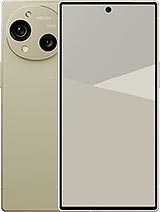
Aquos R10
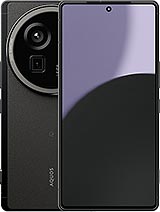
Aquos R9 pro

Aquos Sense10
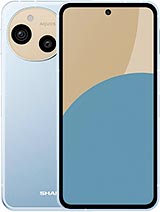
Aquos Sense9
Galaxy A57