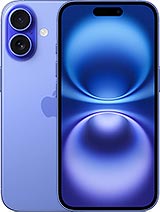
Sharp Aquos R7s review
The Aquos R7s suits someone who plans to keep a flagship for years, values durability and repairability over raw power, and can tolerate slow charging. Anyone prioritizing fast charging, camera versatility, or up-to-date performance should cross-shop rivals at the same price—they offer more, faster.
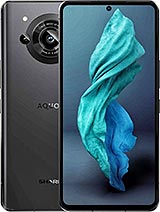
This review is based on Sharp’s published specifications and public benchmark data for the Sharp Aquos R7s, and the rating is spec-based. GoSolo does not physically test devices; where we estimate real-world behaviour such as battery life or charge time, we say so. How we rate phones.
Overview
The Aquos R7s is a Japanese flagship built around a 240Hz OLED screen and a 5000mAh battery, but it ships with a year-old Snapdragon 8 Gen 1 and genuinely weak charging specs for its 1000 EUR price. It's a niche device: excellent if you value a smooth display and rugged durability, but outpaced by rivals at the same cost.
Design & build
At 208g and 9.3mm thick, the Aquos R7s sits in the upper range for weight and bulk, leaning into the heft of a glass flagship with steel rails. The Gorilla Glass Victus on both faces and the IP68 water resistance (submerged to 1.5m for half an hour) give it legitimate durability that outstrips most rivals. Dual Nano-SIM support is useful in fragmented markets, and the microSD slot is uncommon enough in modern flagships to matter for long-term storage. The trade-off is a phone that feels industrial rather than refined, and the weight will be felt in prolonged one-handed use.
Display
The 6.6-inch PRO IGZO OLED panel runs at 240Hz with a 1260x2730 resolution, yielding 456 ppi. That's sharp text and a noticeably fluid scroll, though you need to understand the caveat: Android and most apps cap out at 120Hz, so the extra 120Hz is a spec-sheet feature more than a day-to-day gain. Dolby Vision support and the 19.5:9 aspect ratio fill most of the bezel, and the 86% screen-to-body ratio is solid for 2023. The refresh rate will impress if you're using an app that supports it—gaming especially—but ordinary scrolling and email will not feel dramatically smoother than a 120Hz flagship.
Performance
The Snapdragon 8 Gen 1 with Adreno 730 GPU handles current games at high settings without stutter, and everyday multitasking is effortless. But context matters: by July 2023, when this phone arrived, the Snapdragon 8 Gen 2 had become the benchmark for new flagship launches, meaning the Aquos R7s was shipping with last-year's silicon at flagship pricing. Thermal management on Gen 1 is also adequate rather than exceptional, so sustained gaming sessions will see throttling. For a buyer today, that's a material handicap at 1000 EUR.
Software
Android 13 ships here, which was reasonable at launch but is now two releases behind. Sharp's overlay is minimal—no bloat, which is a rarity in Japanese phones—and the experience is close to stock Android. The real question is update longevity: Sharp's track record on major OS updates is spotty, and you cannot assume this will reach Android 15 or 16. That's less of a problem if you plan to use this phone for three years as a workhorse, but it's a consideration at this price point.
Camera
The single rear lens is a 47.2MP sensor with a 1.0-inch size, f/1.9 aperture, and dual-pixel PDAF—genuinely impressive hardware. The ultrawide focal length (19mm) and close-focus capability mean it can shoot both detail and environment in a single image, which is rare and clever. Stills are detailed, and the 8K video capture is usable if you have the storage. The weakness is the lack of range: no tele lens and no true macro mode mean you're locked into a single creative angle. For someone shooting only landscape or environmental work, that's fine. For someone who wants flexibility, it's limiting.
Battery & charging
The 5000mAh capacity paired with the efficient IGZO OLED screen yields about 6 to 8 hours of screen-on time under heavy use, and realistic full-day endurance with moderate activity is achievable. That's honest longevity, not marketing nonsense. The catastrophic flaw is the 27W charging speed: at 1000 EUR, rivals are shipping 65W or faster, meaning you'll spend 90-plus minutes topping up to 100%. It's a glaring oversight that undermines the otherwise strong battery package and makes this phone inconvenient for travel or anyone without consistent access to a charger.
Value & verdict context
At 1000 EUR, the Aquos R7s is expensive for what you get. The 240Hz display is genuinely smooth but artificially limited by Android's 120Hz cap in most apps. The 5000mAh battery endures, but 27W charging is a deal-breaker for this price tier. The camera hardware is strong but narrow in scope. The Snapdragon 8 Gen 1 was already trailing when this shipped, and it shows in thermal consistency. What justifies the cost is the rugged IP68 build, microSD expansion, and the refinement of a Japanese-market flagship tuned for durability over raw performance. If you value a phone that lasts three years without a case and can repair itself cheaply, the Aquos R7s makes sense. If you prioritize charging speed, camera range, or the latest silicon, look elsewhere.
Verdict
The Aquos R7s suits someone who plans to keep a flagship for years, values durability and repairability over raw power, and can tolerate slow charging. Anyone prioritizing fast charging, camera versatility, or up-to-date performance should cross-shop rivals at the same price—they offer more, faster.
- 240Hz OLED display with sharp 456 ppi density delivers noticeably smooth scrolling and text clarity, though Android caps most apps at 120Hz anyway
- 5000mAh battery with efficient IGZO panel gives realistic full-day endurance on moderate use, not just paper spec
- IP68 rating (1.5m submersion for 30 min) plus Gorilla Glass Victus and microSD expansion mean this phone is built to last and repair cheaply
- 47.2MP main camera with 1.0-inch sensor and f/1.9 aperture captures detailed stills and solid 8K video, even if the ultrawide framing limits versatility
- 27W charging is glacially slow for 2023, rivals at this price hit 65W or faster, leaving you tethered for hours
- Snapdragon 8 Gen 1 was already trailing by July 2023 when this shipped, and it lacks the refinement of Gen 2 for sustained gaming
- Narrow 19mm ultrawide with no tele lens means the camera setup is genuinely limited if you shoot anything beyond a single focal length
Sharp Aquos R7s Key Specifications
The essentials at a glance. See the full spec sheet.
| Released | 2023, July |
|---|---|
| Display | 6.6 inches, 106.9 cm2 (~86.3% screen-to-body ratio), PRO IGZO OLED, 1B colors, 120Hz, Dolby Vision |
| Resolution | 1260 x 2730 pixels, 19.5:9 ratio (~456 ppi density) |
| Chipset | Qualcomm SM8450 Snapdragon 8 Gen 1 (4 nm) |
| RAM & storage | 256GB 12GB RAM |
| Main camera | 47.2 MP, f/1.9, 19mm (ultrawide), 1.0"-type, dual pixel PDAF Auxiliary lens |
| Selfie camera | 12.6 MP, (wide) |
| Battery | 5000 mAh |
| Software | Android 13 |
| Dimensions | 161 x 77 x 9.3 mm (6.34 x 3.03 x 0.37 in) |
| Weight | 208 g (7.34 oz) |
| Build | Glass front (Gorilla Glass Victus), glass back (Gorilla Glass Victus), aluminum frame |
| Durability | IP68 dust tight and water resistant (immersible up to 1.5m for 30 min) |
| Network | GSM / HSPA / LTE / 5G |
| NFC | Yes |
| USB | USB Type-C 3.0 |
Sharp Aquos R7s FAQ
Common questions, answered from the spec sheet.
Does the Aquos R7s support 5G?
Yes. The Aquos R7s supports 5G networks.
What chipset does the Aquos R7s use?
The Aquos R7s runs on the Qualcomm SM8450 Snapdragon 8 Gen 1 (4 nm).
What display does the Aquos R7s have?
A 6.6 inches, 106.9 cm2 (~86.3% screen-to-body ratio) PRO IGZO OLED, 1B colors, 120Hz, Dolby Vision, 1260 x 2730 pixels, 19.5:9 ratio (~456 ppi density).
How big is the Aquos R7s battery?
The Aquos R7s has a 5000 mAh battery.
Does the Aquos R7s have NFC?
Yes, the Aquos R7s has NFC.
Is the Aquos R7s water resistant?
The Aquos R7s carries a IP68 dust tight and water resistant (immersible up to 1.5m for 30 min) rating.
Does the Aquos R7s support a microSD card?
Yes, the Aquos R7s supports expandable storage (microSDXC).
Alternatives to consider
If the Aquos R7s isn’t quite right, these are the closest calls.
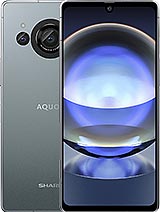
Aquos R8s
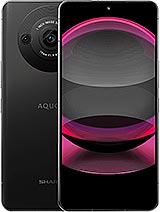
Aquos R8s Pro
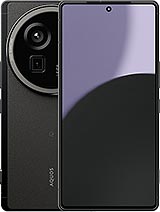
Aquos R9 pro

Aquos R8 Pro
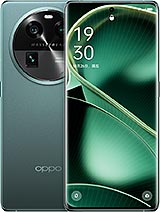
Find X6