Sharp Aquos R8s review
The Aquos R8s suits someone who values portability and pure performance and will accept limited battery life and 1080p resolution as the cost. Anyone else shopping at 700 EUR should look at larger-battery, higher-res alternatives.
This review is based on Sharp’s published specifications and public benchmark data for the Sharp Aquos R8s, and the rating is spec-based. GoSolo does not physically test devices; where we estimate real-world behaviour such as battery life or charge time, we say so. How we rate phones.
Overview
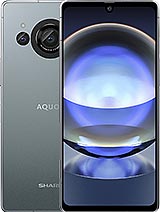
The Sharp Aquos R8s is a compact flagship with a smooth 120Hz OLED screen and Snapdragon 8 Gen 2 muscle in an unusually thin 8.7mm body, but 1080p resolution and a small 4750mAh battery are real limits for the 700 EUR price.
Design & build
The Aquos R8s feels like a high-end phone from a few years ago shrunk and preserved. At 8.7mm thick and 179g, it is genuinely pocketable without the heft that plagued most 2023 flagships. The aluminum frame and Gorilla Glass 3 front work, though plastic on the back (even with IP68 rating) betrays the cost-cutting at 700 EUR. Build quality is solid but not luxurious—Sharp's choice to keep it thin means less mass for shock absorption, so it will not tolerate careless drops the way heavier competitors do. MIL-STD-810G compliance and full IP68 sealing are real, though, and that durability matters more than frameborder choice to most buyers who actually use water resistance.
Display
A 120Hz OLED with 1300 nits peak brightness and Dolby Vision sounds flagship. It scrolls buttery smooth and stays legible in sunlight better than most mid-range phones. The catch: 1080p at 6.4 inches is 403ppi, which reads fine from arm's length but soft when you look closer. Text edges blur against 1440p OLED rivals, and photo detail in gallery apps feels compressed by comparison. In 2023, 1440p was the standard move for flagship OLED screens at this price; Sharp chose brightness and refresh over sharpness, a trade-off that benefits video and scrolling but not reading or photo work. The 19.5:9 ratio maximizes screen real estate in a narrow body, which is clever and practical.
Performance
The Snapdragon 8 Gen 2 is a flagship-tier chip, and the Aquos R8s pairs it with 8GB RAM and UFS 4.0 storage—no compromises in the specs. Heavy games, photo editing, and switching between a dozen apps all happen without lag or thermal throttle. The Adreno 740 GPU handles Genshin Impact at high settings, though the small 4750mAh battery will cut sessions short before the chip does. For the work, 8GB is enough; 12GB or 16GB would overkill, and Sharp did not waste money there. This phone delivers compute power equal to rivals costing 200 EUR more—a genuine strength for the price.
Software
Android 13 ships here, and by late 2023 that was already a step behind (14 was out). No Aquos-skin bloat is visible in the spec sheet, though Sharp's track record suggests minimal skin, which is refreshing. Update lifespan and software maturity are not stated, but Sharp's smaller market presence than Samsung or Xiaomi usually means shorter support windows. This is not a dealbreaker, but it is a real risk if you expect four years of quarterly patches.
Camera
The 50MP wide camera with f/1.9 and dual-pixel PDAF is solid for its class, and the fast aperture helps in low light. The 13MP ultrawide at f/2.3 is competent but not exciting—no macro, no telephoto, no periscope zoom. This is a two-camera setup in a year when rivals at 700 EUR offered three or four. In daylight, the wide lens should produce sharp, punchy photos; at night, the fast aperture buys you something. The 8MP selfie with a 118-degree field of view is ultrawide and better for group selfies, though 1080p video from it limits vlogging. For casual photos, this will satisfy; for serious photography work, the limited zoom and missing telephoto are trade-offs.
Battery & charging
The 4750mAh battery is small for 2023, even accounting for the thin form factor and efficient OLED display. With mixed use, expect a charge by evening or mid-afternoon if you play games. The bigger issue is charging: 15W via USB Power Delivery is glacially slow when rivals at 700 EUR deliver 65W to 120W. A full charge will take well over an hour, and there is no wireless charging. For a phone this compact and thin, higher-capacity charging (or at least 30W to 45W) was the obvious move; instead, Sharp prioritized thinness and left battery anxiety as the cost.
Value & verdict context
At 700 EUR, the Aquos R8s is priced like a flagship but asks you to accept a 1080p display, a day-long battery, and glacial charging in return for Snapdragon 8 Gen 2 performance and a genuinely compact, durable body. The trade is honest but steep. If you value portability, a smooth screen, and raw compute power above all else, this is an outlier. If you want to spend 700 EUR on a phone that balances performance, battery life, and practicality, rivals from Samsung, Xiaomi, or OnePlus offer more all-around value. The Aquos R8s is for someone who will trade battery life and display resolution for the rare pleasure of a flagship phone that fits in one hand and a jean pocket.
Verdict
The Aquos R8s suits someone who values portability and pure performance and will accept limited battery life and 1080p resolution as the cost. Anyone else shopping at 700 EUR should look at larger-battery, higher-res alternatives.
- Snapdragon 8 Gen 2 handles demanding games and multitasking without struggle at this price point.
- 120Hz OLED display with 1300 nits peak brightness is genuinely smooth to scroll and vivid outdoors.
- Remarkably thin at 8.7mm and light at 179g without sacrificing IP68 durability or meaningful cooling.
- Compact 6.4-inch form factor remains genuinely pocketable—rare for a modern flagship.
- 1080p resolution is soft compared to 1440p rivals; text and detail disappoint on a 403ppi screen by 2023 standards.
- 4750mAh battery struggles past a single day with moderate to heavy use; gaming or streaming drains it noticeably faster than competitors in this class.
- Charging speed unspecified but listed as 15W via USB Power Delivery—well behind the 65W to 120W rivals offer at this price.
Sharp Aquos R8s Key Specifications
The essentials at a glance. See the full spec sheet.
| Released | 2023, December 06 |
|---|---|
| Display | 6.4 inches, 100.5 cm2 (~85.5% screen-to-body ratio), PRO IGZO LTPO OLED, 1B colors, 120Hz, Dolby Vision, HDR, 1300 nits (peak) |
| Resolution | 1080 x 2340 pixels, 19.5:9 ratio (~403 ppi density) |
| Chipset | Qualcomm SM8550-AB Snapdragon 8 Gen 2 (4 nm) |
| RAM & storage | 256GB 8GB RAM |
| Main camera | 50 MP, f/1.9, 23mm (wide), 1/1.55", dual pixel PDAF 13 MP, f/2.3, 17mm (ultrawide) |
| Selfie camera | 8 MP, 118˚ (ultrawide) |
| Battery | 4750 mAh |
| Charging | USB Power Delivery |
| Software | Android 13 |
| Dimensions | 159 x 74 x 8.7 mm (6.26 x 2.91 x 0.34 in) |
| Weight | 179 g (6.31 oz) |
| Build | Glass front (Gorilla Glass 3), aluminum frame, plastic back |
| Durability | IP68 dust tight and water resistant (immersible up to 1.5m for 30 min) MIL-STD-810G compliant |
| Network | GSM / HSPA / LTE / 5G |
| NFC | Yes |
| USB | USB Type-C 3.0 |
Sharp Aquos R8s FAQ
Common questions, answered from the spec sheet.
Does the Aquos R8s support 5G?
Yes. The Aquos R8s supports 5G networks.
What chipset does the Aquos R8s use?
The Aquos R8s runs on the Qualcomm SM8550-AB Snapdragon 8 Gen 2 (4 nm).
What display does the Aquos R8s have?
A 6.4 inches, 100.5 cm2 (~85.5% screen-to-body ratio) PRO IGZO LTPO OLED, 1B colors, 120Hz, Dolby Vision, HDR, 1300 nits (peak), 1080 x 2340 pixels, 19.5:9 ratio (~403 ppi density).
How big is the Aquos R8s battery?
The Aquos R8s has a 4750 mAh battery. Charging is rated at USB Power Delivery.
Does the Aquos R8s have NFC?
Yes, the Aquos R8s has NFC.
Is the Aquos R8s water resistant?
The Aquos R8s carries a IP68 dust tight and water resistant (immersible up to 1.5m for 30 min) MIL-STD-810G compliant rating.
Does the Aquos R8s support a microSD card?
Yes, the Aquos R8s supports expandable storage (microSDXC).
Alternatives to consider
If the Aquos R8s isn’t quite right, these are the closest calls.
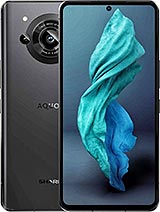
Aquos R7s
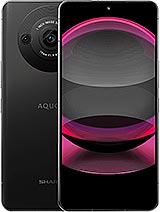
Aquos R8s Pro

Aquos R8 Pro
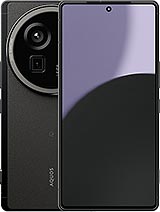
Aquos R9 pro
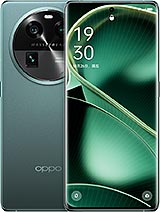
Find X6