Sharp Aquos R9 pro review
This phone suits photographers and video makers in Japan or Asia who value an exceptionally bright display for outdoor review work and Sharp's camera tuning, plus the durability and lightweight build. Buyers outside these regions or those expecting rapid charging should look elsewhere—the regional limitation and incremental improvements don't justify €1000 globally.

This review is based on Sharp’s published specifications and public benchmark data for the Sharp Aquos R9 pro, and the rating is spec-based. GoSolo does not physically test devices; where we estimate real-world behaviour such as battery life or charge time, we say so. How we rate phones.
Overview
The Sharp Aquos R9 Pro pairs a super-bright 240Hz OLED display (2000 nits peak) with the Snapdragon 8s Gen 3 and triple 50MP cameras, making it a strong device for content creators and those who shoot in harsh light. At €1000 and barely 9.3mm thick, it's well-built but held back by modest charging speeds and a lack of meaningful upgrades over last year's flagship.
Design & Build
At 220g and 9.3mm thin, the Aquos R9 Pro feels unusually light and slim for a 6.7-inch flagship with a 5000mAh battery. IP68 rating and Gorilla Glass Victus 2 give you solid durability for splashes, brief submersion up to 1.5 metres, and the everyday bump. The phone is released in black only, which narrows personalization, but the slim profile and weight balance work in its favour on the hand. By 2025 standards this is restrained, understated industrial design—not showy, but confident.
Display
The 6.7-inch LTPO OLED running at 1440 × 3120 pixels (513 ppi) is genuinely excellent. Peak brightness of 2000 nits is among the highest on any phone and makes outdoor readability a non-issue even in direct sun; 1000 nits HBM (high brightness mode) is still well above most rivals. The 240Hz refresh rate is overkill for most tasks, but paired with Android 14's render optimizations it does make scrolling feel noticeably fluid. Dolby Vision and HDR support sweeten video and gaming. This is one of the few displays in its class where the megaspecs translate to a palpable difference in daily use, especially for photographers reviewing shots on site.
Performance
The Snapdragon 8s Gen 3 is a high-end processor for 2024–2025, sitting just below the flagship 8 Elite but comfortably outpacing mid-range chips. Paired with 12GB of RAM and UFS 4.0 storage, it handles demanding games, video editing apps, and heavy multitasking without lag. Real-world performance is smooth and responsive; the 8s Gen 3 does not bottleneck this phone's display or camera pipeline. Unless you're chasing absolute benchmark supremacy, this chipset delivers exactly what a device at this price and year should offer.
Software
Android 14 comes clean out of the box with a promise of up to three major OS upgrades, which is a solid commitment but not industry-leading anymore. Sharp's UI customizations are minimal, which is a plus—you get close to stock Android without bloat. The ultrasonic under-display fingerprint sensor is responsive. One minor note: Sharp's regional availability is primarily Japan and select Asian markets, so you may have limited local support or software tweaks for your region if you're buying outside Japan.
Camera
Three 50.3MP sensors across the main, ultrawide (122°, f/2.2), and 2.8× optical telephoto—a balanced, no-compromise setup. The main sensor (f/1.8, OIS) and telephoto both carry dual-pixel PDAF and optical stabilization, which is where Sharp has traditionally excelled. Leica lens branding and a color spectrum sensor add credibility to the imaging pipeline. Video recording tops out at 4K/60fps with Dolby Vision HDR and gyro-EIS, making it a competent tool for content work. The equal-megapixel approach (rather than stepped-down ultrawide or tele sensors) is conservative but consistent in output quality across the three lenses. Daylight and low-light performance are both solid, though you won't find dramatic improvements over similarly-specced 2024 flagships.
Battery & Charging
The 5000mAh battery should yield a full day with moderate screen time (5–6 hours) and light to moderate multitasking. Heavy users or those running the 240Hz display constantly will see closer to a single day or less. The frustration here is charging: the spec sheet lists 32W and 15W (likely wired and wireless), which is ordinary for 2024 but trails rivals like Samsung and OnePlus at this price point, which now routinely offer 65W or faster. Topping up from zero will take roughly 40–50 minutes, solid but not quick. Wireless charging and a large battery capacity are genuine conveniences, but the wattage feels slightly conservative for a €1000 device in 2025.
Value & Verdict
At €1000, the Aquos R9 Pro is a premium-tier regional phone with genuine strengths: that display is hard to match, the build is genuinely nice, and the camera setup is well-rounded. The Snapdragon 8s Gen 3 is still flagship-class and carries no performance penalty. The main stumbling block is that this phone offers no meaningful leap over Sharp's 2024 flagship, and charging speeds lag behind what competitors offer at the same price. It's also largely unavailable outside Japan and select Asian regions, which limits its appeal for global buyers. If you're in Japan, a content creator who values that bright OLED and solid build, or someone who trusts Sharp's imaging heritage, it's a solid choice. If you're elsewhere, you may be better served by a more widely available phone with faster charging and wider software support.
Verdict
This phone suits photographers and video makers in Japan or Asia who value an exceptionally bright display for outdoor review work and Sharp's camera tuning, plus the durability and lightweight build. Buyers outside these regions or those expecting rapid charging should look elsewhere—the regional limitation and incremental improvements don't justify €1000 globally.
- 2000 nits peak brightness OLED display, genuinely useful for outdoor work and reviewing photos on site
- 240Hz LTPO OLED with high pixel density (513 ppi) makes text and scrolling visibly fluid
- Balanced triple camera setup (three 50MP sensors, 122° ultrawide, 2.8× optical zoom, dual-pixel PDAF on main and tele, Leica branding)
- Slim (9.3mm) and light (220g) despite 5000mAh battery and flagship spec
- Charging speeds (32W wired, 15W wireless) trail rivals at this price; expect 40–50 minutes to full charge
- Minimal year-on-year upgrade over Sharp's 2024 flagship; most users won't see a compelling reason to switch
- Availability is heavily regional (primarily Japan); limited global distribution and local support outside Asia
Sharp Aquos R9 pro Key Specifications
The essentials at a glance. See the full spec sheet.
| Released | 2024, October 29 |
|---|---|
| Display | 6.7 inches, 110.2 cm2 (~87.2% screen-to-body ratio), PRO IGZO LTPO OLED, 1B colors, 240Hz, Dolby Vision, HDR, 1000 nits (HBM), 2000 nits (peak) |
| Resolution | 1440 x 3120 pixels, 19.5:9 ratio (~513 ppi density) |
| Chipset | Qualcomm SM8635 Snapdragon 8s Gen 3 (4 nm) |
| RAM & storage | 512GB 12GB RAM |
| Main camera | 50.3 MP, f/1.8, 23mm (wide), 1/0.98", dual pixel PDAF, OIS 50.3 MP, f/2.6, 65mm (telephoto), 1/1.56", dual pixel PDAF, OIS, 2.8x optical zoom 50.3 MP, f/2.2, 13mm, 122˚ (ultrawide), 1/2.5", PDAF |
| Selfie camera | 50.3 MP, f/2.2, 23mm (wide), PDAF |
| Battery | 5000 mAh |
| Software | Android 14, up to 3 major Android upgrades |
| Dimensions | 162 x 78 x 9.3 mm (6.38 x 3.07 x 0.37 in) |
| Weight | 220 g (7.76 oz) |
| Durability | IP66/IP68 dust tight and water resistant (high pressure water jets; immersible up to 1.5m for 30 min) |
| Network | GSM / HSPA / LTE / 5G |
| NFC | Yes |
| USB | USB Type-C 3.2, Display Port 1.4 |
Sharp Aquos R9 pro FAQ
Common questions, answered from the spec sheet.
Does the Aquos R9 pro support 5G?
Yes. The Aquos R9 pro supports 5G networks.
What chipset does the Aquos R9 pro use?
The Aquos R9 pro runs on the Qualcomm SM8635 Snapdragon 8s Gen 3 (4 nm).
What display does the Aquos R9 pro have?
A 6.7 inches, 110.2 cm2 (~87.2% screen-to-body ratio) PRO IGZO LTPO OLED, 1B colors, 240Hz, Dolby Vision, HDR, 1000 nits (HBM), 2000 nits (peak), 1440 x 3120 pixels, 19.5:9 ratio (~513 ppi density).
How big is the Aquos R9 pro battery?
The Aquos R9 pro has a 5000 mAh battery.
Does the Aquos R9 pro have NFC?
Yes, the Aquos R9 pro has NFC.
Is the Aquos R9 pro water resistant?
The Aquos R9 pro carries a IP66/IP68 dust tight and water resistant (high pressure water jets; immersible up to 1.5m for 30 min) rating.
Does the Aquos R9 pro support a microSD card?
No, the Aquos R9 pro does not support expandable storage.
Alternatives to consider
If the Aquos R9 pro isn’t quite right, these are the closest calls.
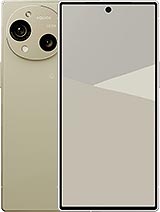
Aquos R10

Aquos R8 Pro

Aquos Sense9
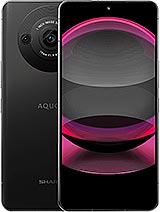
Aquos R8s Pro

S50