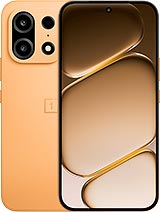
Sharp Aquos sense11 review
The Aquos sense11 makes sense for people who need a phone that can take a hit and last two days on a charge, without paying premium money or carrying a brick. It's less compelling if you prioritize fast charging, camera refinement, or gaming power—there are better options at the same price point for those priorities.
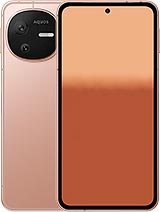
This review is based on Sharp’s published specifications and public benchmark data for the Sharp Aquos sense11, and the rating is spec-based. GoSolo does not physically test devices; where we estimate real-world behaviour such as battery life or charge time, we say so. How we rate phones.
Overview
The Sharp Aquos sense11 is a mid-range 5G phone built for durability and everyday reliability rather than raw power or camera flashiness. It delivers where it counts—a bright OLED display, long-haul battery, and rugged construction—making it a sensible choice for people who want a phone that lasts and doesn't demand constant babying, even if it won't blow you away on paper.
Design & build
Sharp has built a phone that feels like it was designed to survive a job site, not a marketing department. At 157 grams and 7.6mm thin, the Aquos sense11 sits at the practical edge of pocketability—light enough to carry all day, rigid enough that you won't hear creaks. The aluminum frame and glass back are competent materials, but the real story is what it's rated for: IP68/IP69 dust and water resistance (immersible to 1.5m for 30 minutes, plus resistance to high-pressure jets), MIL-STD-810H military durability, and a 1.2-meter drop rating. That constellation of certifications is typically found on rugged phones that weigh 200 grams and look like they're ready for a war, not consumer devices this thin. For people working outdoors or simply tired of worrying whether the phone survives a spill, this is the mid-range sweet spot. The side-mounted fingerprint sensor is a practical touch, faster and more reliable than under-display alternatives, especially with wet hands.
Display
The 6.2-inch LTPO IGZO OLED screen is the phone's quiet strength. At 416 ppi and 1080p, the resolution is not exceptional, but on OLED it's sharp enough that individual pixels stay invisible in normal use. The standout spec is brightness: 1500 nits in high brightness mode and 3000 nits peak put it in league with flagships for outdoor readability, a rarity at this price. The 240Hz refresh rate is smooth, though it won't deliver the perceptual jump of 120Hz on an LCD to 240Hz on OLED; the effect is more refinement than revelation. LTPO adaptive refresh should keep power draw reasonable when the screen isn't scrolling. For a mid-range phone, this display is genuinely well-executed: punchy colors from OLED, no brightness anxiety in direct sun, and fluid motion without the battery tax of a fixed 240Hz.
Performance
The Snapdragon 7s Gen 3 is a sensible match for this phone's mission. It's not a performance chipset—you won't match a flagship's 3D gaming or video rendering—but it handles everyday tasks (apps, multitasking, browsing, light gaming) without stutters. The Adreno 810 GPU keeps things smooth for content consumption. With 8GB or 12GB RAM (depending on storage tier) and UFS 3.1 storage, the system feels responsive, and the 12GB option gives headroom for heavier workflows. The practical ceiling is there if you're editing 4K video or running intensive games, but for the audience this phone targets—people who want reliability over bleeding-edge speed—it's adequate. Android 17 out of the box and a promise of four major OS updates is respectable software longevity, though not as generous as some competitors' six-year commitments.
Camera
Sharp's camera setup looks more impressive on a spec sheet than it performs in reality. The 50MP main sensor pairs a fast f/1.9 aperture with optical image stabilization, the kind of setup that should deliver low-light shots and clean details. But the sensor itself, at 1/1.55 inches, is modest—not in the category of the larger 1/1.3" or 1/1.1" modules flagship phones use, so computational photography and crop shots will feel softer. The 50MP ultrawide at 122 degrees and the 32MP selfie are both competent but unremarkable, with no telephoto to reach for zoom shots. In daylight, colors will be natural and exposure balanced, but don't expect the shadow recovery or selective blur that flagship processing extracts. For social media, documents, and travel snapshots, it's adequate. For detailed close-ups, challenging lighting, or any work that demands professional output, it won't surprise you. The spec appeal (dual 50MP, 122° field of view) masks a camera system that is straightforward, not exceptional.
Battery & charging
The 5000 mAh battery is generously sized and paired with an efficient chipset, so two full days of moderate to heavy use is realistic. That's one of the Aquos sense11's genuine strengths—you won't be hunting for a charger by evening or making anxiety trades between using the phone and preserving battery. Where Sharp dropped the ball is charging speed: 36W is respectable in 2024, but by late 2026, it's trailing. Rivals in the mid-range have moved to 60W, 80W, or beyond, so you're looking at an hour-plus to replenish from empty on a cable. The philosophy seems to be efficiency and longevity over quick top-ups, which suits the durable positioning but leaves a real-world gap if you need a fast charge before heading out.
Value & verdict-context
The Aquos sense11 targets a specific buyer: someone who values durability, long battery life, and dependable everyday performance over flagship specs or competitive positioning. It's not trying to be the fastest, the most feature-rich, or the best camera phone at any price. It's trying to be reliable, pocketable, and unbothered by water, dust, or the occasional drop. For that job, it's well-designed and honestly positioned. The price (not yet disclosed, but expected to position it in the mid-range) will determine whether it's a bargain or merely adequate. At comparable cost to other 5G mid-rangers with similar battery and processing power, it's a reasonable choice, especially for anyone working outdoors, using it in harsh conditions, or simply preferring longevity to trend-chasing. If you're after cutting-edge performance, flagship cameras, or warp-speed charging, look elsewhere.
Verdict
The Aquos sense11 makes sense for people who need a phone that can take a hit and last two days on a charge, without paying premium money or carrying a brick. It's less compelling if you prioritize fast charging, camera refinement, or gaming power—there are better options at the same price point for those priorities.
- Bright, smooth OLED display (1500 nits typical, 240Hz refresh) makes it genuinely usable in sunlight and responsive scrolling, rare in the mid-range
- Rugged enough for real-world abuse (IP68/IP69, MIL-STD-810H, survives 1.2m drops) without the bulk or premium pricing
- 5000 mAh battery with efficient Snapdragon 7s Gen 3 should deliver two full days of mixed use on a charge
- Side-mounted fingerprint sensor and compact 7.6mm frame keep it pocketable and one-handed
- Charging speed capped at 36W, slow by 2026 standards—expect an hour-plus to reach full from empty on a cable
- 50MP cameras on paper hide a modest 1/1.55" wide sensor; output will be competent but not distinctive, especially the 122° ultrawide
- Snapdragon 7s Gen 3 is capable but not cutting-edge; demanding games and high-end video work will show its limits versus flagships
Sharp Aquos sense11 Key Specifications
The essentials at a glance. See the full spec sheet.
| Released | 2026, November 17 |
|---|---|
| Display | 6.2 inches, 94.4 cm2 (~85.6% screen-to-body ratio), LTPO IGZO OLED, 1B colors, 240Hz, 1500 nits (HBM), 3000 nits (peak) |
| Resolution | 1080 x 2340 pixels, 19.5:9 ratio (~416 ppi density) |
| Chipset | Qualcomm SM7635 Snapdragon 7s Gen 3 (4 nm) |
| RAM & storage | 128GB 8GB RAM, 256GB 12GB RAM |
| Main camera | 50 MP, f/1.9, 23mm (wide), 1/1.55", dual pixel PDAF, OIS 50 MP, f/2.2, 13mm, 122˚ (ultrawide), 1/2.55", PDAF |
| Selfie camera | 32 MP, f/2.2, 25mm (wide) |
| Battery | 5000 mAh |
| Software | Android 17, up to 4 major OS updates |
| Dimensions | 151 x 73 x 7.6 mm (5.94 x 2.87 x 0.30 in) |
| Weight | 157 g (5.54 oz) |
| Build | Glass front, aluminum frame, aluminum back |
| Durability | IP68/IP69 dust tight and water resistant (high pressure water jets; immersible up to 1.5m for 30 min) MIL-STD-810H compliant Drop resistant up to 1.2m |
| Network | GSM / HSPA / LTE / 5G |
| NFC | Yes |
| USB | USB Type-C 3.2 |
Sharp Aquos sense11 FAQ
Common questions, answered from the spec sheet.
Does the Aquos sense11 support 5G?
Yes. The Aquos sense11 supports 5G networks.
What chipset does the Aquos sense11 use?
The Aquos sense11 runs on the Qualcomm SM7635 Snapdragon 7s Gen 3 (4 nm).
What display does the Aquos sense11 have?
A 6.2 inches, 94.4 cm2 (~85.6% screen-to-body ratio) LTPO IGZO OLED, 1B colors, 240Hz, 1500 nits (HBM), 3000 nits (peak), 1080 x 2340 pixels, 19.5:9 ratio (~416 ppi density).
How big is the Aquos sense11 battery?
The Aquos sense11 has a 5000 mAh battery.
Does the Aquos sense11 have NFC?
Yes, the Aquos sense11 has NFC.
Is the Aquos sense11 water resistant?
The Aquos sense11 carries a IP68/IP69 dust tight and water resistant (high pressure water jets; immersible up to 1.5m for 30 min) MIL-STD-810H compliant Drop resistant up to 1.2m rating.
Does the Aquos sense11 support a microSD card?
Yes, the Aquos sense11 supports expandable storage (microSDXC).
Alternatives to consider
If the Aquos sense11 isn’t quite right, these are the closest calls.
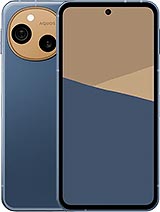
Aquos Sense10
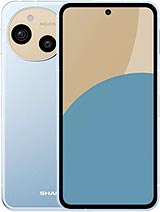
Aquos Sense9
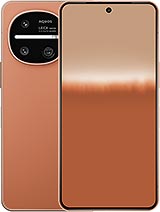
Aquos R11
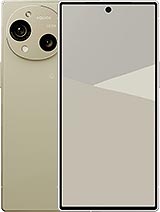
Aquos R10
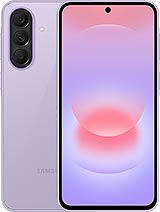
Galaxy A37