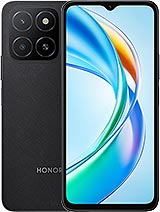
Sharp Aquos V7 Plus review
The Aquos V7 Plus is best suited to buyers in emerging markets who need a large, expandable phone for light daily use and are willing to tolerate a blurry screen and weak performance for the low price and compact form factor. Those who plan any gaming, multitasking, or photo editing should look elsewhere.

This review is based on Sharp’s published specifications and public benchmark data for the Sharp Aquos V7 Plus, and the rating is spec-based. GoSolo does not physically test devices; where we estimate real-world behaviour such as battery life or charge time, we say so. How we rate phones.
Overview
The Sharp Aquos V7 Plus is a large, light phone aimed at buyers who prioritize screen real estate and storage expansion over processing power or display clarity. At 180 EUR, it is a budget device with weak performance and a blurry 720p display that feels a generation behind for 2023.
Design & build
At 190 grams and 8.5mm thick, the Aquos V7 Plus is genuinely compact and light despite its 6.74-inch frame. The glass front, plastic frame, and plastic back keep it affordable but also make it feel less durable than rivals with metal frames. The side-mounted fingerprint sensor is quicker and more reliable than the in-display readers found on many budget competitors. For someone who values portability and one-handed reach over durability, this design makes sense at the price, though the plastic back will accumulate fingerprints and show wear.
Display
The 6.74-inch IPS LCD is genuinely large and the 90Hz refresh does make scrolling feel smoother than a standard 60Hz panel, but the 720p resolution at 260 ppi creates visible pixelation that undermines the experience. Text is blurry, app icons lack crispness, and photos appear soft. By 2023, even budget phones routinely shipped with 1080p or higher densities; this screen feels like a compromise too far. The 90Hz animation smoothness is nice for scrolling, but it cannot hide the fundamental lack of clarity that comes with low resolution on a large display.
Performance
The MediaTek Helio G37 is entry-level, designed for light daily tasks rather than sustained performance. Browsing, messaging, and basic apps work, but opening multiple apps or switching between them introduces lag. Gaming is restricted to older titles at low settings; modern games will stutter or simply refuse to run at playable frame rates. For 2023, this chipset represents a budget compromise, and buyers should be clear that demanding apps, heavy multitasking, or any creative work will feel sluggish. The 4GB or 6GB RAM pairing does not overcome the CPU bottleneck.
Software
The Aquos V7 Plus runs Android 13, which is standard for its July 2023 launch. Sharp's UI customization is minimal, so the experience is close to stock Android. However, the weak hardware means that even stock Android's animations and transitions can lag. Software updates are often sparse on budget Sharp devices, so you should expect this phone to fall behind on security patches and OS upgrades sooner than more established budget brands.
Camera
The rear 50MP sensor is a familiar spec-sheet play: it handles basic daylight shots adequately, but the lack of optical stabilization, weak processing, and low light struggle are typical of budget phones. The 2MP macro is nearly useless; it is a gimmick that rarely produces sharp images. The 8MP selfie camera is ordinary. Video maxes out at 1080p at 30fps, which is passable but not impressive. Overall, this camera system is a step behind rivals at the price; a 48MP main sensor with faster processing would serve better.
Battery & charging
The 5010 mAh battery provides about one full day of light to moderate use, though heavy usage drains it to evening. The spec sheet does not list charging wattage, which typically signals a slow charger—expect a standard 10W or 18W at best, meaning 2 to 3 hours for a full refill. The large screen and modest CPU help efficiency somewhat, but the lack of fast charging is a drawback when rivals at this price offer 33W or faster. For a phone you will use daily, the combination of slow charging and mid-tier battery capacity creates friction.
Value & verdict
At 180 EUR, the Aquos V7 Plus targets buyers in cost-sensitive markets who need a large screen and storage expansion without worrying about raw power. It delivers on size and expandability, but the blurry display and sluggish performance expose the compromises Sharp made to hit this price. For the same budget, competitors like Xiaomi or Samsung's entry lines offer sharper displays, faster processors, or better cameras. The Aquos V7 Plus suits someone who plans light browsing, messaging, and media consumption and values the physical experience—light weight, large screen, side fingerprint—over performance or display quality.
Verdict
The Aquos V7 Plus is best suited to buyers in emerging markets who need a large, expandable phone for light daily use and are willing to tolerate a blurry screen and weak performance for the low price and compact form factor. Those who plan any gaming, multitasking, or photo editing should look elsewhere.
- Large 6.74-inch screen with 85% screen-to-body ratio, making it genuinely useful for media and reading despite low resolution
- Expandable storage via microSD; the dual 128GB/256GB options with up to 1TB extra give flexibility for photos and offline content
- Lightweight and slim at 190g and 8.5mm, easy to hold and pocket compared to modern flagships
- Side-mounted fingerprint sensor is faster and more convenient than in-display alternatives on budget phones
- 260 ppi display is noticeably pixelated; text, icons, and photos lack sharpness even for a budget phone in 2023
- Helio G37 processor is weak for anything beyond light browsing and messaging; gaming and multitasking show lag and stuttering
- No charging speed specified and likely very slow, making the modest 5010 mAh battery feel slower to refill
Sharp Aquos V7 Plus Key Specifications
The essentials at a glance. See the full spec sheet.
| Released | 2023, July |
|---|---|
| Display | 6.74 inches, 109.7 cm2 (~85.4% screen-to-body ratio), IPS LCD, 90Hz |
| Resolution | 720 x 1600 pixels, 20:9 ratio (~260 ppi density) |
| Chipset | Mediatek MT6765 Helio G37 (12 nm) |
| RAM & storage | 128GB 4GB RAM, 256GB 6GB RAM |
| Main camera | 50 MP, (wide) 2 MP (macro) Auxiliary lens |
| Selfie camera | 8 MP |
| Battery | 5010 mAh |
| Software | Android 13 |
| Dimensions | 167.9 x 76.5 x 8.5 mm (6.61 x 3.01 x 0.33 in) |
| Weight | 190 g (6.70 oz) |
| Build | Glass front, plastic frame, plastic back |
| Network | GSM / HSPA / LTE |
| NFC | Yes |
| USB | USB Type-C 3.0 |
Sharp Aquos V7 Plus FAQ
Common questions, answered from the spec sheet.
Does the Aquos V7 Plus support 5G?
No. The Aquos V7 Plus tops out at GSM / HSPA / LTE, without 5G.
What chipset does the Aquos V7 Plus use?
The Aquos V7 Plus runs on the Mediatek MT6765 Helio G37 (12 nm).
What display does the Aquos V7 Plus have?
A 6.74 inches, 109.7 cm2 (~85.4% screen-to-body ratio) IPS LCD, 90Hz, 720 x 1600 pixels, 20:9 ratio (~260 ppi density).
How big is the Aquos V7 Plus battery?
The Aquos V7 Plus has a 5010 mAh battery.
Does the Aquos V7 Plus have NFC?
Yes, the Aquos V7 Plus has NFC.
Does the Aquos V7 Plus support a microSD card?
Yes, the Aquos V7 Plus supports expandable storage (microSDXC).
Alternatives to consider
If the Aquos V7 Plus isn’t quite right, these are the closest calls.

Aquos V6 Plus

Aquos V6 5G

Aquos wish4

Aquos wish3
Galaxy XCover 7