Sonim XP10 review
The XP10 is for outdoor crews, remote teams, and anyone whose phone needs to survive a construction site or wilderness job. If you work in an office and want a sleek, fast phone, buy a standard flagship. If you drop phones regularly or work in dust and water, the ruggedness and removable battery justify the price and the performance trade-off.
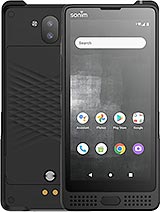
This review is based on Sonim’s published specifications and public benchmark data for the Sonim XP10, and the rating is spec-based. GoSolo does not physically test devices; where we estimate real-world behaviour such as battery life or charge time, we say so. How we rate phones.
Overview
The Sonim XP10 is a rugged workhorse built to survive the field: IP68/IP69K water and dust sealing, MIL-STD-810H drop rating, and a removable 5000mAh battery make it a genuine alternative to consumer phones for anyone who needs durability over finesse. The Snapdragon 480 5G and modest cameras won't excite enthusiasts, but the survivability and removable battery justify its €500 price for outdoor crews, remote teams, and anyone who treats their phone like a tool.
Design & build
The XP10 is unapologetically industrial. At 320 grams and 16.4mm thick, it's a brick, but that mass buys you something most phones lack: a chassis rated IP68/IP69K (fully sealed against dust, submersible to 2 meters for an hour, resistant to high-pressure water jets) and MIL-STD-810H certification (survives 2-meter drops). The nano-SIM dual-slot means you can keep two numbers active on a single device, valuable for field crews splitting personal and work lines. The removable battery, rare in 2023, is the real differentiator—your team can swap in a fresh cell mid-shift instead of hunting for a charger. Build quality feels industrial rather than refined, but that's the point: this phone is meant to be used hard, not shown off.
Display
The 5.5-inch IPS LCD with 1080×2160 resolution and 439ppi is adequately sharp for maps, documents, and site photos. Corning Gorilla Glass Victus protects the screen from scratches and minor impact, though an IPS panel can't match OLED's brightness or contrast in sunlight—a real drawback if you're squinting at blueprints outdoors. The 18:9 aspect ratio is tall and narrow, helpful for scrolling through job lists or logs without horizontal scrolling, but modern phones at this price usually push brighter, more contrasty panels. It's functional, not impressive.
Performance
The Snapdragon 480 5G is an entry-level chipset, and by 2023 standards it already lagged. With 6GB RAM and the Adreno 619 GPU, it handles day-to-day work—messaging, navigation, email, light video calls—without stuttering. Switching between apps feels responsive enough, and 128GB of UFS storage boots quickly. However, sustained tasks like editing photos, running data-heavy apps, or playing 3D games will expose the 480's limitations; expect thermal throttling and frame drops. For most field jobs (forms, calling, GPS logging), it's adequate. For anything beyond that, you'll feel the age of the chip. The two guaranteed major Android upgrades (from 12 to 13) is not aggressive for a 2023 device, though it reflects Sonim's focus on stability over bleeding-edge OS updates.
Software
Stock Android 12 at launch, upgradable to 13, with a promise of two major version jumps. Sonim's approach is to keep the OS lean and avoid heavy skins that would burden an entry-level chipset. This means fewer bloat apps and faster updates than some rivals, but also fewer vendor-specific tools or optimization. For a rugged device meant to run enterprise apps (fleet tracking, asset logging, work order systems), this minimalism is an asset. If you want customization or gaming-focused features, look elsewhere.
Camera
The rear stack is 50MP wide with PDAF and 8MP ultrawide, plus LED flash. In daylight, the main sensor captures detailed stills suitable for documenting job sites or damaged equipment. PDAF autofocus is faster than phase-based rivals, helpful when you're shooting one-handed or in poor conditions. The ultrawide lets you frame larger areas—useful for site photos—but the 8MP sensor means crops and digital zoom lose detail quickly. The 1080p@30fps video ceiling is a significant compromise in 2023; there's no 4K, no slow-motion, no modern codecs. For site documentation or quick clips, 1080p suffices, but you won't be editing polished videos. The 8MP selfie handles video calls adequately on a 5.5-inch screen.
Battery & charging
The removable 5000mAh Li-Ion battery is the star of this section. Wireless charging means you can top up overnight without hunting for a cable, and the ability to carry a spare battery (or swap one mid-day) is irreplaceable for field crews who can't babysit a charger. Real-world battery life, in typical use, runs about 6 to 8 hours of screen time before you need a swap or wireless charge; heavy workloads (GPS, constant calls, video) shorten this. The absence of fast wired charging (the spec sheet lists only wireless) means you can't grab 20% in five minutes, so overnight charging is assumed. For a rugged phone, this is realistic and forgivable, especially since the removable battery is your fallback.
Connectivity & value
5G sub-6 connectivity is present and functional where networks exist; LTE fallback is thorough, covering most global bands. Dual-SIM flexibility, Wi-Fi 802.11ac (not Wi-Fi 6E, so a slight step behind mainstream mid-range), Bluetooth 5.1, and multi-band GPS (L1+L5 with GALILEO, GLONASS, BDS) make it a solid choice for remote areas with poor coverage. NFC rounds out the connectivity suite. At €500, the XP10 is not a bargain for general consumers—a standard flagship costs less and offers faster performance and better cameras. But for a team that needs a phone to survive drops, water, and dust while keeping a removable battery, the total cost of ownership (fewer replacements, longer device lifetime, battery swaps instead of new phones) tips the scales. The question is whether durability is worth the compromise in performance and camera quality; for field workers and outdoor crews, it usually is.
Verdict
The XP10 is for outdoor crews, remote teams, and anyone whose phone needs to survive a construction site or wilderness job. If you work in an office and want a sleek, fast phone, buy a standard flagship. If you drop phones regularly or work in dust and water, the ruggedness and removable battery justify the price and the performance trade-off.
- IP68/IP69K water and dust resistance plus 2m drop rating and MIL-STD-810H compliance—actual ruggedness that field workers depend on
- Removable 5000mAh battery lets you swap in a fresh cell instead of losing power hours into a job site
- Wireless charging and 5G modem on a device meant for rough use, so you're not stuck with legacy connectivity or wired-only charging
- Dual-SIM, multi-band GPS (L1+L5), and 100dB+ stereo speakers make it practical for remote work and calling in poor coverage
- Snapdragon 480 5G is entry-level and already two generations old for a 2023 release, so sustained performance under heavy apps feels sluggish compared to mid-range peers
- 1080p video at 30fps only—no 4K, no slow-motion, no modern camera refinements beyond basic PDAF
- At 320g and 16.4mm thick, it's heavy and bulky even for a rugged phone, making it less pocket-friendly than unarmored alternatives
Sonim XP10 Key Specifications
The essentials at a glance. See the full spec sheet.
| Released | 2022, December 02 |
|---|---|
| Display | 5.5 inches, 78.1 cm2 (~62.6% screen-to-body ratio), IPS LCD |
| Resolution | 1080 x 2160 pixels, 18:9 ratio (~439 ppi density) |
| Chipset | Qualcomm SM4350 Snapdragon 480 5G (8 nm) |
| RAM & storage | 128GB 6GB RAM |
| Main camera | 50 MP, (wide), PDAF 8 MP, (ultrawide) |
| Selfie camera | 8 MP, (wide) |
| Battery | 5000 mAh |
| Charging | Wireless charging |
| Software | Android 12, upgradable to Android 13, up to 2 major Android upgrades |
| Dimensions | 161 x 77.5 x 16.4 mm (6.34 x 3.05 x 0.65 in) |
| Weight | 320 g (11.29 oz) |
| Durability | IP68/IP69K dust tight and water resistant (high pressure water jets; immersible up to 2m for 60 min) MIL-STD-810H compliant Drop resistant up to 2m |
| Network | GSM / HSPA / LTE / 5G |
| NFC | Yes |
| USB | USB Type-C, magnetic connector pins |
Sonim XP10 FAQ
Common questions, answered from the spec sheet.
Does the XP10 support 5G?
Yes. The XP10 supports 5G networks.
What chipset does the XP10 use?
The XP10 runs on the Qualcomm SM4350 Snapdragon 480 5G (8 nm).
What display does the XP10 have?
A 5.5 inches, 78.1 cm2 (~62.6% screen-to-body ratio) IPS LCD, 1080 x 2160 pixels, 18:9 ratio (~439 ppi density).
How big is the XP10 battery?
The XP10 has a 5000 mAh battery. Charging is rated at Wireless charging.
Does the XP10 have NFC?
Yes, the XP10 has NFC.
Is the XP10 water resistant?
The XP10 carries a IP68/IP69K dust tight and water resistant (high pressure water jets; immersible up to 2m for 60 min) MIL-STD-810H compliant Drop resistant up to 2m rating.
Does the XP10 support a microSD card?
Yes, the XP10 supports expandable storage (microSDXC).
Does the XP10 have a headphone jack?
No, the XP10 does not have a 3.5mm headphone jack.
Alternatives to consider
If the XP10 isn’t quite right, these are the closest calls.
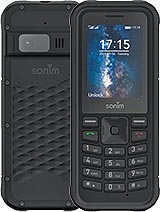
XP100
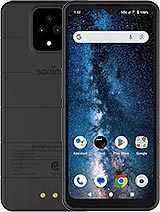
XP Pro
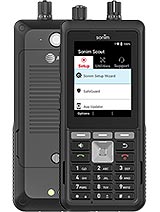
XP5plus
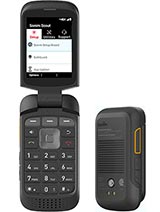
XP3plus
Galaxy A06