Sonim XP100 review
Buy this if you work outdoors in harsh or remote conditions where durability and a removable battery matter more than apps or a modern interface. If you spend most of your day indoors with WiFi and power access, or if you need any smartphone features at all, look elsewhere—this phone will simply slow you down.
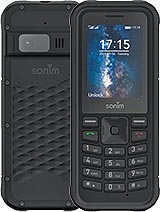
This review is based on Sonim’s published specifications and public benchmark data for the Sonim XP100, and the rating is spec-based. GoSolo does not physically test devices; where we estimate real-world behaviour such as battery life or charge time, we say so. How we rate phones.
Overview
The Sonim XP100 is a rugged feature phone built for workers in harsh environments or remote areas without reliable data, not a smartphone. It excels at durability and removable battery swaps but stumbles with a tiny 2.4-inch screen, ancient 64MB RAM, and no WiFi—making it a lifeline for construction sites or off-grid work, not an all-rounder.
Design & build
At 165 grams and 16.2mm thick, the XP100 feels built rather than crafted. The chassis meets MIL-STD-810H military standards and is rated IP68/IP69K—meaning it survives immersion to 1.5 meters for 30 minutes and withstands high-pressure water jets. For a worker exposed to rain, mud, or accidental dunks, this is not exaggeration; it is survival. The removable Li-Ion 1800 mAh battery is a genuine advantage in remote areas where charging infrastructure is sparse—swap in a spare and keep working. The trade-off is obvious: this phone feels industrial and chunky because it is industrial, and that aesthetic matters far less than the fact it will still ring after your competitor's smartphone is dead in a puddle.
Display
The 2.4-inch TFT LCD screen displays 240 by 320 pixels at roughly 167 ppi, which is low even by feature-phone standards. The pixel density is fine for reading SMS and call logs, and Gorilla Glass protects it from scratches. But this is not a device for reading websites or viewing photos. The screen-to-body ratio sits at about 20 percent, meaning vast bezels surround a tiny viewfinder. Modern budget smartphones routinely offer four or five-inch displays; the XP100 unapologetically rejects that. It is a deliberate choice for durability and simplicity, not an oversight.
Performance
The Unisoc T127 runs at 1.0 GHz with 64MB of RAM. This is entry-level hardware designed for voice calls, SMS, and basic radio apps, not for any modern smartphone tasks. There is no on-device app ecosystem to speak of. Tasks like switching between menu screens or dialing happen without lag—because there is nothing complex to run. Comparing this to a budget Android phone is apples to grenades; the XP100 operates in a different category entirely. If you try to force it into smartphone duty, you will be frustrated within minutes. If you need reliable connectivity and nothing more, the simplicity becomes a strength.
Connectivity & radio
The phone supports LTE, HSPA, and legacy GSM on dual Nano-SIM cards, covering most global networks. Bluetooth 5.0 works for basic accessories. But there is no WiFi and no GPS, which means you cannot fall back on WiFi calling or location services. In developed cities with blanket LTE coverage, this is rarely a problem. In remote mining camps, rural farmland, or areas where carrier choice is limited, the lack of WiFi becomes critical—you are entirely dependent on cellular signal. The FM radio tuner adds a tiny layer of utility in regions where broadcast radio still dominates or emergency information flows through local stations. For workers in structured environments, this is enough. For mobile professionals accustomed to always-on connectivity, it is a wall.
Camera
A 2MP fixed camera records basic video and snapshots. The output is low-resolution by any modern measure—suitable for proof-of-presence documentation or a quick reference photo, but not for sharing, printing, or detailed inspection work. There is no optical zoom, no multiple lenses, and no computational photography. This is the camera equivalent of the phone itself: does the job it was designed for (capture something happened here) and nothing more.
Battery & charging
The 1800 mAh removable battery will last roughly one to two days of light use, depending on network conditions and call volume. The real advantage is the removable design. Carry a spare battery and you swap it instantly without hunting for a charger or waiting for a cable. In a field office hundreds of kilometers from a power outlet, this is invaluable. The USB Type-C 2.0 port handles charging when you do have access to power, though no fast-charging figures are listed and the small capacity does not require them. Battery anxiety is essentially replaced by battery swapping; the trade-off favors workers over convenience seekers.
Value & verdict context
The XP100 launches in late 2024 at a time when even entry-level Android phones cost under $100 USD and offer vastly more capability. This phone targets a narrow slice: workers and professionals in harsh or remote environments where durability and removable battery outweigh modern features. Construction crews, mining operations, disaster recovery teams, and field researchers in areas with unreliable power will find it indispensable. If you work indoors, have WiFi and a charger nearby, or want to run any modern app or service, this phone will frustrate you. It is not a compromise device or a budget stepping stone; it is a tool designed for a specific job.
Verdict
Buy this if you work outdoors in harsh or remote conditions where durability and a removable battery matter more than apps or a modern interface. If you spend most of your day indoors with WiFi and power access, or if you need any smartphone features at all, look elsewhere—this phone will simply slow you down.
- Removable battery allows instant swaps in remote areas without chargers
- IP68/IP69K rating and MIL-STD-810H compliance survive job sites, water, and drops that destroy modern phones
- LTE and GSM connectivity on dual SIM cards with global band support
- Extremely lightweight at 165g with slim 16.2mm profile, practical for fieldwork
- No WiFi means absolute dependence on cellular signal; no fallback in dead-zone areas
- 64MB RAM and 1.0 GHz processor make even menu navigation feel sluggish compared to any modern device
- 2.4-inch screen with 20% body-to-screen ratio and 167 ppi makes reading and viewing impractical for anything beyond caller ID and basic text
Sonim XP100 Key Specifications
The essentials at a glance. See the full spec sheet.
| Released | 2024, October 24 |
|---|---|
| Display | 2.4 inches, 17.8 cm2 (~19.8% screen-to-body ratio), TFT LCD |
| Resolution | 240 x 320 pixels, 4:3 ratio (~167 ppi density) |
| Chipset | Unisoc T127 |
| RAM & storage | 128MB 64MB RAM |
| Main camera | 2 MP |
| Battery | 1800 mAh |
| Software | Android |
| Dimensions | 145 x 62 x 16.2 mm (5.71 x 2.44 x 0.64 in) |
| Weight | 165 g (5.82 oz) |
| Durability | IP68/IP69K dust tight and water resistant (high pressure water jets; immersible up to 1.5m for 30 min) MIL-STD-810H compliant LED flashlight |
| Network | GSM / HSPA / LTE |
| NFC | No |
| USB | USB Type-C 2.0 |
Sonim XP100 FAQ
Common questions, answered from the spec sheet.
Does the XP100 support 5G?
No. The XP100 tops out at GSM / HSPA / LTE, without 5G.
What chipset does the XP100 use?
The XP100 runs on the Unisoc T127.
What display does the XP100 have?
A 2.4 inches, 17.8 cm2 (~19.8% screen-to-body ratio) TFT LCD, 240 x 320 pixels, 4:3 ratio (~167 ppi density).
How big is the XP100 battery?
The XP100 has a 1800 mAh battery.
Does the XP100 have NFC?
No, the XP100 does not list NFC support.
Is the XP100 water resistant?
The XP100 carries a IP68/IP69K dust tight and water resistant (high pressure water jets; immersible up to 1.5m for 30 min) MIL-STD-810H compliant LED flashlight rating.
Does the XP100 support a microSD card?
Yes, the XP100 supports expandable storage (microSDXC).
Does the XP100 have a headphone jack?
Yes, the XP100 has a 3.5mm headphone jack.
Alternatives to consider
If the XP100 isn’t quite right, these are the closest calls.
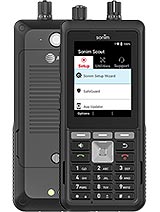
XP5plus
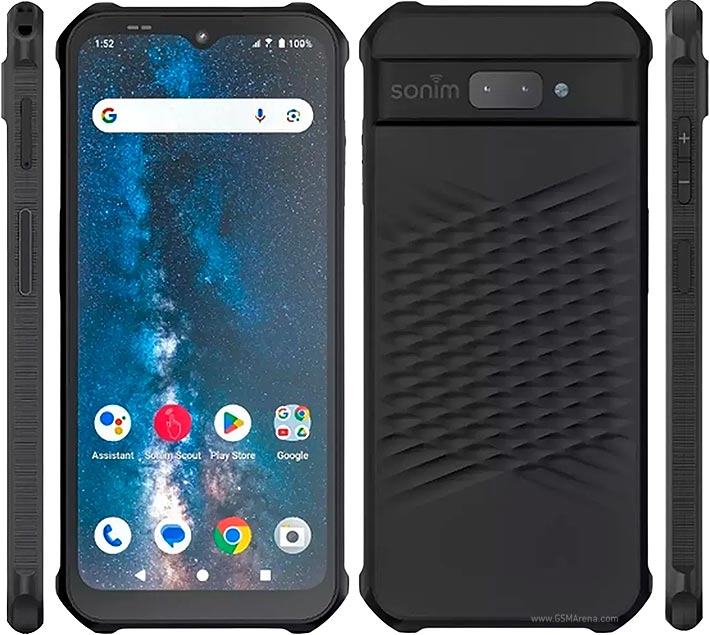
XP400
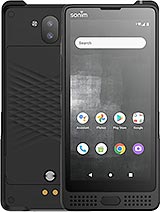
XP10
XP Pro

Y50 5G