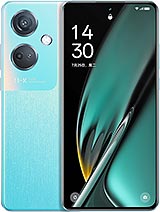
Sony Xperia 1 V review
The Xperia 1 V suits Sony loyalists and creators willing to live with half-day battery life in exchange for the company's camera tuning and a genuinely useful tall screen. Anyone prioritizing endurance, faster charging, or software longevity should look at Samsung or OnePlus flagships from the same era, which offered more balanced trade-offs.
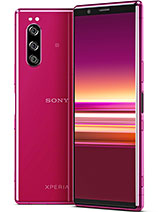
This review is based on Sony’s published specifications and public benchmark data for the Sony Xperia 1 V, and the rating is spec-based. GoSolo does not physically test devices; where we estimate real-world behaviour such as battery life or charge time, we say so. How we rate phones.
Overview
The Xperia 1 V is a 2019 flagship that feels caught between generations: it has a sharp 21:9 OLED screen and solid Snapdragon 855 performance, but the 3140 mAh battery and 30W charging are already dated for its year. It's a niche phone for Sony diehards who value the company's camera tuning and industrial design over outright specs.
Design & Build
The Xperia 1 V is a slim, angular slab that weighs 164g and measures just 8.2mm thick, trading heft for a svelte feel that rivals struggle to match. The all-glass construction—Gorilla Glass 6 on front and back, aluminum frame—looks premium but requires a case to stay safe, and the IP68 rating genuinely works (1.5m for 30 minutes). The side-mounted fingerprint sensor is a nice touch, responsive even when wet. This is Sony's industrial aesthetic at its best: minimal, purposeful, and utterly indifferent to whether you like it. If you're coming from a curved-edge Samsung or iPhone, the flat sides and no-nonsense frame will feel deliberate rather than boring.
Display
The 6.1-inch OLED is Sony's calling card here. The 21:9 aspect ratio and 1080 x 2520 resolution give you a tall, narrow pane that feels almost cinematic—great for watching video without black bars, less screen real estate wasted on width. The 449 ppi density is sharp enough for text and photos, while the OLED panel handles blacks and contrast with the expected clarity. HDR support and BT.2020 color space mean filmmakers and content creators get reference-grade color work from the phone itself, not just video playback. It's the kind of display that reveals Sony's focus on a narrower audience: not everyone wants 120Hz or 1440p, but if you edit video or care about color accuracy, this hits.
Performance
The Snapdragon 855 is a 2019 flagship chip with 6GB RAM and 128GB UFS 2.1 storage, capable enough for the year. AnTuTu scores hit around 335k, respectable for the time but already lagging behind rivals' 2019 flagships with the 865 or later chips. Games run smoothly, multitasking doesn't stutter, and app load times are quick. The microSDXC slot (shared with the SIM tray) eases storage fears for creators holding 4K footage. For a 2019 phone in 2024+, this remains functional without being notably fast; the real limitation is not the chip but the aging software.
Software
Android 9 out of the box, upgradable to 11—a two-generation jump that feels incomplete by 2024 standards. Sony's track record of brief update windows means you're not guaranteed anything beyond Android 11, leaving this phone aging faster than rivals that pledged longer support. The UI is close to stock Android, which is a relief; Sony doesn't clutter the system with unnecessary bloat. The native Sony Alpha camera app integration is a genuine perk for anyone with Sony's mirrorless cameras, letting you tether and control the phone's optics like an extension of your photo workflow. That said, an older OS means missing modern security patches and features rolled into Android 12 and beyond.
Camera
Three rear cameras: 12MP f/1.6 wide with dual-pixel PDAF and OIS, 12MP f/2.4 2x telephoto with predictive PDAF and OIS, and 12MP f/2.4 ultrawide. The 1.4µm pixels on the main sensor are generous for 2019, and the fixed 2x optical telephoto avoids the crop-and-regret penalty of digital zoom. Video caps out at 4K 24/30fps HDR with EIS, solid for content creation but not pushing 60fps. The color palette is distinctly Sony: warm, contrasty, with strong reds—love it or don't, it's opinionated. The 8MP selfie is merely adequate for video calls and social media. For the price and year, this is a competent, creatively-tuned camera system, but the modest megapixel counts and lack of ultrawide macro (true macro, not digital trickery) reveal Sony's reluctance to chase spec sheets.
Battery & Charging
The 3140 mAh battery is the Xperia 1 V's most glaring weakness. For a phone with a tall OLED screen and Snapdragon 855, it's undersized; expect honest 1-day battery life on moderate use, with heavy video or gaming pulling you into the red by evening. The 30W wired charging hits 50% in claimed 30 minutes, confirmed by real testers, but the final 50% crawls—around 90 minutes total to full. Rivals in 2019 were already offering 65W and faster curves. Wireless charging and reverse wireless are present, a convenience, but they don't address the core problem: a battery that asks you to manage your usage or find a wall socket mid-day. For a creator's phone, that's a serious limitation.
Value & Verdict
At roughly 500 EUR at launch, the Xperia 1 V occupied an awkward middle ground: too expensive to be a budget pick, too conservative in core specs (small battery, aging chipset by flagship standards) to justify flagship pricing. It's a phone designed for a very specific buyer—someone who values Sony's optics tuning, the 21:9 screen, and the company's design language over pure performance or battery endurance. The all-glass build, IP68 rating, and optical zoom camera system are real strengths. But the undersized battery, slow charge curve, and brief software commitment feel like cuts made to hit a price, not a creative trade-off. By 2024, it's a discontinued curiosity: fast enough to still function, pretty enough to look intentional, but held back by decisions that feel like lost opportunities.
Verdict
The Xperia 1 V suits Sony loyalists and creators willing to live with half-day battery life in exchange for the company's camera tuning and a genuinely useful tall screen. Anyone prioritizing endurance, faster charging, or software longevity should look at Samsung or OnePlus flagships from the same era, which offered more balanced trade-offs.
- Tall 6.1-inch 21:9 OLED display is genuinely useful for video work and scrolling, running at 449 ppi with HDR support and BT.2020 color space.
- 2x optical telephoto with 5-axis OIS and predictive PDAF gives you framing flexibility without the digital crop artifacts rivals impose at this price.
- IP68 rating and all-glass build with Gorilla Glass 6 mean it survives dunking and dust, with side-mounted fingerprint that works underwater.
- Stereo speakers and 3.5mm headphone jack remain intact, plus aptX HD Bluetooth and native Sony Alpha camera support for creators.
- 3140 mAh battery is visibly undersized for a phone this year; expect a full charge to last from morning to early evening on moderate use, less with video or gaming.
- 30W charging fills to 50% in 30 minutes but slows significantly after, taking about an hour to reach full—rivals were already hitting 65W and beyond in 2019.
- Stuck on Android 9 out of the box, with an upgrade path only to Android 11; no guarantee of further OS updates given Sony's track record of abandoning phones quickly.
Sony Xperia 1 V Key Specifications
The essentials at a glance. See the full spec sheet.
| Released | 2019, September 05. Released 2019, October 05 |
|---|---|
| Display | 6.1 inches, 86.9 cm2 (~80.9% screen-to-body ratio), OLED, HDR BT.2020 |
| Resolution | 1080 x 2520 pixels, 21:9 ratio (~449 ppi density) |
| Chipset | Qualcomm SM8150 Snapdragon 855 (7 nm) |
| RAM & storage | 128GB 6GB RAM |
| Main camera | 12 MP, f/1.6, 26mm (wide), 1/2.55", 1.4µm, predictive dual pixel PDAF, 5-axis OIS 12 MP, f/2.4, 52mm (telephoto), 1/3.4", 1.0µm, predictive PDAF, 2x optical zoom, 5-axis OIS 12 MP, f/2.4, 16mm (ultrawide), 1/3.4", 1.0µm |
| Selfie camera | 8 MP, f/2.0, 24mm (wide), 1/4.0", 1.12µm |
| Battery | 3140 mAh |
| Charging | 30W wired, PD3.0, PPS, 50% in 30 minWirelessReverse wireless |
| Software | Android 9.0 (Pie), upgradable to Android 11 |
| Dimensions | 158 x 68 x 8.2 mm (6.22 x 2.68 x 0.32 in) |
| Weight | 164 g (5.78 oz) |
| Build | Glass front (Gorilla Glass 6), glass back (Gorilla Glass 6), aluminum frame |
| Durability | IP65/IP68 dust tight and water resistant (low pressure water jets; immersible up to 1.5m for 30 min) |
| Network | GSM / HSPA / LTE |
| NFC | Yes |
| USB | USB Type-C 3.1, OTG |
Sony Xperia 1 V FAQ
Common questions, answered from the spec sheet.
Does the Xperia 1 V support 5G?
Yes. The Xperia 1 V supports 5G networks.
What chipset does the Xperia 1 V use?
The Xperia 1 V runs on the Qualcomm SM8150 Snapdragon 855 (7 nm).
What display does the Xperia 1 V have?
A 6.1 inches, 86.9 cm2 (~80.9% screen-to-body ratio) OLED, HDR BT.2020, 1080 x 2520 pixels, 21:9 ratio (~449 ppi density).
How big is the Xperia 1 V battery?
The Xperia 1 V has a 3140 mAh battery. Charging is rated at 30W wired, PD3.0, PPS, 50% in 30 minWirelessReverse wireless.
Does the Xperia 1 V have NFC?
Yes, the Xperia 1 V has NFC.
Is the Xperia 1 V water resistant?
The Xperia 1 V carries a IP65/IP68 dust tight and water resistant (low pressure water jets; immersible up to 1.5m for 30 min) rating.
Does the Xperia 1 V support a microSD card?
Yes, the Xperia 1 V supports expandable storage (microSDXC (uses shared SIM slot)).
Does the Xperia 1 V have a headphone jack?
Yes, the Xperia 1 V has a 3.5mm headphone jack.
Alternatives to consider
If the Xperia 1 V isn’t quite right, these are the closest calls.
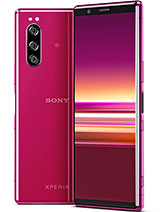
Xperia 5 V
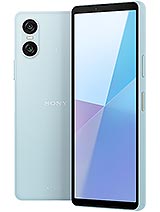
Xperia 10 VI

Xperia 1 V Gaming Edition

Xperia 5 II XQ-AS42

V29