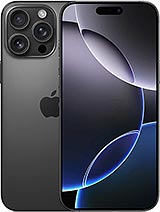
Sony Xperia 1 VI review
Buy this if you shoot stills or video regularly and value Sony's Zeiss optics and RAW workflow, or if you simply need a lightweight flagship that fits one hand. Everyone else—especially gamers or power users—should look at the Galaxy S24 Ultra or Pixel 9 Pro, which offer better value in performance, display, and sustained usability.
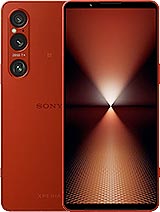
This review is based on Sony’s published specifications and public benchmark data for the Sony Xperia 1 VI, and the rating is spec-based. GoSolo does not physically test devices; where we estimate real-world behaviour such as battery life or charge time, we say so. How we rate phones.
Overview
The Xperia 1 VI is a narrow, light flagship with a flagship chip, pro-grade camera, and rare microSD slot—but the 1080p display and weak thermal management undercut its performance promise, and 30W charging lags its rivals. It's for Sony loyalists and stills photographers, not gaming or all-day users.
Design & build
At 192g and 8.2mm thin, this is genuinely one of the lightest flagships you'll find. The narrow 74mm frame means it sits naturally in one hand in a way most modern phones don't. Glass front and back with an aluminum ridge deliver the expected durability, and the IP68 rating (submersible to 1.5 meters) is solid enough for poolside use or accidentally dropping it in the sink. The trade-off is real: this thinness and lightness come with compromises elsewhere. The glass feels delicate compared to matte or metal-heavy designs, and that slim profile leaves little room for battery or thermal solutions—both of which the Xperia 1 VI genuinely needs.
Display
The 6.5-inch LTPO OLED panel is sharp enough for video playback and most apps, but 1080p at this diagonal is noticeably softer than the 1440p or higher you'll find on comparably priced flagships. Text and small UI elements look slightly blurred at arm's length, and if you've used a recent Samsung Galaxy or Oppo flagship, the downgrade is immediately obvious. The 120Hz refresh and HDR support are expected in this tier, and colors are accurate without being dramatic. For professional photo review or video work, the accuracy is valuable; for casual use, you're paying flagship money for a 2021-era display resolution.
Performance
The Snapdragon 8 Gen 3 is flagship-grade silicon and will handle anything you throw at it—for the first 15 to 20 minutes. Genshin Impact and Honkai Star Rail run at high settings initially, but sustained thermal throttling kicks in faster than on competitors with larger frames or better cooling. This is a real limitation if you game regularly or stream video for extended periods. Day-to-day tasks, multitasking, and app switching are effortless, and there's no stutter in daily use. But the slim chassis is working against the chip's potential here; Sony prioritized thinness over thermal headroom, and you feel that trade-off under load.
Software
Android 14 ships, with a promise of three major updates bringing you to Android 16. Sony's skin is light and relatively bloat-free compared to Samsung or Chinese brands, though it still adds a few proprietary apps you won't miss. No surprises here; it works, stays out of the way, and will remain current for several years.
Camera
This is where the Xperia 1 VI justifies its price. The 48MP main sensor with f/1.9 lens and Zeiss optics produces clean, color-accurate stills in good light, and OIS helps in dim conditions. The dual telephoto setup (3.5x and 7.1x continuous optical zoom) is rare and genuinely useful for wildlife, sports, or distant subjects without the resolution loss of digital zoom. The 123-degree ultrawide is roomy without distorting edges noticeably. Video capture at 4K 120fps with HDR is competitive, and the native Sony Alpha camera support means pros can import RAW files and adjust white balance or color science in Sony's ecosystem. This is a serious stills and video tool, not just a camera phone. For anyone doing creative work, the output is several levels above mainstream flagships.
Battery & charging
The 5000mAh battery is respectable on paper, but the slim chassis and small thermal mass mean you'll see about a day of typical mixed use before hitting red—less if you're gaming or streaming video for hours. 30W wired charging gets you to full in roughly 45 to 60 minutes, which is acceptable but lags behind rivals offering 65W, 80W, or faster. Wireless charging is present but glacially slow; if you're at an outlet, the wired path is worth it. The battery endurance rating (17:27h active use according to the spec sheet) aligns with what you'd expect from a 5000mAh phone with a flagship chip, though real-world variation depends heavily on network strength and display brightness.
Value & verdict-context
At €973, the Xperia 1 VI occupies an awkward middle ground. It costs as much as Samsung's Galaxy S24 Ultra or Google's Pixel 9 Pro, both of which offer higher display resolution, faster charging, and better sustained performance. Against Sony's own midrange Xperia 5 VI, you're paying roughly €300 more for the telephoto lenses and superior build materials—a real step up for photographers, but unjustifiable for casual users. The microSD slot is genuinely rare at this price and useful if you shoot video or install large games, but storage is already generous at 256GB base. The narrow, light design is nice to hold but serves form over function when the thermal management suffers for it. This phone makes sense if you're already in Sony's ecosystem, shoot stills or video regularly, or simply prefer a lightweight flagship in hand. Everyone else should crossshop the Galaxy S24 Ultra for better all-around performance, or the Pixel 9 Pro for better computational photography and software.
Verdict
Buy this if you shoot stills or video regularly and value Sony's Zeiss optics and RAW workflow, or if you simply need a lightweight flagship that fits one hand. Everyone else—especially gamers or power users—should look at the Galaxy S24 Ultra or Pixel 9 Pro, which offer better value in performance, display, and sustained usability.
- Zeiss camera system with dual telephoto (3.5x–7.1x) and clean RAW output—a serious tool for stills and video work.
- Lightweight and narrow (192g, 74mm frame) with genuine one-handed usability rare in modern flagships.
- microSD slot for storage expansion, a rarity at this price point and useful for video or large app libraries.
- 1080p display on a 6.5-inch screen feels soft compared to 1440p rivals at the same price; text and UI blur at arm's length.
- Thermal throttling after 15–20 minutes of heavy gaming or video despite flagship silicon; the slim chassis sacrifices cooling for thinness.
- 30W charging is slower than 65W–100W alternatives at this price; wireless charging is unusably slow.
Sony Xperia 1 VI Key Specifications
The essentials at a glance. See the full spec sheet.
| Released | 2024, May 15 |
|---|---|
| Display | 6.5 inches, 103.7 cm2 (~86.5% screen-to-body ratio), LTPO OLED, 1B colors, 120Hz, HDR BT.2020 |
| Resolution | 1080 x 2340 pixels, 19.5:9 ratio (~396 ppi density) |
| Chipset | Qualcomm SM8650-AB Snapdragon 8 Gen 3 (4 nm) |
| RAM & storage | 256GB 12GB RAM, 512GB 12GB RAM |
| Main camera | 48 MP, f/1.9, 24mm (wide), 1/1.35", 1.12µm, dual pixel PDAF, OIS 12 MP, f/2.3, 85mm (telephoto), f/3.5, 170mm (telephoto), 1/3.5", 1.0µm, dual pixel PDAF, 3.5x-7.1x continuous optical zoom, OIS, 4cm macro @ 120mm, no AF 12 MP, f/2.2, 16mm, 123˚ (ultrawide), 1/2.5", 1.4µm, dual pixel PDAF |
| Selfie camera | 12 MP, f/2.0, 24mm (wide), 1/2.9", 1.22µm |
| Battery | 5000 mAh |
| Charging | USB Power Delivery 3.0 up to 30 W, Wireless: Qi |
| Software | Android 14, upgradable to Android 16, up to 3 major Android upgrades |
| Dimensions | 162 x 74 x 8.2 mm (6.38 x 2.91 x 0.32 in) |
| Weight | 192 g (6.77 oz) |
| Build | Glass front (Gorilla Glass Victus 2), glass back (Gorilla Glass Victus), aluminum frame |
| Durability | IP65/IP68 dust tight and water resistant (low pressure water jets; immersible up to 1.5m for 30 min) |
| Network | GSM / HSPA / LTE / 5G |
| NFC | Yes |
| USB | USB Type-C 3.2, OTG, video output |
Sony Xperia 1 VI FAQ
Common questions, answered from the spec sheet.
Does the Xperia 1 VI support 5G?
Yes. The Xperia 1 VI supports 5G networks.
What chipset does the Xperia 1 VI use?
The Xperia 1 VI runs on the Qualcomm SM8650-AB Snapdragon 8 Gen 3 (4 nm).
What display does the Xperia 1 VI have?
A 6.5 inches, 103.7 cm2 (~86.5% screen-to-body ratio) LTPO OLED, 1B colors, 120Hz, HDR BT.2020, 1080 x 2340 pixels, 19.5:9 ratio (~396 ppi density).
How big is the Xperia 1 VI battery?
The Xperia 1 VI has a 5000 mAh battery. Charging is rated at USB Power Delivery 3.0 up to 30 W, Wireless: Qi.
Does the Xperia 1 VI have NFC?
Yes, the Xperia 1 VI has NFC.
Is the Xperia 1 VI water resistant?
The Xperia 1 VI carries a IP65/IP68 dust tight and water resistant (low pressure water jets; immersible up to 1.5m for 30 min) rating.
Does the Xperia 1 VI support a microSD card?
Yes, the Xperia 1 VI supports expandable storage (microSDXC (uses shared SIM slot; dual nano-SIM model only)).
Alternatives to consider
If the Xperia 1 VI isn’t quite right, these are the closest calls.
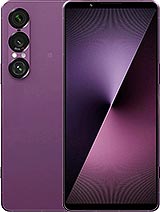
Xperia 1 VII
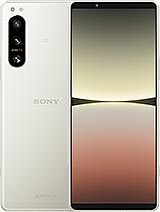
Xperia 5 IV
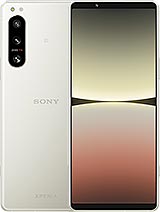
Xperia 1 IV

Xperia 1 V Gaming Edition
Galaxy Z Fold Special