Sony Xperia 1 VII review
This is for video creators and photo enthusiasts who shoot regularly and want a phone that stays light in hand while delivering optical and color tools rivals don't. If you prioritize screen sharpness, charging speed, or ultrawide angles, the price and compromises won't feel worth it.

This review is written with AI assistance from Sony’s published specifications and public benchmark data for the Sony Xperia 1 VII, and the rating is spec-based. GoSolo does not physically test devices; where we estimate real-world behaviour such as battery life or charge time, we say so. How we rate phones.
Overview
The Xperia 1 VII is Sony's answer to the cinematic phone: a 6.5-inch tall slab with Zeiss glass, a dual telephoto system that zooms smoothly without jumps, and color science tuned for video work. It's expensive and narrow, with a 1080p screen that misses the sharpness rivals offer at this price, but for someone who shoots video and stills seriously, the optical capabilities and build justify the cost.
Design & Build
At 8.2mm thick and 197g, the Xperia 1 VII feels light and pockets easily, a deliberate counterpoint to the tank-like slabs most flagships have become. The 19.5:9 aspect ratio is narrow and tall—a choice Sony has stuck with for years—and it makes the phone feel planted in one hand but awkward to reach across. The aluminum frame and Gorilla Glass Victus 2 front give it a solid feel, and IP68 rating means it survives full immersion to 1.5 meters. The back glass will scratch and crack like any other, and there's no practical reason for it to be there, but it plays into the premium aesthetic Sony is selling. Colors (Moss Green, Orchid Purple, Slate Black) are understated, which suits the design philosophy.
Display
The 6.5-inch LTPO OLED is smooth (120Hz) and color-accurate for photo and video work, but at 1080x2340 it is jarringly soft. At 396 ppi, individual pixels are visible when reading text or browsing web pages up close—a compromise that feels tired in 2025, when rivals at this price routinely deliver 1440p or higher. OLED contrast is excellent for HDR content and low-light viewing, and the adaptive refresh rate helps battery life, but the resolution gap is real and unavoidable. For a phone positioned as a creative tool, the screen feels like a cost-cutting measure.
Performance
The Snapdragon 8 Elite and Adreno 830 are top-tier silicon for this generation, handling everything from 4K video editing to demanding games at high framerates without lag. The AnTuTu score of 2,062,177 puts it among the fastest phones on the market. For video creators, this means you can edit 4K footage on the device itself, color-grade in real time, and offload to the cloud without bottleneck. RAM and storage are solid: 12GB is standard for flagship work, and the dual telephoto system's processing (especially the continuous zoom math) relies on CPU grunt that this chip delivers effortlessly. Performance is a strength, not a compromise.
Camera
The dual telephoto setup (85mm f/2.3 and 170mm f/3.5) with continuous 3.5x–7.1x optical zoom is the standout feature. Unlike phones that jump between fixed focal lengths (2x, 5x, 10x), Sony's implementation lets you zoom smoothly mid-video or during photo capture, a workflow advantage for professional video work. The 48MP f/1.9 wide sensor captures sharp, well-exposed shots in daylight and low light, and the 48MP ultrawide rounds out the toolkit. Zeiss optics and T* coatings are real—flare is minimal, color fringing is controlled, and the built-in color spectrum sensor helps with white balance on set. The macro mode at 120mm (4cm focus) is a novelty more than a daily tool. Video quality at up to 120fps 4K with OIS is strong, though rivals now offer higher resolution 8K at flagship prices, and the 12MP selfie is basic. If you shoot video seriously, the zoom system alone justifies the phone; if you prioritize ultrawide coverage or computational nightmode, look elsewhere.
Battery & Charging
The 5000mAh battery nets about 6–7 hours of screen-on time with mixed use (messaging, social, video), and longer if you avoid heavy gaming or 4K recording. That is typical for flagships this size, though power users will reach dinner needing a charge. Charging at 30W hits 50% in 30 minutes, which is respectable as a top-up but slow by 2025 standards—rivals at this price now hit 100W or more, cutting the same battery to near-full in 20 minutes. The 15W wireless and reverse wireless charging are conveniences, not differentiators. Fast wired charging would have softened the battery compromise; at 30W it feels like an oversight.
Software & Features
Android 15 with a promise of four major OS upgrades gives you long-term support, which Sony has historically delivered. The side-mounted fingerprint sensor is fast and reliable. Native Sony Alpha camera support is a niche win for hybrid photo-video workflows—you can tether the phone to a Sony camera or import raw files and edit them with phone-optimized color science. Wi-Fi 7, Bluetooth 6.0 with aptX Lossless, and LE Audio round out the connectivity story. No headphone jack (expected for 2025) and no FM radio (irrelevant for most). The experience is standard Android in Sony's light skin.
Value & Verdict Context
At €1,607, the Xperia 1 VII costs as much as a high-end iPad or a decent mirrorless camera. The Snapdragon 8 Elite and the zoom system justify some of that, but the 1080p screen is a hard sell at this price. Rivals offer faster charging, sharper displays, and more computational power for less. The Xperia 1 VII is built for a specific buyer: someone who shoots video and stills on phone regularly, values optical zoom over raw sensor size, and trusts Zeiss color science over AI processing. If you fit that profile and can handle the narrow aspect ratio and soft screen, it is the right tool. If you want a general-purpose flagship with the best display and fastest charging for the money, this is not it.
Verdict
This is for video creators and photo enthusiasts who shoot regularly and want a phone that stays light in hand while delivering optical and color tools rivals don't. If you prioritize screen sharpness, charging speed, or ultrawide angles, the price and compromises won't feel worth it.
- Dual telephoto with continuous 3.5x–7.1x optical zoom, no traditional zoom steps
- Zeiss Optics and color science tuned for video production; 4K recording at up to 120fps with OIS
- Snapdragon 8 Elite handles 4K video editing and demanding apps without stutter
- Slim and light at 8.2mm and 197g, with IP68 water resistance and premium glass-aluminum build
- 1080x2340 resolution (396 ppi) is soft and dated—rivals at this price hit 1440p or better, making text and UI blurry up close
- 30W charging is slow for the 5000mAh battery; competitors now offer 100W+, meaning longer waits between shots
- €1,607 is a lot for a phone whose screen and raw performance don't match its cost; you are paying for the lens system and color science, not flagship parity everywhere
Sony Xperia 1 VII Key Specifications
The essentials at a glance. See the full spec sheet.
| Released | 2025, May 13 |
|---|---|
| Display | 6.5 inches, 103.7 cm2 (~86.5% screen-to-body ratio), LTPO OLED, 1B colors, 120Hz, HDR BT.2020 |
| Resolution | 1080 x 2340 pixels, 19.5:9 ratio (~396 ppi density) |
| Chipset | Qualcomm SM8750-AB Snapdragon 8 Elite (3 nm) |
| RAM & storage | 256GB 12GB RAM, 512GB 12GB RAM |
| Main camera | 48 MP, f/1.9, 24mm (wide), 1/1.35", 1.12µm, dual pixel PDAF, OIS 12 MP, f/2.3, 85mm (telephoto), f/3.5, 170mm (telephoto), 1/3.5", 1.0µm, dual pixel PDAF, 3.5x-7.1x continuous optical zoom, OIS, 4cm macro @ 120mm, no AF 48 MP, f/2.0, 16mm (ultrawide), 1/1.56", 1.0µm, PDAF |
| Selfie camera | 12 MP, f/2.0, 24mm (wide), 1/2.9", 1.22µm |
| Battery | 5000 mAh |
| Charging | 30W wired, PD3.0, PPS, 50% in 30 min15W wirelessReverse wireless |
| Software | Android 15, up to 4 major Android upgrades |
| Dimensions | 162 x 74 x 8.2 mm (6.38 x 2.91 x 0.32 in) |
| Weight | 197 g (6.95 oz) |
| Build | Glass front (Gorilla Glass Victus 2), glass back (Gorilla Glass Victus), aluminum frame |
| Durability | IP65/IP68 dust tight and water resistant (low pressure water jets; immersible up to 1.5m for 30 min) |
| Network | GSM / HSPA / LTE / 5G |
| NFC | Yes |
| USB | USB Type-C 3.2, OTG, video output |
Sony Xperia 1 VII FAQ
Common questions, answered from the spec sheet.
Does the Xperia 1 VII support 5G?
Yes. The Xperia 1 VII supports 5G networks.
What chipset does the Xperia 1 VII use?
The Xperia 1 VII runs on the Qualcomm SM8750-AB Snapdragon 8 Elite (3 nm).
What display does the Xperia 1 VII have?
A 6.5 inches, 103.7 cm2 (~86.5% screen-to-body ratio) LTPO OLED, 1B colors, 120Hz, HDR BT.2020, 1080 x 2340 pixels, 19.5:9 ratio (~396 ppi density).
How big is the Xperia 1 VII battery?
The Xperia 1 VII has a 5000 mAh battery. Charging is rated at 30W wired, PD3.0, PPS, 50% in 30 min15W wirelessReverse wireless.
Does the Xperia 1 VII have NFC?
Yes, the Xperia 1 VII has NFC.
Is the Xperia 1 VII water resistant?
The Xperia 1 VII carries a IP65/IP68 dust tight and water resistant (low pressure water jets; immersible up to 1.5m for 30 min) rating.
Does the Xperia 1 VII support a microSD card?
Yes, the Xperia 1 VII supports expandable storage (microSDXC (uses shared SIM slot; dual nano-SIM model only)).
Does the Xperia 1 VII have a headphone jack?
Yes, the Xperia 1 VII has a 3.5mm headphone jack.
Alternatives to consider
If the Xperia 1 VII isn’t quite right, these are the closest calls.
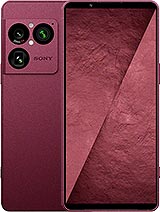
Xperia 1 VIII
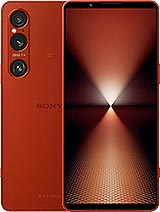
Xperia 1 VI
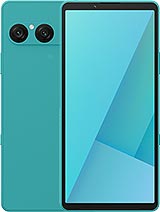
Xperia 10 VII

Xperia 1 V Gaming Edition
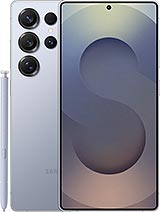
Galaxy S25 Ultra