Sony Xperia 10 V review
This phone suits someone who prioritizes portability and a comfortable grip over raw speed and battery longevity, and who shoots mostly in daylight. Anyone expecting zippy performance, extended endurance, or long-term software support should look at rivals that offer better balance in at least one of those areas.
This review is based on Sony’s published specifications and public benchmark data for the Sony Xperia 10 V, and the rating is spec-based. GoSolo does not physically test devices; where we estimate real-world behaviour such as battery life or charge time, we say so. How we rate phones.
Overview
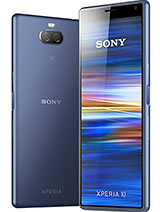
The Xperia 10 V is a lightweight, water-resistant phone with an unusually tall 21:9 screen—better suited to reading and scrolling than it is to gaming or heavy work. For 2019 money, it delivered solid midrange performance and decent daylight photography, but the Snapdragon 630 feels dated even for its time, and the 2870 mAh battery is stingy.
Design & build
At 162 grams and 8.4 mm thin, this phone is genuinely light and pocketable by 2019 standards. The glass-front-plastic-back combo is familiar and sensible, and the IP65/IP68 rating means it tolerates dust and brief dunking up to 1.5 meters for half an hour—practical peace of mind for an affordable device. The standout is the form factor: a 21:9 screen squeezed into a body that feels narrow and easy to grip one-handed, though that tall aspect ratio is a personal choice, not an objective win. If you find modern phones unwieldy, this one's genuinely easier to hold.
Display
The 6-inch IPS LCD with 1080 by 2520 resolution and 21:9 aspect ratio yields 457 ppi—sharp enough for text and web at arm's length, not eye-popping, but Sonys Triluminos tweaking adds pleasant color saturation for photos and video. The tall ratio makes the screen feel almost like a window when reading or scrolling social media; websites and feeds reflow well without the typical left-right pan. Brightness and color accuracy are competent rather than exceptional, and the IPS panel doesn't match the contrast depth of OLED, but for everyday viewing it's a genuinely useful screen, not a compromise.
Performance
The Snapdragon 630 is mainstream midrange for 2019—good enough for apps, messaging, light browsing, and casual gaming, but not impressive by any measure. With 3 or 4 GB of RAM depending on variant, you'll notice lag in heavy apps and multitasking. Demanding games like Genshin Impact won't run smoothly on high settings, and even moderate 3D titles will demand graphics cuts. For someone checking email, scrolling Reddit, and taking photos, it's fine; for anyone expecting snappy desktop-class speed, it's a disappointment. The Antutu score of around 90k places it well below even budget flagships of that era.
Software
The phone launched on Android 9 Pie, which is two major versions behind Android 11 as of 2021. For a device that cost about 280 EUR, Sony was notably stingy with OS updates; many rivals at that price got three years of support or more. The lack of timely software updates is a real liability in the long term, especially if you care about security patches and feature improvements. That said, Android 9 is still functional today, and the phone's modest hardware won't struggle with it the way a flagship would with older software.
Camera
The 13 MP main camera with f/2.0 aperture and PDAF is solid for daylight and well-lit indoor shots; the 1.12 µm pixels are small, which limits low-light performance compared to phones with larger sensors. You get 4K video at 30 fps, which is fine for casual recording but feels dated against rivals offering 60 fps or higher bitrates. The 8 MP selfie camera is basic and sufficient. Sony's color rendering tends toward warmth, which many people prefer, but there's no ultra-wide lens or telephoto zoom here—just the main camera and a selfie camera. By 2019 standards, this is a respectable set, not a highlight.
Battery & charging
The 2870 mAh battery is small, even for 2019. In mixed daily use—browsing, messaging, a few photos—you might stretch it to evening before needing a charge, but video watching or gaming will drain it noticeably faster. The phone supports USB Power Delivery and Quick Charge, but exact charge times aren't specified in the sheet; 18W charging is reasonable but not fast by rivals' standards. Battery life is the phone's weakest area and a real consideration if you spend long days away from a charger.
Value & verdict
In 2019, the Xperia 10 V occupied an odd niche: lightweight, water-resistant, and pleasantly narrow, but with midrange performance and a stingy battery. At about 280 EUR, it asked you to care more about form and durability than speed or camera prowess. Today, as a used or refurbished device, it might appeal to someone who values portability and one-handed use above all else, or who already prefers Sony's interface and color science. But for most buyers even then, rivals offered faster chips, bigger batteries, or better cameras for similar money. The phone does what it claims—it's a slim, water-resistant device with a useful tall screen—but those strengths address niche priorities.
Verdict
This phone suits someone who prioritizes portability and a comfortable grip over raw speed and battery longevity, and who shoots mostly in daylight. Anyone expecting zippy performance, extended endurance, or long-term software support should look at rivals that offer better balance in at least one of those areas.
- Compact, lightweight frame (162g) and narrow width make it genuinely easy to hold and carry one-handed
- IP65/IP68 water and dust resistance gives practical durability without bulk
- The 21:9 tall screen is excellent for reading, messaging, and scrolling without excessive width
- The Snapdragon 630 and 3–4 GB RAM feel underpowered even by 2019 midrange standards; noticeably sluggish in demanding apps and games
- 2870 mAh battery is meager and won't reliably last a full day with moderate-to-heavy use
- Stingy with software updates (launched on Android 9, which fell behind quickly)
Sony Xperia 10 V Key Specifications
The essentials at a glance. See the full spec sheet.
| Released | 2019, February 25. Released 2019, February 27 |
|---|---|
| Display | 6.0 inches, 84.1 cm2 (~79.3% screen-to-body ratio), IPS LCD |
| Resolution | 1080 x 2520 pixels, 21:9 ratio (~457 ppi density) |
| Chipset | Qualcomm SDM630 Snapdragon 630 (14 nm) |
| RAM & storage | 64GB 3GB RAM, 64GB 4GB RAM |
| Main camera | 13 MP, f/2.0, 27mm (wide), 1/3.1", 1.12µm, PDAF Auxiliary lens |
| Selfie camera | 8 MP, f/2.0, 24mm (wide), 1/4.0", 1.12µm |
| Battery | 2870 mAh |
| Charging | Wired, PD, QC |
| Software | Android 9.0 (Pie) |
| Dimensions | 156 x 68 x 8.4 mm (6.14 x 2.68 x 0.33 in) |
| Weight | 162 g (5.71 oz) |
| Build | Glass front (Gorilla Glass 5), plastic back, plastic frame |
| Durability | IP65/IP68 dust tight and water resistant (low pressure water jets; immersible up to 1.5m for 30 min) |
| Network | GSM / HSPA / LTE |
| NFC | Yes |
| USB | USB Type-C 2.0, OTG |
Sony Xperia 10 V FAQ
Common questions, answered from the spec sheet.
Does the Xperia 10 V support 5G?
Yes. The Xperia 10 V supports 5G networks.
What chipset does the Xperia 10 V use?
The Xperia 10 V runs on the Qualcomm SDM630 Snapdragon 630 (14 nm).
What display does the Xperia 10 V have?
A 6.0 inches, 84.1 cm2 (~79.3% screen-to-body ratio) IPS LCD, 1080 x 2520 pixels, 21:9 ratio (~457 ppi density).
How big is the Xperia 10 V battery?
The Xperia 10 V has a 2870 mAh battery. Charging is rated at Wired, PD, QC.
Does the Xperia 10 V have NFC?
Yes, the Xperia 10 V has NFC.
Is the Xperia 10 V water resistant?
The Xperia 10 V carries a IP65/IP68 dust tight and water resistant (low pressure water jets; immersible up to 1.5m for 30 min) rating.
Does the Xperia 10 V support a microSD card?
Yes, the Xperia 10 V supports expandable storage (microSDXC (uses shared SIM slot)).
Does the Xperia 10 V have a headphone jack?
Yes, the Xperia 10 V has a 3.5mm headphone jack.
Alternatives to consider
If the Xperia 10 V isn’t quite right, these are the closest calls.

Xperia Ace II SO-41B

Xperia Ace III SO-53C

Xperia Ace III SOG08

Xperia Ace III
Galaxy XCover 7