T-Mobile REVVL 7 review
The T-Mobile REVVL 7 is a 2017 relic with no place in 2026. Do not buy it. If you somehow inherit or own one, it is a stopgap only—a phone that can make calls and send texts, but nothing more, and not even safely.
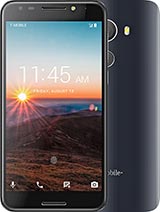
This review is based on T-Mobile’s published specifications and public benchmark data for the T-Mobile REVVL 7, and the rating is spec-based. GoSolo does not physically test devices; where we estimate real-world behaviour such as battery life or charge time, we say so. How we rate phones.
Overview
The T-Mobile REVVL 7 is a 2017 budget phone with a 5.5-inch 720p LCD and 2GB RAM that feels slow by modern standards, though the 3000mAh battery and microUSB charging are deeply dated for any era. It's been discontinued and was never a phone worth buying new; anyone holding one now should not expect it to last much longer.
Design & build
At 157.9g and 8.4mm thick, the REVVL 7 is genuinely compact and light by today's standards, a quality now rare among budget phones. The 5.5-inch footprint fits easily in a pocket. The spec sheet does not detail the build materials, but the overall frame feels utilitarian rather than durable. For 2017, this sizing was unremarkable; now, it is almost quaint.
Display
The 5.5-inch IPS LCD panel with 720 x 1280 resolution delivers 267 ppi density, which is adequate but noticeably soft compared to modern budget screens. At this density, text and icons appear slightly fuzzy at arm's length, and scrolling feels sluggish. No brightness figures are provided, so outdoor visibility is unclear, but 720p on a 5.5-inch screen in 2017 was already a compromise, and it has aged worse. There is no mention of any refresh rate beyond 60Hz, which means scrolling will feel choppy against anything from the last five years.
Performance
The MediaTek MT6738 quad-core clocked at 1.5GHz with Mali-T860MP2 graphics is a low-end entry-level chipset, even for 2017. With only 2GB of RAM, multitasking is strained; opening more than two or three apps simultaneously often triggers forced closures or stuttering. Gaming is restricted to lightweight titles; any modern game will either not run or will crawl at low settings. Email, messaging, and light web browsing work but feel deliberate rather than snappy. By 2026 standards, this hardware is nearly unusable.
Software
The phone shipped with Android 7.0 Nougat in August 2017 and has since been discontinued. No update path exists; it is stuck on a nine-year-old OS. This is not merely outdated—it is a security liability. Modern apps increasingly require Android 8 or 9 as a minimum, and many refuse to run at all. The fingerprint sensor works, but there is no guarantee of ongoing support for any authentication mechanism. Running this phone for any sensitive task—banking, email, password managers—is irresponsible.
Camera
The 13MP main camera with autofocus and LED flash could capture passable daylight photos in 2017. There is no stated aperture, sensor size, or detail on processing, so concrete day-to-day performance is unclear, but a 13MP sensor from that era typically produces acceptable shots under good light and soft or grainy results indoors. The 5MP front camera was standard for the budget tier in 2017 and is useless by today's standards. Video maxes out at 1080p@30fps, which is technically 1080p but sluggish. The hardware is wholly outpaced by modern budget phones, which ship with 50MP sensors and better computational imaging.
Battery & charging
The 3000mAh battery is miserly. In 2017, this was borderline acceptable; now it is a red flag. Light use—messaging, calls, light browsing—might stretch to a full day; moderate use including social media and some video will require a charge by evening. The 15W wired charging is glacially slow by any standard, past or present. A full charge from empty takes about 2 to 3 hours, making it impractical to top up during a workday. There is no fast charging technology that would have made this acceptable even in 2017.
Value & verdict-context
This phone is discontinued, obsolete, and should not be purchased new or used. If you own one, it is a liability masquerading as a device. The security posture is indefensible; the performance is frustrating; the battery is exhausting. For the price of a budget phone today (often 100–150 EUR), you gain a far more capable, current, and secure device. The compact size and stereo speakers are genuine conveniences, but they do not redeem a phone that is no longer receiving patches or support. Only keep this phone if you have no other option, and replace it at the earliest opportunity.
Verdict
The T-Mobile REVVL 7 is a 2017 relic with no place in 2026. Do not buy it. If you somehow inherit or own one, it is a stopgap only—a phone that can make calls and send texts, but nothing more, and not even safely.
- Compact 5.5-inch body and lightweight (157.9g) make it pocketable and comfortable for long use
- Stereo speakers and 3.5mm jack still present
- MicroSDXC card slot for storage expansion
- Rear fingerprint sensor was a standard convenience in 2017
- Android 7.0 from 2017 is deeply outdated; no security patches or OS updates available, making it a security risk
- Only 2GB RAM and a quad-core 1.5GHz MediaTek MT6738 struggle with basic multitasking and modern apps
- 3000mAh battery with 15W charging is inadequate even by 2017 standards; the phone will not hold a day of moderate use
T-Mobile REVVL 7 Key Specifications
The essentials at a glance. See the full spec sheet.
| Released | 2017, August. Released 2017, August |
|---|---|
| Display | 5.5 inches, 83.4 cm2 (~71.3% screen-to-body ratio), IPS LCD |
| Resolution | 720 x 1280 pixels, 16:9 ratio (~267 ppi density) |
| Chipset | Mediatek MT6738 |
| RAM & storage | 32GB 2GB RAM |
| Main camera | 13 MP, AF |
| Selfie camera | 5 MP |
| Battery | 3000 mAh |
| Charging | 15W wired, PD3.0, QC3 |
| Software | Android 7.0 (Nougat) |
| Dimensions | 151.9 x 77 x 8.4 mm (5.98 x 3.03 x 0.33 in) |
| Weight | 157.9 g (5.64 oz) |
| Network | GSM / HSPA / LTE |
| NFC | No |
| USB | microUSB 2.0 |
T-Mobile REVVL 7 FAQ
Common questions, answered from the spec sheet.
Does the REVVL 7 support 5G?
Yes. The REVVL 7 supports 5G networks.
What chipset does the REVVL 7 use?
The REVVL 7 runs on the Mediatek MT6738.
What display does the REVVL 7 have?
A 5.5 inches, 83.4 cm2 (~71.3% screen-to-body ratio) IPS LCD, 720 x 1280 pixels, 16:9 ratio (~267 ppi density).
How big is the REVVL 7 battery?
The REVVL 7 has a 3000 mAh battery. Charging is rated at 15W wired, PD3.0, QC3.
Does the REVVL 7 have NFC?
No, the REVVL 7 does not list NFC support.
Does the REVVL 7 support a microSD card?
Yes, the REVVL 7 supports expandable storage (microSDXC (dedicated slot)).
Does the REVVL 7 have a headphone jack?
Yes, the REVVL 7 has a 3.5mm headphone jack.
Alternatives to consider
If the REVVL 7 isn’t quite right, these are the closest calls.
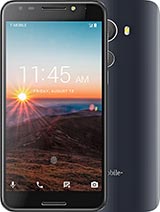
REVVL 6
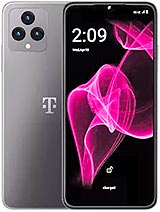
REVVL 6x
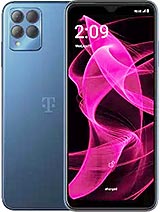
REVVL 6x Pro
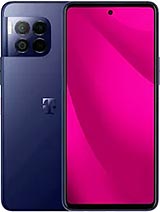
REVVL 7 Pro
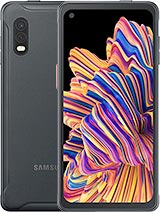
Galaxy XCover 7 Pro