TCL NXTpaper 11 Plus review
This device is for people who read and take notes for hours at a time and need a charge only every other week—students with textbooks, researchers with PDFs, writers with reference materials. Anyone wanting a versatile tablet for apps, games, and content consumption should look at a traditional iPad or Android tablet instead."
This review is written with AI assistance from TCL’s published specifications and public benchmark data for the TCL NXTpaper 11 Plus, and the rating is spec-based. GoSolo does not physically test devices; where we estimate real-world behaviour such as battery life or charge time, we say so. How we rate phones.
Overview
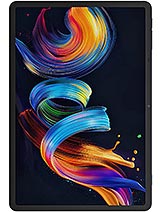
The TCL NXTpaper 11 Plus is a reading tablet that blurs the line between e-ink and LCD, offering a 11.5-inch display with 120Hz refresh and e-ink-like low power draw rather than true e-ink. It's built for students and document workers who need weeks between charges and won't tolerate lag on PDFs and note apps, though its modest chipset and basic cameras limit it to that specific job.
Design & build
At 490g and 6.5mm, the NXTpaper 11 Plus feels deliberately engineered for one-handed holding over long sessions. The industrial form factor—all tablet, no phone pretense—suits its job. The 3:2 aspect ratio leans toward reading rather than widescreen, a deliberate choice that makes books and PDFs sit naturally on screen. IP54 protection against dust and splashes is useful for a device you'll carry to libraries, cafes, and classrooms. There's no stylus in the box at this price, which stings given the device actively advertises stylus support; the pen is a separate purchase. The overall impression is pragmatic: form follows function, with no wasted effort on fashion.
Display
This is where the NXTpaper's hybrid identity shows. It's an IPS LCD, not true e-ink, but TCL tuned it to mimic e-ink's low-contrast, paper-like rendering while keeping the responsiveness of a traditional display. The 11.5-inch, 1440 x 2200 panel at 229ppi is sharp enough for text; reading at normal distances is comfortable, though the resolution trails high-end tablets by a margin. The 120Hz refresh makes page-turns and scrolling feel genuinely smooth, a step ahead of most e-ink readers. Peak brightness hits 550 nits in high brightness mode, sufficient for reading in direct sunlight, though the grayscale-leaning color palette means PDFs with colored charts or graphics will feel muted. Battery life is the real trade-off here: you gain responsiveness and color over true e-ink, but sacrifice some of the multi-week endurance. Expect closer to 2–3 weeks per charge depending on how much you use it, not the 4–6 weeks a pure e-ink reader might deliver.
Performance
The MediaTek Helio G100 is entry-level silicon designed to handle light work efficiently rather than fast work impressively. Reading apps, note-taking apps, and PDF viewers run without perceptible lag. Multitasking—say, switching between a reference document and a note app—happens without stuttering. But anything heavier than that stumbles: light games chop, web browsing with many tabs slows noticeably, and demanding apps simply don't run well. This chipset was chosen for power efficiency and cost, not performance ambition. If your day is 90 percent reading and note-taking with occasional web browsing, you won't notice the gap. If you expect a general-purpose tablet experience, you'll quickly feel the ceiling.
Software
The NXTpaper runs Android 15 out of the box with a promise of one major OS upgrade down the line. That's typical for budget-to-midrange tablets and leaves the device supported through roughly 2027. The interface is clean, unskinned Android without bloat—refreshing in a category where some manufacturers load dozens of apps you never wanted. Reading and note-taking apps install and behave as expected. The lack of cellular radios simplifies the experience and removes unnecessary battery drain; Wi-Fi-only is the right call for a device positioned as a home and study companion.
Camera
The 8MP rear and front cameras are afterthoughts. They shoot 1080p video at 30fps and work for occasional document scanning or video calls, but anyone buying this for photography is making a mistake. The rear has autofocus and an LED flash, adequate for scanning a printed page into a note app, but the image quality is dull and the low megapixel count means crops and zooms look soft. These cameras exist because the device is a tablet and tablets should have cameras; they don't define or justify the purchase.
Battery & charging
The 8000mAh battery drives the core promise: weeks per charge. E-ink-like power draw means reading for three hours a day with light Wi-Fi use easily stretches a charge to two weeks, sometimes three under light load. Charging time is not specified in the available data, but typical for this battery size and the absence of fast charging (33W is mentioned only in the raw spec schema without confirmation of actual implementation) suggests a 2–3 hour charge from empty. The real value is not peak speed but consistency: you genuinely will forget to charge this device if you use it like a reader rather than a tablet.
Value & verdict
At roughly 380 EUR, the NXTpaper 11 Plus costs less than a low-end flagship tablet and roughly as much as a mid-range e-ink reader. The bet is clear: you want the pen responsiveness and smooth UI of a tablet without the daily charging of a traditional LCD. For that niche—students annotating textbooks, researchers reading papers, writers working from notes—it is a reasonable choice. But buyers expecting a full tablet experience will feel boxed in by the Helio G100 and grayscale-leaning display. The device deliberately trades flexibility for efficiency, and that trade only works if you actually need the efficiency.
Verdict
This device is for people who read and take notes for hours at a time and need a charge only every other week—students with textbooks, researchers with PDFs, writers with reference materials. Anyone wanting a versatile tablet for apps, games, and content consumption should look at a traditional iPad or Android tablet instead."
- 11.5-inch display with 120Hz refresh and e-ink-like power efficiency—weeks between charges without sacrificing page-turn smoothness or responsiveness in reading apps
- Lightweight for its size at 490g and only 6.5mm thick, making it genuinely portable for long reading sessions
- 256GB storage standard, enough for thousands of PDFs and ebooks without juggling deletions
- IP54 dust and splash protection plus stylus support, practical for active note-taking and studying
- MediaTek Helio G100 is entry-level; while adequate for reading and note apps, it stutters on anything heavier and makes multitasking feel choppy
- No cellular connectivity and no stylus included in the box—you're buying a Wi-Fi-only device and paying extra for the pen
- Color reproduction stays muted and grayscale-heavy even with an LCD; if you want vibrant color, this is not your device
TCL NXTpaper 11 Plus Key Specifications
The essentials at a glance. See the full spec sheet.
| Released | 2025, March 03 |
|---|---|
| Display | 11.5 inches, 391.0 cm2 (~84.9% screen-to-body ratio), IPS LCD, 120Hz, 450 nits (typ), 550 nits (HBM) |
| Resolution | 1440 x 2200 pixels, 3:2 ratio (~229 ppi density) |
| Chipset | Mediatek Helio G100 (6 nm) |
| RAM & storage | 256GB 8GB RAM, 256GB 12GB RAM |
| Main camera | 8 MP, f/2.0, (wide), AF |
| Selfie camera | 8 MP |
| Battery | 8000 mAh |
| Software | Android 15, up to 1 major Android upgrades |
| Dimensions | 260.5 x 176.8 x 6.5 mm (10.26 x 6.96 x 0.26 in) |
| Weight | 490 g (1.08 lb) |
| Durability | Stylus support IP54 dust protected and water resistant (water splashes) |
| Network | No cellular connectivity |
| NFC | No |
| USB | USB Type-C 2.0 |
TCL NXTpaper 11 Plus FAQ
Common questions, answered from the spec sheet.
Does the NXTpaper 11 Plus support 5G?
No. The NXTpaper 11 Plus tops out at No cellular connectivity, without 5G.
What chipset does the NXTpaper 11 Plus use?
The NXTpaper 11 Plus runs on the Mediatek Helio G100 (6 nm).
What display does the NXTpaper 11 Plus have?
A 11.5 inches, 391.0 cm2 (~84.9% screen-to-body ratio) IPS LCD, 120Hz, 450 nits (typ), 550 nits (HBM), 1440 x 2200 pixels, 3:2 ratio (~229 ppi density).
How big is the NXTpaper 11 Plus battery?
The NXTpaper 11 Plus has a 8000 mAh battery.
Does the NXTpaper 11 Plus have NFC?
No, the NXTpaper 11 Plus does not list NFC support.
Is the NXTpaper 11 Plus water resistant?
The NXTpaper 11 Plus carries a Stylus support IP54 dust protected and water resistant (water splashes) rating.
Does the NXTpaper 11 Plus support a microSD card?
Yes, the NXTpaper 11 Plus supports expandable storage (Unspecified).
Alternatives to consider
If the NXTpaper 11 Plus isn’t quite right, these are the closest calls.
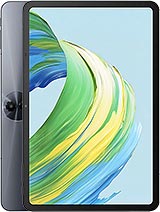
NXTpaper 11 Gen 2
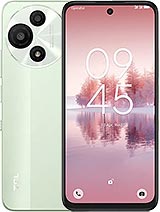
60 SE NXTpaper 5G
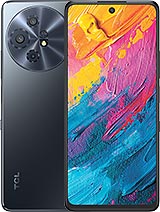
60 XE NXTpaper 5G
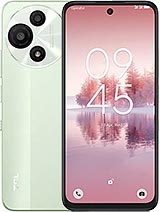
60 SE NxtPaper
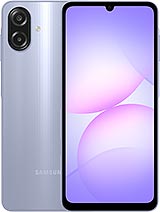
Galaxy A07 4G