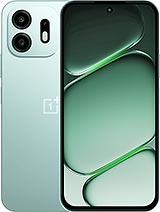
Tecno Camon Air review
The Camon Air suits buyers in emerging markets who spend long hours scrolling, watching video, and taking snapshots without fearing the charger. It is less suited to anyone who games regularly, edits video, or needs telephoto reach—the chip and camera set will frustrate them quickly.
This review is written with AI assistance from Tecno’s published specifications and public benchmark data for the Tecno Camon Air, and the rating is spec-based. GoSolo does not physically test devices; where we estimate real-world behaviour such as battery life or charge time, we say so. How we rate phones.
Overview
The Camon Air is a thin, stylish mid-range Android with a 6.78-inch AMOLED display, solid 50MP camera, and a massive 6000mAh battery, but its mid-tier Helio G200 chipset and unclear charging specs limit it to light users who care more about looks and endurance than raw performance.
Design & build
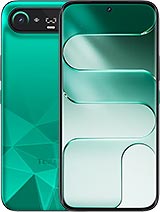
At 6.4mm and without a stated weight, the Camon Air is impressively thin for 2026. That thinness paired with a 6000mAh battery is the headline: most slim phones require you to dock every evening, but this one promises genuine two-day reach for light users. The back's mini-LED matrix (354 dots) is a marketing flourish—programmable lighting for notifications—that Tecno has leaned into before, and it works as a visual accent without feeling essential. IP68/IP69 with MIL-STD-810H is solid. This phone is built to last and endure moisture and dust in environments where screen protectors and cases are mandatory anyway.
Display
The 6.78-inch AMOLED is the right choice for a thin phone that will spend time scrolling. 144Hz is standard flagship territory by 2026, and the 2160Hz PWM dimming is a quality-of-life detail (smoother brightness transitions, less flicker at low levels). At 440ppi, sharpness is acceptable—not retina-sharp like 500ppi OLED panels in flagships, but books, maps, and websites are legible. The 87.7% screen-to-body ratio reflects modern bezels, and Gorilla Glass protection is expected. Nothing here disappoints, but nothing surprises either.
Performance
The Helio G200 Ultimate is the real ceiling. This is a mid-tier chip built for casual use: messaging, browsing, social media, light photography editing. It will not choke on everyday tasks, but gaming, video rendering, and heavy app-switching expose its limits quickly. By 2026 standards and this phone's price tier, rivals like Snapdragon 6 Gen 1 and Dimensity 5080 deliver noticeably smoother sustained performance. The Mali-G57 GPU is fine for 2D and light 3D work, but demanding games will demand frame-rate compromises. Eight gigabytes of RAM is enough for this class.
Software
Android 16 with HIOS 16.3 (Tecno's overlay) is current. Three major OS updates is the baseline expectation now—not a selling point, but good to see it guaranteed. HIOS itself is relatively light compared to heavy vendor skins, and the programmable LED matrix gets some software leverage (custom notification patterns, app-triggered animations). Bloat is typical for this price, and uninstallable preloads are likely, but nothing that a Global South user would not expect on a Tecno device.
Camera
The 50MP main sensor (1/1.95", f/1.8, 0.8µm) is well-spec'd for this tier. That sensor size and aperture mean good light-gathering, and PDAF keeps focus sharp on moving subjects. Real-world shots in daylight will be detailed and bright; low light is where the 0.8µm pixel pitch reveals its limits (noise rises faster than you'd see on 1.0µm flagships). The 32MP selfie with f/2.5 is adequate for video calls and portraits, though the fixed lens offers no ultra-wide selfie option. The real miss is the absence of an ultrawide and a telephoto—rivals at this price often bundle a 2MP macro or 5MP ultra-wide, neither of which is premium but both broaden your shot options.
Battery & charging
The 6000mAh cell in a 6.4mm frame is genuinely impressive engineering. For a light user (moderate browsing, messaging, photos), expect 1.5 to 2 days per charge; heavier users will land closer to one full day. The catch is that charging wattage is not listed in the specs—if it is 60W or slower, real-world recharge times could be long (80 minutes plus), which undermines the all-day advantage. If it is 100W+, Tecno should have screamed it from the spec sheet. This ambiguity is a red flag worth clarifying before purchase.
Value & verdict-context
The Camon Air targets buyers who prioritize battery endurance and screen real estate over raw processing power and photography range. At a mid-range price (likely $200–$300 USD equivalent in emerging markets), the combination of AMOLED, 144Hz, 6000mAh, and durability rating is coherent and competitive. The design is distinctive—those color finishes (Mondrian, Van Gogh Blue) stand out in a sea of glossy blacks. Performance is the trade-off; if you need smooth gaming, multitasking, or heavy app use, step up to a Dimensity 7050 or Snapdragon 7s Gen 2 device. For content consumption, light work, and photography that does not demand zoom, this phone delivers.
Verdict
The Camon Air suits buyers in emerging markets who spend long hours scrolling, watching video, and taking snapshots without fearing the charger. It is less suited to anyone who games regularly, edits video, or needs telephoto reach—the chip and camera set will frustrate them quickly.
- 6.4mm thickness with 6000mAh battery is rare—genuine all-day endurance without bulk
- 6.78-inch AMOLED at 144Hz feels fluid for scrolling and media, 440ppi is sharp enough for this size
- 50MP main camera with f/1.8 and 0.8µm pixels captures decent light and detail for a mid-range phone
- IP68/IP69 rating with MIL-STD-810H compliance actually matters for durability across global markets
- Helio G200 Ultimate is entry-level; no gaming or heavy multitasking muscle, notably behind Snapdragon 6 Gen 1 or Dimensity 5080 rivals at the same price
- Charging speed is absent from the spec sheet—if it is not 60W or higher, the thin design is a gamble against inferior battery lifespan
- 32MP selfie and no telephoto limit the camera setup; ultrawide is missing entirely
Tecno Camon Air Key Specifications
The essentials at a glance. See the full spec sheet.
| Released | 2026, September 02 |
|---|---|
| Display | 6.78 inches, 111.0 cm2 (~87.7% screen-to-body ratio), AMOLED, 144Hz, 2160Hz PWM |
| Resolution | 1224 x 2720 pixels, 20:9 ratio (~440 ppi density) |
| Chipset | Mediatek Helio G200 Ultimate (6 nm) |
| RAM & storage | 128GB 8GB RAM, 256GB 8GB RAM |
| Main camera | 50 MP, f/1.8, 24mm (wide), 1/1.95", 0.8µm, PDAF |
| Selfie camera | 32 MP, f/2.5, (wide) |
| Battery | 6000 mAh |
| Software | Android 16, up to 3 major OS updates, HIOS 16.3 |
| Dimensions | 162.8 x 77.7 x 6.4 mm (6.41 x 3.06 x 0.25 in) |
| Durability | Mini-LED (354 dots) programmable matrix (on the back) IP68/IP69 dust tight and water resistant (high pressure water jets; immersible up to 2m for 30 min) MIL-STD-810H compliant* * does not guarantee ruggedness or use in extreme conditions |
| Network | GSM / HSPA / LTE |
| NFC | Yes |
| USB | USB Type-C 2.0, OTG |
Tecno Camon Air FAQ
Common questions, answered from the spec sheet.
Does the Camon Air support 5G?
No. The Camon Air tops out at GSM / HSPA / LTE, without 5G.
What chipset does the Camon Air use?
The Camon Air runs on the Mediatek Helio G200 Ultimate (6 nm).
What display does the Camon Air have?
A 6.78 inches, 111.0 cm2 (~87.7% screen-to-body ratio) AMOLED, 144Hz, 2160Hz PWM, 1224 x 2720 pixels, 20:9 ratio (~440 ppi density).
How big is the Camon Air battery?
The Camon Air has a 6000 mAh battery.
Does the Camon Air have NFC?
Yes, the Camon Air has NFC.
Is the Camon Air water resistant?
The Camon Air carries a Mini-LED (354 dots) programmable matrix (on the back) IP68/IP69 dust tight and water resistant (high pressure water jets; immersible up to 2m for 30 min) MIL-STD-810H compliant* * does not guarantee ruggedness or use in extreme conditions rating.
Does the Camon Air support a microSD card?
Yes, the Camon Air supports expandable storage (Unspecified).
Alternatives to consider
If the Camon Air isn’t quite right, these are the closest calls.
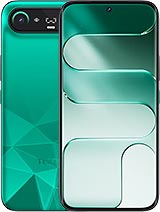
Camon Slim 4G
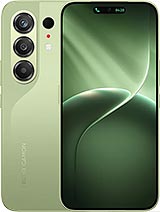
Camon 50 4G
Camon 50 Pro 4G
Camon Slim
Galaxy M17e