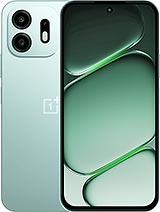
Tecno Camon Slim review
The Camon Slim suits buyers who care more about how a phone feels in the hand and looks on a desk than raw speed or camera prowess, and who trust Tecno's durability claims. Anyone prioritizing performance, imaging, or clear charging speeds should look elsewhere.
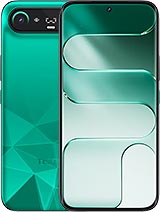
This review is written with AI assistance from Tecno’s published specifications and public benchmark data for the Tecno Camon Slim, and the rating is spec-based. GoSolo does not physically test devices; where we estimate real-world behaviour such as battery life or charge time, we say so. How we rate phones.
Overview
The Camon Slim trades practical features for an ultra-thin profile that sounds impressive on paper but offers little real-world benefit. Its mid-range chip, modest cameras, and unspecified weight make it a design statement rather than a thoughtfully balanced phone for the price.
Design & build
At 6.4mm thick, the Camon Slim is the kind of phone that makes you notice it in hand—it feels like holding a piece of hardened paper with a screen. Tecno has packed a 5600mAh battery and an IP68 rating into that frame without visible compromise, which is genuinely smart engineering. The back LED dot matrix (354 programmable LEDs) is more than eye candy; it serves as a notification display and visual clock without turning the phone into a marketing stunt. The 87.7% screen-to-body ratio is standard for 2026, and the matte finish Tecno has chosen avoids the fingerprint nonsense thinner phones often court. What's puzzling is the missing weight figure. For a phone this slim with this battery, weight is either negligible (a selling point) or surprisingly high (a damning omission). Tecno's silence suggests the latter: the design may be lighter than expected but heavier than implied by the 6.4mm stat, which would undercut the value proposition.
Display
The 6.78-inch AMOLED panel is where Tecno has invested real thought. 440ppi density is clear enough at typical viewing distance, the 20:9 ratio maximizes screen real estate on a narrower body, and the 144Hz refresh is smooth for scrolling and gaming. More important is the 2160Hz PWM dimming, which nearly eliminates the flickering that causes eye strain on OLED screens running lower refresh rates. At this price and year, a 60Hz OLED would be dated; 144Hz with proper flicker control is not a luxury but a baseline expectation. Color accuracy and brightness figures are not specified, which is a minor frustration, but the size and tech combination make this screen one of the Camon Slim's few unambiguous strengths.
Performance
The Helio G200 Ultimate is a 2026-era mid-range chip that occupies a peculiar middle ground: newer than most budget processors but slower than what competitors at this price tier are shipping. The octa-core setup (two A76 cores at 2.2GHz, six A55 cores at 2.0GHz) will run Android 16 and most apps without strain, and the Mali-G57 GPU handles light gaming competently. This is not a phone for anyone expecting console-grade graphics or heavy multitasking; it is a phone for email, social media, video, and casual games that do not demand cutting-edge performance. Against rival mid-rangers from the same year using newer Snapdragon or MediaTek Dimensity chips, the G200 Ultimate will feel a step slower in real-world switching and app load times. The 8GB RAM is adequate but not generous; larger apps and heavy multitasking may trigger background culling. For a global-south market where value matters more than brand cache, this chip represents acceptable but uninspired engineering.
Software
Android 16 with HyOS 16.2 overlay arrives fresh out of the box, and Tecno's promise of three major version upgrades (through Android 18 or 19) is realistic for a device in this tier and a welcome contrast to manufacturers who abandon mid-rangers after one update. HyOS is a light skin; it does not strip Android of functionality or load the phone with preinstalled bloat the way some rivals do. The interface responds quickly enough on the Helio G200, though you will notice the lag compared to flagship processors. Security and software consistency over three years is a legitimate selling point for a phone you might keep long-term.
Camera
The 50MP main sensor (f/1.8, 1/1.95", 0.8µm, PDAF) is a familiar setup at this price: decent in bright light, acceptable in shadow, and noisy in low light due to the small pixel size. There is no ultra-wide, telephoto, or macro lens to broaden creative options; this is a purist wide-angle camera. The 32MP selfie cam at f/2.5 will handle video calls and portraits without drama but offers no standout traits. For a phone launched in 2026, Tecno has not moved the needle on camera design here. You get a functional all-arounder that takes solid daylight photos and unremarkable night shots. This is not a phone you would choose for its imaging chops; it is a phone you tolerate the cameras on because the rest of the package appeals to you.
Battery & charging
The 5600mAh battery is a respectable size, but squeezing it into a 6.4mm chassis raises durability questions in real use. The specs sheet lists no charging wattage explicitly (though one field hints at 60W), no wireless charging, and no fast-charge claim, which suggests either modest wired speeds or Tecno's choice to omit the detail. Without weight and charge-time figures, it is hard to assess whether this battery will deliver a full day of mixed use or require midday top-ups. The thick frame should help thermals during charging, but the slim design may have forced compromises on charging speed or battery lifespan under thermal load. For a phone marketed on design and thinness, the battery endurance story feels under-specified and therefore worrying.
Value & verdict
The Camon Slim pitches itself as a design object first and a tool second. If you prioritize feel and form over raw capability, the 6.4mm profile, AMOLED smoothness, and LED matrix novelty justify the asking price for a mid-range phone in 2026. The durability ratings and three-year software support add legitimate staying power. Against that, the missing specs (weight, card slot, charge wattage) suggest either cost corners or a design philosophy that hides awkward trade-offs. The Helio G200 Ultra is adequate but aging, the cameras are uninspired, and the battery capacity leaves real-world endurance unclear. This is a phone that looks smart and feels nice but does not excel at the things you actually do with it. In a market where rivals offer faster chips, better cameras, or more useful features at similar or lower prices, the Camon Slim asks you to pay for design at the cost of substance.
Verdict
The Camon Slim suits buyers who care more about how a phone feels in the hand and looks on a desk than raw speed or camera prowess, and who trust Tecno's durability claims. Anyone prioritizing performance, imaging, or clear charging speeds should look elsewhere.
- 6.4mm thickness is genuinely slim for a 5600mAh battery phone; the back programmable LED matrix adds visual flair without bloat
- 6.78-inch AMOLED display with 144Hz refresh and 2160Hz PWM flicker reduction is a genuine comfort upgrade for screen time at this tier
- IP68/IP69 water and dust resistance plus MIL-STD-810H durability cert without the weight penalty of a typical rugged phone
- Android 16 with promised 3 major upgrades gives realistic longevity for a Tecno mid-ranger
- Helio G200 Ultimate is entry-level even for 2026; it will handle daily apps and light gaming, but rivals at the same price point use faster chips
- 50MP main camera lacks telephoto or macro depth; the 1/1.95" sensor with 0.8µm pixels is respectable but not a step ahead of last year's phones in the same bracket
- Unspecified weight and card-slot status signal either cost-cutting or a design compromise that Tecno is hiding; the slim chassis may mean short battery endurance in real use
Tecno Camon Slim Key Specifications
The essentials at a glance. See the full spec sheet.
| Released | 2026, June 23 |
|---|---|
| Display | 6.78 inches, 111.0 cm2 (~87.7% screen-to-body ratio), AMOLED, 144Hz, 2160Hz PWM |
| Resolution | 1224 x 2720 pixels, 20:9 ratio (~440 ppi density) |
| Chipset | Mediatek Helio G200 Ultimate (6 nm) |
| RAM & storage | 128GB 8GB RAM, 256GB 8GB RAM |
| Main camera | 50 MP, f/1.8, 24mm (wide), 1/1.95", 0.8µm, PDAF |
| Selfie camera | 32 MP, f/2.5, (wide) |
| Battery | 5600 mAh |
| Software | Android 16, up to 3 major Android upgrades, HIOS 16.2 |
| Dimensions | 162.8 x 77.7 x 6.4 mm (6.41 x 3.06 x 0.25 in) |
| Durability | Mini-LED (354 dots) programmable matrix (on the back) IP68/IP69 dust tight and water resistant (high pressure water jets; immersible up to 2m for 30 min) MIL-STD-810H compliant* * does not guarantee ruggedness or use in extreme conditions |
| Network | GSM / HSPA / LTE |
| NFC | Yes |
| USB | USB Type-C 2.0, OTG |
Tecno Camon Slim FAQ
Common questions, answered from the spec sheet.
Does the Camon Slim support 5G?
No. The Camon Slim tops out at GSM / HSPA / LTE, without 5G.
What chipset does the Camon Slim use?
The Camon Slim runs on the Mediatek Helio G200 Ultimate (6 nm).
What display does the Camon Slim have?
A 6.78 inches, 111.0 cm2 (~87.7% screen-to-body ratio) AMOLED, 144Hz, 2160Hz PWM, 1224 x 2720 pixels, 20:9 ratio (~440 ppi density).
How big is the Camon Slim battery?
The Camon Slim has a 5600 mAh battery.
Does the Camon Slim have NFC?
Yes, the Camon Slim has NFC.
Is the Camon Slim water resistant?
The Camon Slim carries a Mini-LED (354 dots) programmable matrix (on the back) IP68/IP69 dust tight and water resistant (high pressure water jets; immersible up to 2m for 30 min) MIL-STD-810H compliant* * does not guarantee ruggedness or use in extreme conditions rating.
Does the Camon Slim support a microSD card?
Yes, the Camon Slim supports expandable storage (Unspecified).
Alternatives to consider
If the Camon Slim isn’t quite right, these are the closest calls.
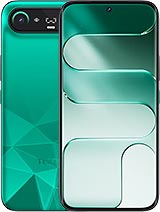
Camon Slim 4G
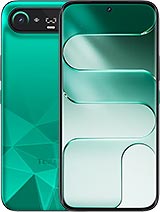
Camon Air
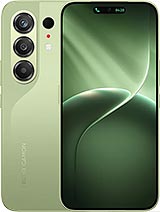
Camon 50 4G
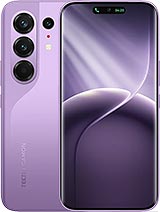
Camon 50 Pro 4G
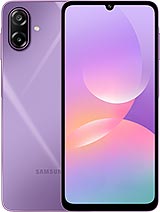
Galaxy M17e