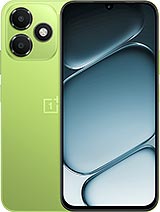
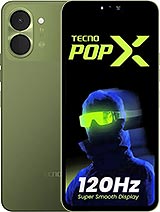
Tecno Pop X 4G review
The Pop X 4G suits first-time 4G users and remote markets where battery life and affordability outweigh performance, but it will disappoint anyone jumping from a recent phone or used to the speed of even modest midrange hardware. If you value a big screen and three days of idle time over smoothness, and can live with basic features, it delivers on that promise.
This review is written with AI assistance from Tecno’s published specifications and public benchmark data for the Tecno Pop X 4G, and the rating is spec-based. GoSolo does not physically test devices; where we estimate real-world behaviour such as battery life or charge time, we say so. How we rate phones.
Overview
The Tecno Pop X 4G is a budget 4G phone with a large 6.74-inch screen and 5000 mAh battery at under €80, but the 720p display and entry-level Unisoc T7250 chip leave it feeling dated even for the price class. It's a straightforward option for calls, messaging, and light browsing in emerging markets where affordability matters more than performance.
Design & Build
At 8.1mm thick and 167.7mm tall, the Pop X 4G is slim and compact enough for one-handed reach, though the spec sheet omits the weight so it's hard to judge overall balance. The glass front and plastic back are standard fare for the price; the IP64 rating means it'll shrug off dust and water splashes, which is a genuine practical touch at this tier. Drop resistance to 1.2m is modest but appreciated. The design is plain but functional, with a side-mounted fingerprint sensor and dual-LED flash. There's nothing to excite, but nothing obviously cheap or brittle either.
Display
The 6.74-inch screen with 120Hz refresh feels generous for an €80 phone, and the 84.1% screen-to-body ratio is decent. The problem is the 720p resolution at that size: 260 ppi is noticeably soft for text and fine details. By 2026 standards, competitors at this price are pushing 1080p on smaller screens. The IPS panel and 120Hz are pluses for everyday smoothness and viewing angles, but you're paying for screen real estate at the cost of sharpness. For casual video and social media, it passes; for reading or productivity, the jagged edges will be obvious.
Performance
The Unisoc T7250 is entry-level silicon, even for 2026. Its octa-core setup (two 1.8 GHz Cortex-A75 and six 1.6 GHz Cortex-A55 cores) with Mali-G57 GPU is meant for basic tasks: calling, texting, light browsing, and casual apps. With only 4GB RAM and 64GB storage, don't expect smooth juggling of apps or heavy games. Multitasking will lag and stutter; gaming is off the table beyond simple titles. The 64GB is tight, but the dedicated microSDXC slot helps. For someone in an emerging market upgrading from 2G or a very old 4G phone, this feels fine. For someone used to modern midrange hardware, the slowness will frustrate within weeks.
Software
Android 15 with Tecno's HIOS 15 overlay arrives out of the box. HIOS tends toward simple interfaces and pre-loaded Tecno apps, which is useful in markets with limited app ecosystem awareness but adds bloat for others. Updates on a Unisoc device are not guaranteed; Tecno's track record here is patchy. You get FM radio, which is a bonus for areas with weak mobile data. For an €80 phone aimed at developing markets, the software stack is appropriate and functional.
Camera
The 13MP main camera with f/1.9 aperture and dual-LED flash is adequate for daylight snaps and can handle low light reasonably thanks to the wide aperture. The 8MP selfie is basic but adequate for video calls. Don't expect computational photography or pro modes; this is shoot-and-share hardware. Video capability is listed but likely maxes out at 1440p or lower bitrates. For social media and family photos, acceptable. For anything requiring detail or edge-case conditions, the results will be soft and noisy.
Battery & Charging
The 5000 mAh battery is the phone's strongest asset. At this size with a low-power chip and 720p screen, you can realistically expect one and a half to two days of mixed use, maybe longer with light workloads. The 15W charging (inferred from the spec highlights) is slow by modern standards but typical for budget 4G phones; expect 90 minutes or more to full. In markets where power is intermittent, the big battery is genuinely valuable.
Value & Verdict Context
At €80, the Pop X 4G targets first-time 4G buyers and replacement shoppers in Africa, South Asia, and Southeast Asia who prioritize battery life and affordability over speed. For that audience, the large screen, dual SIM, microSD expansion, and long battery are appropriate. Against other sub-€100 4G phones, it's neither exceptional nor obviously worse; it's a straightforward commodity device. The 720p screen and entry-level chip are genuine trade-offs that date it even in its own price band, but for someone who needs voice, text, WhatsApp, and YouTube without spending more, the compromises are live-able.
Verdict
The Pop X 4G suits first-time 4G users and remote markets where battery life and affordability outweigh performance, but it will disappoint anyone jumping from a recent phone or used to the speed of even modest midrange hardware. If you value a big screen and three days of idle time over smoothness, and can live with basic features, it delivers on that promise.
- 5000 mAh battery and efficient chip deliver one and a half to two days of real-world use, a real advantage in regions with spotty charging
- Large 6.74-inch screen with 120Hz refresh and strong screen-to-body ratio make the phone feel bigger and smoother than the price suggests
- Dedicated microSDXC slot and dual SIM support keep costs down while letting users expand storage and manage multiple networks
- IP64 durability and 1.2m drop resistance add practical protection for daily bumps and splashes
- 720p display at 6.74 inches is noticeably soft and pixelated; rivals now push 1080p even at this price, making text and details fuzzy
- Unisoc T7250 with 4GB RAM struggles with multitasking and modern apps; expect stuttering and long load times beyond basic calls and browsing
- 15W charging is slow; realistic refill time is 90+ minutes, and the chip's age means limited firmware support and likely no major updates
Tecno Pop X 4G Key Specifications
The essentials at a glance. See the full spec sheet.
| Released | 2026, March 04 |
|---|---|
| Display | 6.74 inches, 109.7 cm2 (~84.1% screen-to-body ratio), IPS LCD, 120Hz |
| Resolution | 720 x 1600 pixels, 20:9 ratio (~260 ppi density) |
| Chipset | Unisoc T7250 (12 nm) |
| RAM & storage | 64GB 4GB RAM |
| Main camera | 13 MP, f/1.9, (wide) |
| Selfie camera | 8 MP |
| Battery | 5000 mAh |
| Software | Android 15, HIOS 15 |
| Dimensions | 167.7 x 77.8 x 8.1 mm (6.60 x 3.06 x 0.32 in) |
| Build | Glass front, plastic back, plastic frame |
| Durability | IP64 dust tight and water resistant (water splashes) Drop resistant up to 1.2m |
| Network | GSM / HSPA / LTE |
| NFC | No |
| USB | USB Type-C, OTG |
Tecno Pop X 4G FAQ
Common questions, answered from the spec sheet.
Does the Pop X 4G support 5G?
No. The Pop X 4G tops out at GSM / HSPA / LTE, without 5G.
What chipset does the Pop X 4G use?
The Pop X 4G runs on the Unisoc T7250 (12 nm).
What display does the Pop X 4G have?
A 6.74 inches, 109.7 cm2 (~84.1% screen-to-body ratio) IPS LCD, 120Hz, 720 x 1600 pixels, 20:9 ratio (~260 ppi density).
How big is the Pop X 4G battery?
The Pop X 4G has a 5000 mAh battery.
Does the Pop X 4G have NFC?
No, the Pop X 4G does not list NFC support.
Is the Pop X 4G water resistant?
The Pop X 4G carries a IP64 dust tight and water resistant (water splashes) Drop resistant up to 1.2m rating.
Does the Pop X 4G support a microSD card?
Yes, the Pop X 4G supports expandable storage (microSDXC (dedicated slot)).
Alternatives to consider
If the Pop X 4G isn’t quite right, these are the closest calls.
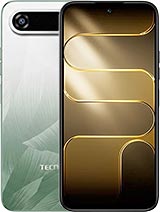
Pop X
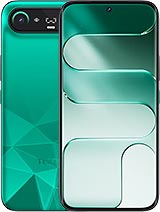
Camon Slim 4G
Spark 50 4G

Spark Go 3 Pro
Galaxy M17e