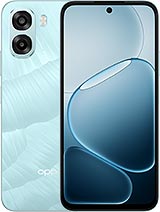
Tecno Spark Go 1S review
This phone suits someone who values battery endurance and a big screen over pace, and accepts that 3GB of RAM and a 720p panel mean corners are cut. Anyone who plans heavy use—multitasking, gaming, photo editing, or full-time work—should look elsewhere; the performance and display will frustrate within days."
This review is based on Tecno’s published specifications and public benchmark data for the Tecno Spark Go 1S, and the rating is spec-based. GoSolo does not physically test devices; where we estimate real-world behaviour such as battery life or charge time, we say so. How we rate phones.
Overview
The Spark Go 1S is a 70-euro entry-level phone built for long battery life and a roomy screen, not pace. The MediaTek Helio G50 and 3GB of RAM handle messaging and video fine, but stall under load; the 720p display on a 6.67-inch panel looks soft up close, and charging speeds are unspecified—likely slow for a phone you'll need to power through a full day.
Design and Build
The Spark Go 1S is a straightforward plastic phone with a glass face and plastic frame, thin at 8.4mm but not in a way that sets it apart. Dual nano-SIM slots cover markets where multiple carriers matter, and IP54 dust and splash protection is genuine enough for spilled water or a dusty pocket, though submersion will kill it. At 165.6 x 77mm, it's a wide, tall slab—comfortable one-handed for some hands, a two-hander for others. Nothing here feels cheap for the asking price, but nothing surprises either; this is honest budget engineering.
Display
The 6.67-inch 90Hz IPS LCD is the phone's main draw: it's large, the refresh rate makes scrolling feel smooth, and the aspect ratio leaves room for video and web pages. But 720p on that real estate means a pixel density of 263ppi, and the trade-off is visible. Text on web pages and in apps shows jagged edges under normal viewing distance, and if you read books or documents regularly, the softness becomes tiresome. For video consumption and casual browsing, the size wins out; for reading-heavy work, this screen struggles. An 84% screen-to-body ratio is solid for the class.
Performance
The MediaTek Helio G50 is entry-level silicon: an eight-core Cortex-A53 running at 2.2GHz with 3GB of RAM backing it. Light tasks—calling, messaging, social media, video—run without hiccup. But the moment you stack apps or ask for anything demanding, the phone shows its limits. Switching between WhatsApp, a browser, and a photo app produces visible lag. Games stutter unless they're simple 2D titles; anything with real graphics is a slideshow. The Helio G50 is from 2017; in 2025, it's a compromise you make to hit the 70-euro price point, not a hidden gem. Battery is frugal in return.
Software
Android 14 (Go edition) is a lean build designed to run on constrained hardware, and it shows its value here. The phone doesn't bog down under its own OS weight the way a full Android install might on 3GB of RAM. HIOS 14 is Tecno's skin, light and mostly invisible. Updates and security patches are the weak point; Tecno's history with software longevity is murky at best, and this is a 70-euro phone in early 2025, which means don't plan on three years of regular updates.
Camera
A 13MP main camera with an f/1.8 aperture, PDAF, and dual-LED flash is respectable on paper for this price. In practice, it's a capable daylight shooter—well-lit scenes turn out clean, and colors hold up. Low-light performance is where corners are cut; the sensor is small and relies on flash or aggressive software noise-reduction, both of which degrade detail. 1080p video at 30fps is standard for the tier, watchable but not smooth. The 8MP front camera handles video calls and selfies adequately, nothing more.
Battery and Charging
The 5000mAh cell is the phone's real strength. Paired with the 720p screen and power-sipping Helio G50, a moderate user (light browsing, social media, calls, some video) stretches to about 1.5–2 days between charges. Heavy users will need a daily top-up, but that's the norm at this performance level. Charging specs are absent from the sheet, a red flag that suggests 10–15W output at best—meaning 2.5 to 3 hours to a full charge from empty, or longer if you use it while plugged in. That's slow by 2025 standards, even for budget phones, many of which now ship 30–50W charging. Here, you're buying into the battery-life tradeoff.
Value and Verdict
At about 70 euros, the Spark Go 1S is positioned as a practical daily device for users who prioritize all-day battery life and a large screen over speed and sharpness. For that brief, it delivers. The real competition at this price isn't other flagships; it's older, discounted midrange phones or other entry-level rivals from Xiaomi or Samsung. The Spark Go 1S wins on battery promise and screen size, but loses if you need responsive multitasking or rich visuals. If you're in a region where power access is spotty or you want a second phone that just needs to survive a day of calls and messages with occasional video, this holds up. If you plan to use it as a primary phone for work or heavy browsing, the limits become apparent within a week.
Verdict
This phone suits someone who values battery endurance and a big screen over pace, and accepts that 3GB of RAM and a 720p panel mean corners are cut. Anyone who plans heavy use—multitasking, gaming, photo editing, or full-time work—should look elsewhere; the performance and display will frustrate within days."
- 5000 mAh battery stretches to about 1.5–2 days for light to moderate use, saving you a hunt for an outlet in areas where power is scarce
- 6.67-inch screen with 90Hz refresh is spacious and smooth enough for video, reading, and casual browsing despite the soft resolution
- microSDXC slot lets you add hundreds of gigabytes cheaply, turning 64GB into a usable device for photos and downloaded content
- Android 14 (Go edition) keeps the OS lean, so the phone stays responsive with just 3GB of RAM
- 720p resolution on a 6.67-inch display yields visible pixellation and makes small text uncomfortable to read for long stretches
- Helio G50 and 3GB RAM mean no multitasking grace; apps refresh, games stutter, and opening a second browser tab requires patience
- Charging speed unspecified and almost certainly slow—on 70-euro hardware this year, expect 10–15W at best, meaning 2–3 hours to full from empty
Tecno Spark Go 1S Key Specifications
The essentials at a glance. See the full spec sheet.
| Released | 2025, January 06 |
|---|---|
| Display | 6.67 inches, 107.4 cm2 (~84.2% screen-to-body ratio), IPS LCD, 90Hz |
| Resolution | 720 x 1600 pixels, 20:9 ratio (~263 ppi density) |
| Chipset | Mediatek Helio G50 |
| RAM & storage | 64GB 3GB RAM |
| Main camera | 13 MP, f/1.8, 27mm (wide), PDAF |
| Selfie camera | 8 MP |
| Battery | 5000 mAh |
| Software | Android 14 (Go edition), HIOS 14 |
| Dimensions | 165.6 x 77 x 8.4 mm (6.52 x 3.03 x 0.33 in) |
| Build | Glass front, plastic back, plastic frame |
| Durability | IP54 dust protected and water resistant (water splashes) |
| Network | GSM / HSPA / LTE |
| NFC | No |
| USB | USB Type-C, OTG |
Tecno Spark Go 1S FAQ
Common questions, answered from the spec sheet.
Does the Spark Go 1S support 5G?
No. The Spark Go 1S tops out at GSM / HSPA / LTE, without 5G.
What chipset does the Spark Go 1S use?
The Spark Go 1S runs on the Mediatek Helio G50.
What display does the Spark Go 1S have?
A 6.67 inches, 107.4 cm2 (~84.2% screen-to-body ratio) IPS LCD, 90Hz, 720 x 1600 pixels, 20:9 ratio (~263 ppi density).
How big is the Spark Go 1S battery?
The Spark Go 1S has a 5000 mAh battery.
Does the Spark Go 1S have NFC?
No, the Spark Go 1S does not list NFC support.
Is the Spark Go 1S water resistant?
The Spark Go 1S carries a IP54 dust protected and water resistant (water splashes) rating.
Does the Spark Go 1S support a microSD card?
Yes, the Spark Go 1S supports expandable storage (microSDXC).
Alternatives to consider
If the Spark Go 1S isn’t quite right, these are the closest calls.
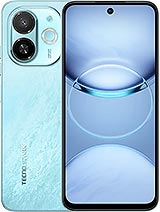
Spark 30C 5G
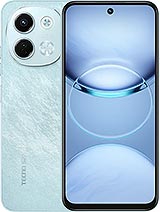
Spark 30 5G
Spark Go 2
Spark Go 5G
Galaxy M06 5G