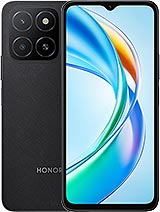
Tecno Spark Go 2023 review
The Spark Go suits buyers in emerging markets who need long battery life and dual-SIM flexibility without high expectations for display quality or app responsiveness. Anyone in a developed market or seeking modern performance should look to competing budget phones with better chipsets and sharper displays, even at slightly higher cost.
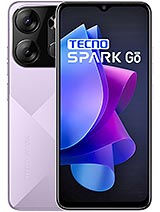
This review is based on Tecno’s published specifications and public benchmark data for the Tecno Spark Go 2023, and the rating is spec-based. GoSolo does not physically test devices; where we estimate real-world behaviour such as battery life or charge time, we say so. How we rate phones.
Overview
The Tecno Spark Go 2023 is a no-frills budget phone built around a 5000 mAh battery and a large 6.6-inch display, hitting the formula of maximum screen and stamina at minimum cost. It's honest work for light daily use—messaging, social media, and video streaming—but the 720p panel and entry-level Helio A22 chipset mean you're trading sharpness and speed for longevity and affordability.
Design & build
The Spark Go is slim at 8.9 mm and light enough in hand (weight unspecified in the sheet, but typical for this class at under 200g), with a straightforward plastic build and 84% screen-to-body ratio that feels modern for the price. The form is competent: dual nano-SIM slots and a dedicated microSD tray mean you can stack two carriers and storage without compromise. There is no water resistance or premium materials to speak of, which is par for a 90 EUR phone in 2023. The rear fingerprint sensor works reliably for unlock and app authentication. Overall, it's a device built to be practical, not to impress.
Display
A 6.6-inch IPS LCD at 720 × 1600 pixels delivers 267 ppi—readable at arm's length, but not sharp. Text and simple UI elements are clear, but photographs and detailed graphics show pixelation under scrutiny, and fine UI elements lack crispness. The 60 Hz refresh rate is standard for this tier and contributes to scrolling that feels slightly slower than newer 90 Hz rivals. Colour reproduction is decent for an IPS panel, and brightness is adequate indoors and in moderate sunlight, though not exceptional. For scrolling through social media and reading, it suffices; for photo viewing or gaming, the limitations become obvious.
Performance
The quad-core Helio A22 at 2 GHz and PowerVR GE8320 GPU handle light work without fuss: messaging apps, web browsing, and video streaming work smoothly. Heavy multitasking, sustained app switching, and any 3D game will trigger frame drops and lag. The 3 GB RAM base config is tight alongside Android 12; the 4 GB option gives more breathing room. For a 90 EUR phone, this is expected: the chipset is frankly entry-level, and it makes no sense to demand flagship responsiveness at this price. Most users will adapt, but anyone seeking a gaming device or photo-editing capability should shop elsewhere.
Software
Android 12 with Tecno's HIOS 12 skin runs stably but is cluttered with bloatware and carrier apps out of the box. Updates are unlikely to arrive on schedule, as Tecno's track record for major OS upgrades is weak. The experience is functional rather than polished: you can disable or uninstall much of the junk, but it requires patience. No surprises, but nothing to celebrate either.
Camera
The 13 MP main sensor with f/1.9 aperture and autofocus captures passable daylight shots with adequate detail, though color reproduction leans flat. HDR and dual-LED flash help balance backlit scenes and low light. Indoor and night photography are weak: noise creeps in quickly, and the small sensor struggles with shadow recovery. The 5 MP selfie is serviceable for video calls but soft in daylight. Video maxes at 1080p 30fps, which is basic but functional for social posting. For a budget phone, the camera is honest: it gets the job done on social media, but don't expect nuance or consistency.
Battery & charging
The 5000 mAh battery is the Spark Go's strongest asset. Light use—messaging, streaming, and social media—stretches comfortably into a second day, easily hitting 36 to 48 hours. Heavy video watching or gaming drains it in under a day. No charging wattage is listed, which is telling: expect a slow trickle charge (likely 5 to 10W) from the USB Type-C port, taking well over an hour to fill. This is a phone that rewards patience and light use, not one for heavy users who swap fast-charging flagships daily.
Value & verdict-context
At roughly 90 EUR, the Spark Go undercuts most rivals in its year and offers genuine utility: dual SIM, microSD expansion, and a battery that lasts. The 6.6-inch display and sturdy build deliver relative space and durability for the cost. However, the experience corners you: 720p resolution shows limits by 2023 standards, the processor lags in real time, and software support is uncertain. It is a phone for people in emerging markets or those seeking a second device for standby and data plans, not for anyone who demands modern responsiveness or good photography.
Verdict
The Spark Go suits buyers in emerging markets who need long battery life and dual-SIM flexibility without high expectations for display quality or app responsiveness. Anyone in a developed market or seeking modern performance should look to competing budget phones with better chipsets and sharper displays, even at slightly higher cost.
- 5000 mAh battery stretches to two days on light use, making it reliable for all-day absence from a charger
- Large 6.6-inch display and dedicated microSD slot let you expand storage and enjoy media without paying for internal capacity
- Dual SIM support is genuinely useful in regions with multiple carriers, and the nano-slot design leaves the microSD untouched
- 720p display at 267 ppi looks soft and dated by 2023, especially for the 6.6-inch screen size where a 1080p panel is now standard in the budget tier
- Helio A22 and 3 GB RAM make daily use choppy for anything beyond light messaging and browsing; gaming and heavy apps stall noticeably
- Slow or unspecified charging speed combined with thin software support and bloatware out of the box feel like cost-cutting that squeezes user experience
Tecno Spark Go 2023 Key Specifications
The essentials at a glance. See the full spec sheet.
| Released | 2023, January 19 |
|---|---|
| Display | 6.6 inches, 104.4 cm2 (~84.4% screen-to-body ratio), IPS LCD |
| Resolution | 720 x 1600 pixels, 20:9 ratio (~267 ppi density) |
| Chipset | Mediatek MT6761 Helio A22 (12 nm) |
| RAM & storage | 32GB 3GB RAM, 64GB 3GB RAM, 64GB 4GB RAM |
| Main camera | 13 MP, f/1.9, (wide), AF Auxiliary lens |
| Selfie camera | 5 MP |
| Battery | 5000 mAh |
| Software | Android 12, HIOS 12 |
| Dimensions | 163.9 x 75.5 x 8.9 mm (6.45 x 2.97 x 0.35 in) |
| Network | GSM / HSPA / LTE |
| NFC | Unspecified |
| USB | USB Type-C 2.0, OTG |
Tecno Spark Go 2023 FAQ
Common questions, answered from the spec sheet.
Does the Spark Go 2023 support 5G?
No. The Spark Go 2023 tops out at GSM / HSPA / LTE, without 5G.
What chipset does the Spark Go 2023 use?
The Spark Go 2023 runs on the Mediatek MT6761 Helio A22 (12 nm).
What display does the Spark Go 2023 have?
A 6.6 inches, 104.4 cm2 (~84.4% screen-to-body ratio) IPS LCD, 720 x 1600 pixels, 20:9 ratio (~267 ppi density).
How big is the Spark Go 2023 battery?
The Spark Go 2023 has a 5000 mAh battery.
Does the Spark Go 2023 have NFC?
No, the Spark Go 2023 does not list NFC support.
Does the Spark Go 2023 support a microSD card?
Yes, the Spark Go 2023 supports expandable storage (microSDXC (dedicated slot)).
Alternatives to consider
If the Spark Go 2023 isn’t quite right, these are the closest calls.
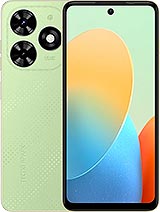
Spark Go 2024
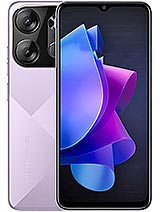
Pop 7 Pro
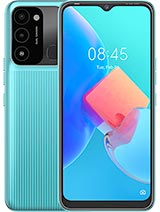
Spark Go 2022
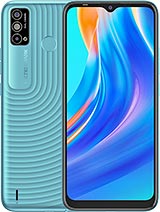
Spark Go 2021
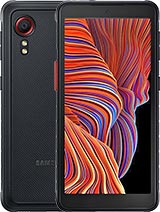
Galaxy XCover 7