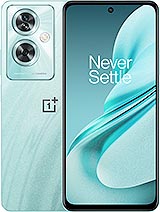
Tecno Spark Go 2024 review
The Spark Go 2024 suits users who need a backup phone or a device built around multiday battery life and can tolerate laggy performance and a blurry screen. Anyone wanting to actually use their phone for browsing, video, or photography should spend a bit more; the weak CPU and 720p display are not worth saving 20–30 euros on a rival at this price tier."
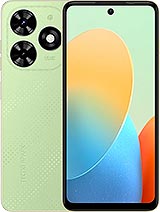
This review is based on Tecno’s published specifications and public benchmark data for the Tecno Spark Go 2024, and the rating is spec-based. GoSolo does not physically test devices; where we estimate real-world behaviour such as battery life or charge time, we say so. How we rate phones.
Overview
The Spark Go 2024 is a 90-euro budget phone built around a 5000 mAh battery and a large 6.6-inch screen, pitched at users who prioritize days of runtime over speed. It handles calls, messaging, and casual browsing without strain, but the weak Unisoc chip and 720p display reveal the cost-cutting—and neither can be overlooked at this price.
Design & build
The phone is slim and light—8.6 mm thick with a glass front and plastic back—and doesn't feel like it's fighting the 5000 mAh battery. The frame is plastic, and there's no stated weight, which suggests it's unremarkable in hand. Nano-SIM slots and a microSDXC drawer are practical touches for a budget device aimed at dual-SIM markets. The plastic construction means no water resistance rating, so this phone is not built to withstand drops or splashes. Build quality is ordinary for the price; you're getting what 90 euros buys.
Display
The 6.6-inch IPS LCD is large and the 90Hz refresh rate makes scrolling feel responsive, which is a small luxury at this price. However, 720p resolution and 267 ppi density create a visible pixel grid for text and fine detail. Reading at arm's length or checking small text in apps requires leaning closer than you should have to. Outdoor brightness is adequate but not strong enough to compete with midrange phones; sunlight visibility is a chore. For casual video and messaging, it works; anything that demands text clarity or color accuracy will frustrate.
Performance
The Unisoc T606 is a 2022-era chip designed to minimize power draw, not maximize speed. The octa-core CPU (two 1.6 GHz Cortex-A75 cores and six lower-power Cortex-A55 cores) and Mali-G57 single GPU core handle routing apps—WhatsApp, calls, basic browsing—without lag, but app switching stalls and social media feeds stutter when scrolling. Games that demand 3D rendering are unplayable; even light games show frame drops. Multitasking beyond three open apps causes hiccups. For the asking price this is predictable, but it's not forgiving if you try to do more than the phone was designed for.
Software
Android 13 Go edition is a stripped-down variant built for low-RAM devices, paired with Tecno's HIOS 13 overlay. Go edition reduces system bloat and frees RAM for apps, which is sensible here given the 2–4 GB RAM options. HIOS adds some custom features—FM radio and side-mounted fingerprint—but also adds clutter to settings. Updates are not promised, and Tecno's track record for long-term support on budget lines is poor. You'll likely see one or two patches and then silence. This is typical for the segment but worth knowing upfront.
Camera
The rear camera is 13 MP at f/1.9 with 1.12 µm pixels and autofocus, plus dual-LED flash. On paper it sounds reasonable; in practice, the small sensor and modest optics mean poor detail in shadows and blown highlights in bright scenes. Indoor shots are grainy unless you use the flash, which creates harsh lighting. Video is capped at 1080p and 30 fps, producing jerky, soft footage unsuitable for anything beyond casual clips. The 8 MP front camera with flash is adequate for video calls but not for selfies you want to look good. This is a weak point even for 90 euros; rivals in this tier often do better.
Battery & charging
The 5000 mAh battery is the phone's strongest draw. On light use—calls, messaging, low-brightness browsing—it reaches 1.5 to 2 days before needing a charge. Heavy use drains it to evening on a single day. The spec sheet lists no charging wattage, which likely means it's a slow 5W or 10W trickle, so a full charge takes 2–3 hours or more. For someone in a region with spotty grid access, this battery is valuable; for a user in cities with regular charging, it's overkill and masks the weak CPU.
Value & verdict
At 90 euros, the Spark Go sits in the ultra-budget tier where you cannot have everything. Tecno chose battery and screen size over speed and camera quality, which is a defensible bet if your user base values uptime. The 128 GB storage option and microSD support are practical. However, the 720p display and entry-level chip date the phone immediately; browsing modern websites and apps feels like using a phone from 2019. Rivals at the same price from Xiaomi, Samsung, or Motorola often balance specs more fairly, offering slightly faster chips or sharper screens. This phone asks you to accept significant compromises in performance and image quality for the sake of battery life. It works if that trade-off matches your needs and you have no higher budget.
Verdict
The Spark Go 2024 suits users who need a backup phone or a device built around multiday battery life and can tolerate laggy performance and a blurry screen. Anyone wanting to actually use their phone for browsing, video, or photography should spend a bit more; the weak CPU and 720p display are not worth saving 20–30 euros on a rival at this price tier."
- 5000 mAh battery stretches to 1.5–2 days on light use (calls, messaging, browsing), a real advantage in a budget phone where charging access may be spotty
- 6.6-inch 90Hz IPS display is large and smooth enough for casual scrolling, despite the 720p resolution
- Dual SIM and microSDXC expand flexibility; storage can grow to 1TB if you need it
- Slim build at 8.6mm feels less chunky than the battery capacity might suggest
- Unisoc T606 is entry-level even by 2023 standards; app switching lags noticeably, and anything demanding (social media reels, light gaming) stutters
- 720p resolution on a 6.6-inch screen (267 ppi) makes text blurry at normal viewing distance and outdoor visibility suffers in sunlight
- 13 MP rear camera captures detail poorly in anything but bright, controlled lighting; 1080p video at 30fps is basic and jerky
Tecno Spark Go 2024 Key Specifications
The essentials at a glance. See the full spec sheet.
| Released | 2023, November 21 |
|---|---|
| Display | 6.6 inches, 104.6 cm2 (~84.6% screen-to-body ratio), IPS LCD, 90Hz |
| Resolution | 720 x 1612 pixels, 20:9 ratio (~267 ppi density) |
| Chipset | Unisoc T606 (12 nm) |
| RAM & storage | 64GB 2GB RAM, 64GB 3GB RAM, 64GB 4GB RAM, 128GB 4GB RAM |
| Main camera | 13 MP, f/1.9, (wide), 1.12µm, AF Auxiliary lens |
| Selfie camera | 8 MP |
| Battery | 5000 mAh |
| Software | Android 13 (Go edition), HIOS 13 |
| Dimensions | 163.7 x 75.6 x 8.6 mm (6.44 x 2.98 x 0.34 in) |
| Build | Glass front, plastic back, plastic frame |
| Network | GSM / HSPA / LTE |
| NFC | No |
| USB | USB Type-C, OTG |
Tecno Spark Go 2024 FAQ
Common questions, answered from the spec sheet.
Does the Spark Go 2024 support 5G?
No. The Spark Go 2024 tops out at GSM / HSPA / LTE, without 5G.
What chipset does the Spark Go 2024 use?
The Spark Go 2024 runs on the Unisoc T606 (12 nm).
What display does the Spark Go 2024 have?
A 6.6 inches, 104.6 cm2 (~84.6% screen-to-body ratio) IPS LCD, 90Hz, 720 x 1612 pixels, 20:9 ratio (~267 ppi density).
How big is the Spark Go 2024 battery?
The Spark Go 2024 has a 5000 mAh battery.
Does the Spark Go 2024 have NFC?
No, the Spark Go 2024 does not list NFC support.
Does the Spark Go 2024 support a microSD card?
Yes, the Spark Go 2024 supports expandable storage (microSDXC).
Alternatives to consider
If the Spark Go 2024 isn’t quite right, these are the closest calls.
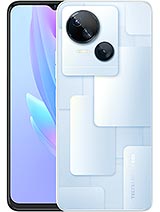
Spark 10 5G
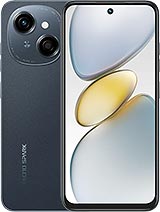
Spark Go 1S
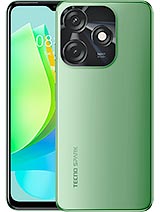
Spark 10C
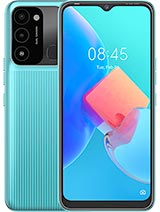
Spark Go 2022
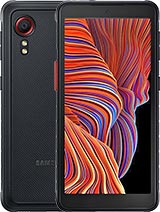
Galaxy XCover 7