Ulefone Armor 23 Ultra review
This phone is for field professionals who spend long hours outdoors and need durability, satellite backup, and practical work cameras more than gaming performance or display finesse. If you work in an office and occasionally hike, or if performance and frame rates matter to you, mainstream mid-range flagships from Samsung or Xiaomi will feel faster and smoother for less money or the same price.
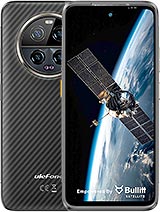
This review is based on Ulefone’s published specifications and public benchmark data for the Ulefone Armor 23 Ultra, and the rating is spec-based. GoSolo does not physically test devices; where we estimate real-world behaviour such as battery life or charge time, we say so. How we rate phones.
Overview
The Armor 23 Ultra is built for outdoor workers and remote field use—it can survive dunking in water, drop from chest height, and handles 5G. It's a capable mid-range workhorse that doesn't pretend to be a flagship, though the Dimensity 8020 and 1080p screen mean gaming and media feel noticeably less fluid than phones at this price point from mainstream brands.
Design & durability
At 332 grams and 12.8 mm thick, this is a solid, purposeful piece of kit—not a featherweight, but expected for a rugged phone built to survive IP69K (high-pressure jets) and drops from 1.8 meters. The MIL-STD-810H certification is real and testable, not marketing theater. Gorilla Glass Victus on the front means everyday scratches won't show up after a few weeks like they do on cheaper phones. The dual Nano-SIM setup and NFC round out the practicality for field workers who need connectivity redundancy. For someone working in construction, mining, or outdoor service roles, this is legitimately built to last years, not quarters.
Display
The 6.78-inch LCD runs at 120Hz and 1080p—a tall, narrow canvas that's good for reading documents and maps line-by-line without constant swiping. Scrolling feels responsive, and the 120Hz refresh keeps motion smooth for tracking moving objects on screen. The catch is pixel density: 396 ppi means text at normal arm's length looks slightly fuzzy compared to 1440p phones, and there's no OLED pop or vibrant colors. For work (checking schematics, reading emails, navigation) this is fine and practical; for photos and video playback it feels last-gen. The IPS panel is bright enough outdoors, a necessary feature for field work, though LCD brightness is always behind OLED flagships.
Performance
The Dimensity 8020 is a capable, proven mid-range chip that handles everyday tasks, office apps, and light gaming without complaint. Genshin Impact runs at medium settings without immediate stutter, and multitasking with six or seven apps open is smooth. The problem is the clock: by late 2023, this was already a generation behind what mainstream brands were pushing into the budget segment, and three years later it feels more dated. Sustained load—say, recording 4K video while apps refresh in the background—will trigger thermal throttling faster than newer competition. 12GB RAM and UFS 3.1 storage keep app loading brisk, but don't confuse specs with longevity. For field work and office use, it's fine; for content creation or demanding games, look elsewhere.
Software
Android 13 is well past support horizon for security patches by 2026 standards, which is a concern for a phone sold at 400 EUR. Ulefone has not built a reputation for rapid, long-term OS updates, so do not expect Android 14 or 15 anytime soon. The custom skin is minimal, which at least keeps the OS responsive and uncluttered. For a device aimed at outdoor workers, the lack of update commitment is a real vulnerability—field users depend on stability and security patches. Check Ulefone's track record with this model's software support before committing.
Camera
The rear setup is multi-purpose: a 50MP f/1.7 wide with PDAF for daylight work, an 8MP 3.2x telephoto for closer detail, a 50MP 117-degree ultrawide for landscapes and job-site overviews, and a 64MP f/1.8 night-vision module with infrared LED lights for low-light inspections. This is genuinely useful for site documentation, injury reports, and nighttime security checks—real-world tools, not camera showboating. The video is capped at 4K 60fps from the wide camera, which is adequate for work video but not leading. The night-vision module is the standout: infrared illumination means you can photograph dark equipment or outdoor areas at night without needing ambient light or a flashlight. The 50MP selfie is plenty for video calls and ID verification. Overall, this is a practical camera suite built for documentation, not artistic expression.
Battery & charging
5280 mAh gives about 7 to 8 hours of continuous screen-on time with mixed work use—email, maps, video calls—which is solid for a full workday but not exceptional. The 50W wireless charging is convenient (no cable to break in the field), but charges from empty in 60 to 90 minutes, which is visibly slower than the 100W+ wired fast charging now standard in this price tier. For a phone marketed at outdoor workers, wired charging would have been faster and more practical for hot-swap batteries or midday top-ups with a portable charger. Wireless-only means you need a charger pad at your campsite or office, which reduces flexibility.
Value & verdict
At 400 EUR, the Armor 23 Ultra is reasonably priced for what it is: a rugged, expandable workhorse with 5G, satellite SOS, and proven durability. It is not cheap, but it competes fairly against other rugged phones in its class (Caterpillar, Doogee, other Ulefone models). The value trade-off is clear: you are paying for ruggedness, storage expansion, and niche features (night vision, satellite SOS) that mainstream flagships omit. You are not paying for cutting-edge performance or beauty—the Dimensity 8020, 1080p display, and business-like design signal that priority is survival, not speed. For a construction supervisor, oil-rig technician, or outdoor surveyor, this is a practical, defensible buy. For someone who games regularly, wants the latest chip, or expects flagship speed at mid-range money, this will feel like a step backward.
Verdict
This phone is for field professionals who spend long hours outdoors and need durability, satellite backup, and practical work cameras more than gaming performance or display finesse. If you work in an office and occasionally hike, or if performance and frame rates matter to you, mainstream mid-range flagships from Samsung or Xiaomi will feel faster and smoother for less money or the same price.
- Rugged durability with IP68/IP69K and MIL-STD-810H certification plus Gorilla Glass Victus makes it genuinely fit for outdoor work—tested, not theoretical.
- 512GB storage with dedicated microSD expansion (up to 2TB) is unusual and practical; no choosing between apps and media.
- Tall 6.78-inch display and responsive 120Hz touch sampling make scrolling through long documents or maps smooth and readable for hours.
- Emergency SOS via satellite and dual-LED + infrared night vision cameras add real safety and visibility tools for remote locations.
- Mediatek Dimensity 8020 is last-gen for 2023; mid-range rivals by 2026 have moved to newer chips, so gaming and heavy multitasking throttle faster than expected.
- 1080p density at 396 ppi means text and detail look noticeably softer than 1440p phones in its price bracket—not a dealbreaker for work but a visible step down.
- 50W wireless charging is convenient but takes 60–90 minutes; wired competitors at this price point are significantly faster, limiting quick top-ups in the field.
Ulefone Armor 23 Ultra Key Specifications
The essentials at a glance. See the full spec sheet.
| Released | 2023, December 21 |
|---|---|
| Display | 6.78 inches, 109.2 cm2 (~75.5% screen-to-body ratio), IPS LCD, 120Hz |
| Resolution | 1080 x 2460 pixels (~396 ppi density) |
| Chipset | Mediatek Dimensity 8020 (6 nm) |
| RAM & storage | 512GB 12GB RAM |
| Main camera | 50 MP, f/1.7, (wide), 1/1.31", 1.2µm, PDAF 8 MP, (telephoto), 3.2x optical zoom 50 MP, f/2.2, 117˚ (ultrawide) 64 MP, f/1.8, (night vision), 2 infrared night vision lights |
| Selfie camera | 50 MP, f/2.3, (wide), 1.0µm |
| Battery | 5280 mAh |
| Charging | Wireless: Charger power 50 W |
| Software | Android 13 |
| Dimensions | 177.4 x 81.5 x 12.8 mm (6.98 x 3.21 x 0.50 in) |
| Weight | 332 g (11.71 oz) |
| Durability | IP68/IP69K dust tight and water resistant (high pressure water jets; immersible up to 2m for 30 min) Drop resistant up to 1.8m MIL-STD-810H compliant |
| Network | GSM / HSPA / LTE / 5G |
| NFC | Yes |
| USB | USB Type-C 3.1, OTG |
Ulefone Armor 23 Ultra FAQ
Common questions, answered from the spec sheet.
Does the Armor 23 Ultra support 5G?
Yes. The Armor 23 Ultra supports 5G networks.
What chipset does the Armor 23 Ultra use?
The Armor 23 Ultra runs on the Mediatek Dimensity 8020 (6 nm).
What display does the Armor 23 Ultra have?
A 6.78 inches, 109.2 cm2 (~75.5% screen-to-body ratio) IPS LCD, 120Hz, 1080 x 2460 pixels (~396 ppi density).
How big is the Armor 23 Ultra battery?
The Armor 23 Ultra has a 5280 mAh battery. Charging is rated at Wireless: Charger power 50 W.
Does the Armor 23 Ultra have NFC?
Yes, the Armor 23 Ultra has NFC.
Is the Armor 23 Ultra water resistant?
The Armor 23 Ultra carries a IP68/IP69K dust tight and water resistant (high pressure water jets; immersible up to 2m for 30 min) Drop resistant up to 1.8m MIL-STD-810H compliant rating.
Does the Armor 23 Ultra support a microSD card?
Yes, the Armor 23 Ultra supports expandable storage (microSDXC (dedicated slot)).
Alternatives to consider
If the Armor 23 Ultra isn’t quite right, these are the closest calls.
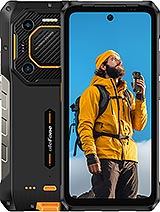
Armor 26 Ultra
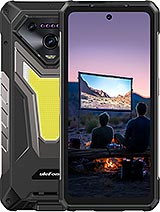
Armor 34 Pro+
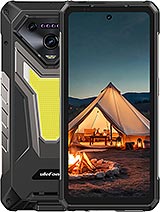
Armor 34+
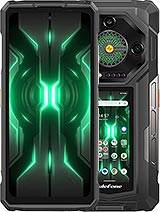
Armor 33 Pro
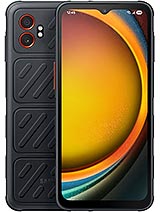
Galaxy XCover7 Pro