Ulefone Armor 24 review
This is purpose-built for outdoor workers and field professionals who need a phone that survives hard use and lasts days between charges. Anyone after gaming performance, a sharp display, or a sleek everyday phone should look at a midrange conventional handset instead.
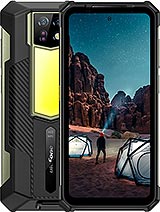
This review is based on Ulefone’s published specifications and public benchmark data for the Ulefone Armor 24, and the rating is spec-based. GoSolo does not physically test devices; where we estimate real-world behaviour such as battery life or charge time, we say so. How we rate phones.
Overview
The Armor 24 is a rugged workphone with a genuinely massive 22,000mAh battery and IP69K durability that will slog through a multi-day site visit or field job. It trades processor muscle and display sharpness for endurance and toughness, which is exactly the right call for its audience, but anyone after gaming performance or a crisp screen should look elsewhere.
Design & Build
This is not a phone designed to fit elegantly in a back pocket. At 647g and 27.5mm thick, the Armor 24 is a portable tank, and that is on purpose. The IP69K and IP68 ratings along with MIL-STD-810H compliance mean it can handle submersion to 1.5 meters, high-pressure water jets, and hard drops from shoulder height without flinching. A dedicated 1,000-lumen flood flashlight and accessory connector for endoscope and microscope attachments underscore its purpose: this is field equipment. The trade-off is heft and bulk that rivals a decade-old phone, but for outdoor workers, construction crews, and anyone doing inspections or maintenance in remote areas, that weight and thickness translate directly to job-site reliability.
Display
The 6.78-inch IPS LCD with 120Hz refresh and 1080p resolution is a genuine compromise. The refresh rate keeps scrolling smooth in daily tasks, but fitting 1080p across such a large screen leaves the pixel density at 396 ppi, which is low enough that text, icons, and UI elements feel smaller than they should without digging into accessibility settings to enlarge them. For office work or content consumption outdoors, the large real estate is useful, but anyone who spends hours reading text on-screen will find themselves cranking up system-wide scaling. The Gorilla Glass 5 is modest by modern standards (a 5.5-year-old spec), though it is fit for purpose in a rugged phone at this price.
Performance
The Helio G96 is a mainstream midrange chip from 2021, and it shows. Everyday apps, messaging, email, and navigation run without stutter or delay, and web browsing is acceptably responsive. Where it falters is gaming and heavy media work. Demanding 3D titles like Genshin Impact or Fortnite need medium or lower settings to stay playable, and video editing or heavy multitasking will feel sluggish compared to current-year flagships or even last year's mainstream chips. For a phone aimed at workers who want reliability and battery life over frame rates, this is the right chip to choose, not a limitation to fight against. It will not slow you down on a job site, but do not expect snappy creative tools or high-end gaming.
Camera
The dual 64MP setup is split between a standard wide camera with f/1.9 aperture and PDAF, and a dedicated night-vision sensor with 2 infrared lights. In daylight, the main camera captures decent detail thanks to its large 1/1.7-inch sensor, though processing is competent rather than exceptional. The night-vision module is the real story: it is not a gimmick for surveillance enthusiasts, but a genuine tool for inspections in darkness, maintenance work, or any low-light environment where a visible light torch would be impractical or unwanted. Video tops out at 1440p at 30fps, which is acceptable for fieldwork documentation but behind what mainstream phones offer in 2023 and beyond. The 16MP selfie camera is purely functional.
Battery & Charging
The 22,000mAh battery is the phone's defining strength. On mixed use with moderate screen-on time, expect 18 to 24 hours before needing power; heavy use (video, navigation, site documentation) will stretch closer to 2 to 3 days. This is genuinely transformative for workers without reliable charging access—site visits, field surveys, remote inspections, or extended outdoor work where plugging in is not an option. The spec sheet does not list charging speed (a notable omission), but a battery this large typically takes 2 to 4 hours on conventional chargers, which is acceptable given the multi-day reserve. For its use case, endurance trumps speed.
Software
Android 13 at launch in September 2023 was current, though by now it will likely have received 1 or 2 years of security updates at best; Ulefone's track record on long-term software support is spotty. For a rugged workphone, this matters less than on a flagship, because the target user prioritizes durability and battery life over the latest features. The phone will continue to handle calls, navigation, and document work long after its Android version falls behind, but lack of a clear update roadmap is a minor concern for anyone keeping the device beyond 2025.
Value & Verdict Context
At around 260 EUR, the Armor 24 is priced fairly for what it offers in ruggedness and battery capacity, though flagships and mainstream phones offer faster chips and sharper screens at similar cost. This is not a generalist phone competing on raw performance or display quality; it is a specialist tool. If you work outdoors, need a phone that will survive hard use without constant babysitting, and want multi-day battery endurance, the Armor 24 delivers on all three fronts. If you value gaming, responsive daily performance, or a display that does not feel cramped, this phone will disappoint. For construction, inspections, field surveys, or any role where the phone is a work tool rather than a consumer device, this makes sense. For everything else, save your money or spend it on a conventional flagship with better all-round capability.
Verdict
This is purpose-built for outdoor workers and field professionals who need a phone that survives hard use and lasts days between charges. Anyone after gaming performance, a sharp display, or a sleek everyday phone should look at a midrange conventional handset instead.
- 22,000mAh battery delivers 2 to 3 days of real-world use, a genuine advantage over conventional handsets for workers without daily charging access
- IP69K and MIL-STD-810H certification means it survives submersion, high-pressure jets, and 1.5m drops without ceremony
- Dedicated night-vision camera with infrared lights is a real tool for inspections, maintenance, and low-light fieldwork rather than a gimmick
- Expandable storage to 2TB via microSD slot covers off-site media archival and large datasets on the job
- 1080p on a 6.78-inch screen means UI elements and text feel cramped; a QHD or higher panel would justify the size
- Helio G96 chipset struggles with any gaming or video editing; everyday apps run fine but performance is a few years behind even budget flagships
- At 647g and 27.5mm thick, it is bulky and heavy compared to modern phones, though that is partly the cost of ruggedness and battery capacity
Ulefone Armor 24 Key Specifications
The essentials at a glance. See the full spec sheet.
| Released | 2023, September |
|---|---|
| Display | 6.78 inches, 109.2 cm2 (~69.2% screen-to-body ratio), IPS LCD, 120Hz |
| Resolution | 1080 x 2460 pixels (~396 ppi density) |
| Chipset | Mediatek MT6781 Helio G96 (12 nm) |
| RAM & storage | 256GB 12GB RAM |
| Main camera | 64 MP, f/1.9, (wide), 1/1.7", 0.8µm, PDAF 64 MP, f/1.8, (night vision), 2 infrared night vision lights |
| Selfie camera | 16 MP, f/2.2, (wide), 1.0µm |
| Battery | 22000 mAh |
| Software | Android 13 |
| Dimensions | 181.2 x 87 x 27.5 mm (7.13 x 3.43 x 1.08 in) |
| Weight | 647 g (1.43 lb) |
| Durability | IP68/IP69K dust tight and water resistant (high pressure water jets; immersible up to 1.5m for 30 min) Drop resistant up to 1.5m MIL-STD-810H compliant Accessory connector (ulefone endoscope, microscope) 1000 lumens dedicated flood flashlight |
| Network | GSM / HSPA / LTE |
| NFC | Yes |
| USB | USB Type-C 2.0, OTG |
Ulefone Armor 24 FAQ
Common questions, answered from the spec sheet.
Does the Armor 24 support 5G?
No. The Armor 24 tops out at GSM / HSPA / LTE, without 5G.
What chipset does the Armor 24 use?
The Armor 24 runs on the Mediatek MT6781 Helio G96 (12 nm).
What display does the Armor 24 have?
A 6.78 inches, 109.2 cm2 (~69.2% screen-to-body ratio) IPS LCD, 120Hz, 1080 x 2460 pixels (~396 ppi density).
How big is the Armor 24 battery?
The Armor 24 has a 22000 mAh battery.
Does the Armor 24 have NFC?
Yes, the Armor 24 has NFC.
Is the Armor 24 water resistant?
The Armor 24 carries a IP68/IP69K dust tight and water resistant (high pressure water jets; immersible up to 1.5m for 30 min) Drop resistant up to 1.5m MIL-STD-810H compliant Accessory connector (ulefone endoscope, microscope) 1000 lumens dedicated flood flashlight rating.
Does the Armor 24 support a microSD card?
Yes, the Armor 24 supports expandable storage (microSDXC (dedicated slot)).
Alternatives to consider
If the Armor 24 isn’t quite right, these are the closest calls.
Power Armor 19T
Armor 21
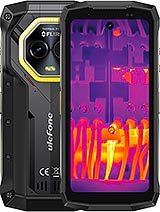
Armor Mini 20T Pro
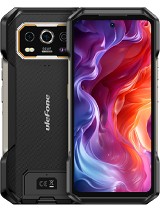
Armor 27 Pro
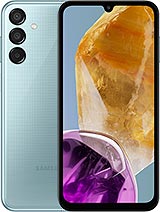
Galaxy M15 5G