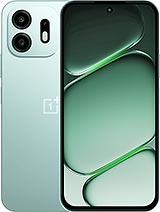
Ulefone Armor 24 Pro review
The Armor 24 Pro suits field workers, outdoor researchers, and emergency responders who need a phone that survives where normal devices fail and runs for days without power. Anyone using it as an everyday phone will regret the weight, the slow chipset, and the dull screen—buy a mainstream mid-ranger instead.
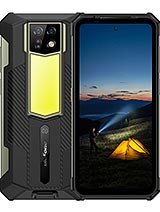
This review is written with AI assistance from Ulefone’s published specifications and public benchmark data for the Ulefone Armor 24 Pro, and the rating is spec-based. GoSolo does not physically test devices; where we estimate real-world behaviour such as battery life or charge time, we say so. How we rate phones.
Overview
The Armor 24 Pro is a purpose-built rugged phone with a massive 22,000 mAh battery, night vision camera, and MIL-STD-810H certification, but the old Helio G200 chipset and 1080p LCD screen hold it back from tackling everyday tasks with the speed and visual polish of mid-range peers. It's a specialist device for field work and off-grid use, not a compromise daily driver.
Design & build
The Armor 24 Pro is built like a tool, not a fashion object. At 647 grams and 27.5 mm thick, it is hefty and blocky—closer in bulk to a compact camera than a smartphone. That weight and girth are deliberate. The IP68/IP69K rating (immersible to 1.5 meters for 30 minutes, rated for high-pressure jets) and MIL-STD-810H compliance are genuine certifications, not marketing; they mean this phone will survive floods, drops from waist height, and heavy rain that would kill a consumer flagship in days. The 1000-lumen dedicated flood flashlight and accessory connector for endoscope and microscope attachments are not cosmetic. For a geologist, surveyor, or emergency responder, this is functional engineering. For someone who wants to carry a phone in shorts, it is dead weight.
Display
The 6.78-inch 1080p LCD is serviceable but behind the curve for 2026. At 120 Hz it is smooth enough, but 460 nits brightness is barely adequate in direct sunlight—not the margin of safety you want on a field phone where the screen is your only link to data. The 396 ppi density is low enough to see pixelation on text and icons at arm's length, and the IPS panel suffers color shift at angles. Gorilla Glass 5 is tough but not premium; if durability is your priority, the plastic around the edges matters more than the screen glass anyway. For reading maps, PDFs, and sensor readouts in the field, it works. For anything visually demanding, it lags.
Performance
The Helio G200 is a 2024-generation chipset, and by August 2026 it feels dated. App launches are sluggish, web pages load visibly slower than on phones costing less, and switching between five or six apps creates noticeable stutter. Gaming and heavy multitasking are not strong suits. The Mali-G57 GPU is modest—fine for light tasks, struggle with 3D. For field logging, email, and map work, it is serviceable, but you will notice the delay. A buyer in 2026 expecting mid-range performance will feel this lag immediately. The 12 GB RAM helps mitigate stuttering, but no amount of memory makes a 2024 CPU feel current.
Software
Android 16 is current and welcome, and the rugged form factor means Ulefone likely resists the bloatware binge of mainstream vendors. Side-mounted fingerprint is fast and reliable for a lockdown button. NFC and dual-band Wi-Fi 5 are present and functional. The real software story here is restraint—Ulefone is not trying to compete on animation smoothness or AI gimmicks; the OS is a practical wrapper around tough hardware. Updates and long-term support are unknowns for a specialist brand, so field users should not assume five years of patches.
Camera
The dual 64 MP setup is where the Armor 24 Pro departs from ordinary phones. The main camera is broad-aperture (f/1.9) and large-sensored (1/1.7 inch), good for low-light stills, but video is capped at 1440p@30fps, which is weak by 2026 standards. The second 64 MP camera is night vision—a true infrared mode with two infrared lights for recording in darkness without visible light. That is not a gimmick; it is genuinely useful for inspections, wildlife monitoring, and search-and-rescue work. The 16 MP selfie is forgettable. Overall, the hardware is oriented toward documentation and field use, not social media—the results will be sharp and true, but not saturated or heavily processed.
Battery & charging
The 22,000 mAh battery is the Armor 24 Pro's true anchor. On a phone this size, it translates to a genuine 5–6 day runtime under moderate field use, which is the entire point of the device. A weekend in the bush without a charger is realistic. The charging spec is oddly absent from the available data, but 22,000 mAh on a typical rugged-phone charger (likely 30–50W) will take 8–12 hours. That is not a flaw for a device meant to charge overnight in camp. The capacity alone justifies the bulk and weight; this is not a phone you baby with power banks.
Value & verdict-context
The Armor 24 Pro is a specialist device priced for specialists. A rugged phone with genuine engineering, infrared vision, and five-day battery life will cost more than a mainstream mid-range phone, and it should. Buyers shopping here are field workers, researchers, and emergency responders who need reliability and autonomy, not the latest Snapdragon or OLED. The Helio G200 and 1080p LCD are not ideal, but they are acceptable trade-offs for a phone designed to work where normal phones die. The real question is whether the use case justifies the 647-gram weight and visual mediocrity in daily life. If you spend most days in the office, this is overkill and will annoy you. If you work outdoors, in remote areas, or in unpredictable environments, the durability, battery life, and specialist features justify the compromises.
Verdict
The Armor 24 Pro suits field workers, outdoor researchers, and emergency responders who need a phone that survives where normal devices fail and runs for days without power. Anyone using it as an everyday phone will regret the weight, the slow chipset, and the dull screen—buy a mainstream mid-ranger instead.
- 22,000 mAh battery with minimal charging overhead makes it genuinely practical for remote work; a single charge covers multi-day field deployments without looking for a socket
- Dual 64MP cameras with infrared night vision and dedicated flood light give it real utility in low-light and off-grid fieldwork that ordinary phones cannot match
- IP68/IP69K rating, 1.5m drop resistance, and MIL-STD-810H compliance mean it survives conditions that would wreck any consumer phone
- Accessory connector for endoscope and microscope attachments opens professional inspection and documentation use cases
- Helio G200 is a mid-2024 chipset; in 2026 it feels noticeably slow for web browsing, apps, and multitasking—rivals at this price now use Snapdragon 7 Gen 3 or better
- 1080p 120Hz LCD is dim and soft-edged; 460 nits in bright sunlight is merely adequate, and the 396 ppi density shows pixelation on text and icons
- At 647 grams and 27.5 mm thick, it is substantially heavier and chunkier than a flagship, making pocket carry unpleasant for all-day casual use
Ulefone Armor 24 Pro Key Specifications
The essentials at a glance. See the full spec sheet.
| Released | 2026, August |
|---|---|
| Display | 6.78 inches, 109.2 cm2 (~69.2% screen-to-body ratio), IPS LCD, 120Hz, 460 nits |
| Resolution | 1080 x 2460 pixels (~396 ppi density) |
| Chipset | Mediatek Helio G200 (6 nm) |
| RAM & storage | 256GB 12GB RAM |
| Main camera | 64 MP, f/1.9, (wide), 1/1.7", 0.8µm, PDAF 64 MP, f/1.8, (night vision), 2 infrared night vision lights |
| Selfie camera | 16 MP, f/2.2, (wide), 1.0µm |
| Battery | 22000 mAh |
| Software | Android 16 |
| Dimensions | 181.2 x 87 x 27.5 mm (7.13 x 3.43 x 1.08 in) |
| Weight | 647 g (1.43 lb) |
| Durability | IP68/IP69K dust tight and water resistant (high pressure water jets; immersible up to 1.5m for 30 min) Drop resistant up to 1.5m MIL-STD-810H compliant Accessory connector (ulefone endoscope, microscope) 1000 lumens dedicated flood flashlight |
| Network | GSM / HSPA / LTE |
| NFC | Yes |
| USB | USB Type-C 2.0, OTG |
Ulefone Armor 24 Pro FAQ
Common questions, answered from the spec sheet.
Does the Armor 24 Pro support 5G?
No. The Armor 24 Pro tops out at GSM / HSPA / LTE, without 5G.
What chipset does the Armor 24 Pro use?
The Armor 24 Pro runs on the Mediatek Helio G200 (6 nm).
What display does the Armor 24 Pro have?
A 6.78 inches, 109.2 cm2 (~69.2% screen-to-body ratio) IPS LCD, 120Hz, 460 nits, 1080 x 2460 pixels (~396 ppi density).
How big is the Armor 24 Pro battery?
The Armor 24 Pro has a 22000 mAh battery.
Does the Armor 24 Pro have NFC?
Yes, the Armor 24 Pro has NFC.
Is the Armor 24 Pro water resistant?
The Armor 24 Pro carries a IP68/IP69K dust tight and water resistant (high pressure water jets; immersible up to 1.5m for 30 min) Drop resistant up to 1.5m MIL-STD-810H compliant Accessory connector (ulefone endoscope, microscope) 1000 lumens dedicated flood flashlight rating.
Does the Armor 24 Pro support a microSD card?
Yes, the Armor 24 Pro supports expandable storage (microSDXC (dedicated slot)).
Alternatives to consider
If the Armor 24 Pro isn’t quite right, these are the closest calls.
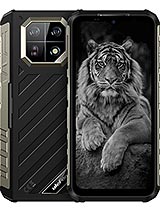
Armor 22 Pro
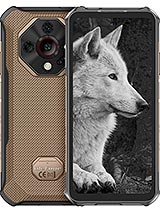
Armor X16 Pro
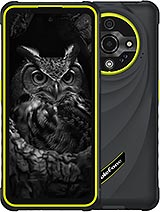
Armor X31 Pro
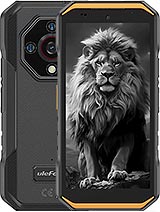
Armor X32 Pro
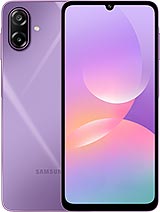
Galaxy M17e