Ulefone Armor 27T review
Buy this if your work—construction, inspection, emergency response, field engineering—happens outdoors in rough conditions and you need thermal imaging and night vision as practical tools. Skip it if you primarily want a conventional smartphone with mainstream camera quality and fast charging; the ruggedness and thermal suite add cost and won't matter to you.
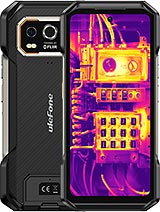
This review is based on Ulefone’s published specifications and public benchmark data for the Ulefone Armor 27T, and the rating is spec-based. GoSolo does not physically test devices; where we estimate real-world behaviour such as battery life or charge time, we say so. How we rate phones.
Overview
The Armor 27T is a rugged workhorse built for outdoors and fieldwork, not a mainstream phone. Its IP68/IP69K protection and thermal imaging suit construction crews and remote teams who value durability and all-day battery over flagship performance or camera refinement.
Design & Durability
At 441g and 18.5mm thick, the Armor 27T is genuinely built. The IP68/IP69K rating means full dust-tightness and submersion to 2m for 30 minutes, plus high-pressure water jets—something you actually notice when you're standing in a downpour or hosing down equipment on a construction site. MIL-STD-810H compliance and 2m drop resistance add weight to the marketing claim. Gorilla Glass Victus protects the screen, which is useful but not unique. The design looks military, which is the point; this is not a phone trying to be thin or light.
Display
The 6.78-inch LCD runs at 1080p and 120Hz, which is tall and smooth for scrolling through documents or inspection photos in portrait mode. At 396 ppi, the pixel density is serviceable but not sharp; text and small details lack the crispness you'd get from a 1440p panel. The 120Hz refresh is a genuine quality-of-life improvement for fieldwork, especially when flipping through multiple images or maps. Brightness peaks around 680 nits according to the spec, which is adequate indoors and decent in overcast light but will washout in bright sunlight if you're trying to read small text. For a rugged phone, this is reasonable.
Performance
The Helio G99 is an upper-midrange chip by 2026 standards, capable enough for everyday work and light gaming without stuttering. With 12GB RAM and UFS 2.2 storage, app-switching is fluid and multitasking doesn't clog up. Field apps—mapping, site inspection software, messaging—run without hiccup. You can play PUBG or Fortnite at medium settings without lag, but sustained high-end gaming or video encoding will push thermal limits. For construction teams, site managers, and inspectors, this is more than adequate; the phone is built to survive the job, not to double as a gaming rig.
Camera & Thermal
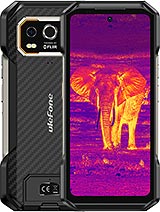
The 50MP main camera (f/2.0, PDAF) handles standard photos and video up to 1440p at 30fps, which is solid for documentation and site recording. The 64MP night vision mode with infrared lights is the headline; paired with the Flir thermal camera, it's genuinely useful for spotting heat loss, electrical faults, or equipment overheating in the dark. The thermal sensor is modest—160x120 pixels, 9Hz refresh—so it's not a replacement for dedicated thermal imaging tools, but it's good enough for quick diagnostics and won't let you miss obvious problems. The 32MP selfie camera is fine for video calls and permits. Overall, the camera stack is practical rather than aspirational, which fits the phone's purpose.
Battery & Charging
The 10,600 mAh battery is well above average for this size and will easily last 1.5 to 2 days with moderate use, stretching closer to two days if you're not hammering the screen all day. For teams working remote sites without daily charging access, this is a major asset. However, charging relies entirely on 30W wireless—there is no wired option—which takes about 2–3 hours to full. If you need the phone while it's charging, add another hour. This is a clear trade-off: all-day endurance comes at the cost of slow top-up speed. For fieldwork, the battery capacity matters more than charging speed, so it's the right bet, but you will feel the wait if your site doesn't have a charger nearby.
Software & Connectivity
Android 15 is current and includes the typical Ulefone customizations; no bloat surprises here. The phone supports 5G across sub-6 bands, dual nanoSIM for network juggling, and Wi-Fi 6 is absent (Wi-Fi 5 ac only), which is a minor downgrade on the connectivity front but won't impact most fieldwork since teams often rely on cellular or site hotspots anyway. NFC, FM radio, and GPS (GPS, GLONASS, Galileo, BeiDou) round out the feature set. The accessory connector for endoscopes and microscopes is a neat angle for inspection work, though you'll need to buy the attachments separately.
Value & Verdict
The Armor 27T is not a phone for everyone; it's niche hardware with a clear audience. For construction crews, field inspectors, emergency responders, and remote team leads who need a device that will not break under real-world abuse and lasts through a heavy work day, this hits the mark. The thermal and night vision cameras are genuine tools, not gimmicks. The main friction is the slow wireless-only charging and mediocre display sharpness, neither of which will disqualify a professional buyer. Pricing and market availability will determine whether it's worth the premium over a standard rugged phone; if you're comparing it to mainstream flagships at the same cost, skip it. But if you're outfitting a team for fieldwork, the durability and battery life justify the choice.
Verdict
Buy this if your work—construction, inspection, emergency response, field engineering—happens outdoors in rough conditions and you need thermal imaging and night vision as practical tools. Skip it if you primarily want a conventional smartphone with mainstream camera quality and fast charging; the ruggedness and thermal suite add cost and won't matter to you.
- Thermal imaging and night vision camera tailored for site inspection, rescue, and infrared diagnostics—a genuinely useful tool for professionals, not a novelty
- IP68/IP69K durability plus drop resistance to 2m and MIL-STD-810H compliance; this thing survives real rough conditions without a case
- 10,600 mAh battery easily clears 1.5 days of heavy use, crucial for teams working remote sites without daily charging
- Helio G99 and 12GB RAM handle field apps, messaging, and moderate mobile games without stalling, paired with 5G readiness
- 30W wireless charging only takes 2–3 hours to full, but it's slower than any wired option and you lose hours if you use the phone while topping up
- 1080p display is adequate but not sharp for a 6.78-inch screen, and 680-nit brightness is moderate in direct sun
- Thermal camera is 160x120px and refreshes at 9Hz; fine for spotting heat leaks or overheating equipment, but not a replacement for serious thermal imaging equipment
Ulefone Armor 27T Key Specifications
The essentials at a glance. See the full spec sheet.
| Released | 2026, February |
|---|---|
| Display | 6.78 inches, 109.2 cm2 (~68.8% screen-to-body ratio), IPS LCD, 120Hz |
| Resolution | 1080 x 2460 pixels (~396 ppi density) |
| Chipset | Mediatek Helio G99 (6 nm) |
| RAM & storage | 256GB 12GB RAM |
| Main camera | 50 MP, f/2.0, (wide), 1/1.31", 1.2µm, PDAF 64 MP, f/1.8, (night vision), 2 infrared lights Thermal camera by Flir 3.5, 160x120 px, 9Hz |
| Selfie camera | 32 MP, f/2.5, (wide), 0.8µm |
| Battery | 10600 mAh |
| Charging | Wireless: Charger power 30 W |
| Software | Android 15 |
| Dimensions | 182.8 x 86.8 x 18.5 mm (7.20 x 3.42 x 0.73 in) |
| Weight | 441 g (15.56 oz) |
| Durability | IP68/IP69K dust tight and water resistant (high pressure water jets; immersible up to 2m for 30 min) Drop resistant up to 2m MIL-STD-810H compliant Accessory connector (ulefone endoscope, microscope) |
| Network | GSM / CDMA / HSPA / LTE |
| NFC | Yes |
| USB | USB Type-C 2.0, OTG |
Ulefone Armor 27T FAQ
Common questions, answered from the spec sheet.
Does the Armor 27T support 5G?
Yes. The Armor 27T supports 5G networks.
What chipset does the Armor 27T use?
The Armor 27T runs on the Mediatek Helio G99 (6 nm).
What display does the Armor 27T have?
A 6.78 inches, 109.2 cm2 (~68.8% screen-to-body ratio) IPS LCD, 120Hz, 1080 x 2460 pixels (~396 ppi density).
How big is the Armor 27T battery?
The Armor 27T has a 10600 mAh battery. Charging is rated at Wireless: Charger power 30 W.
Does the Armor 27T have NFC?
Yes, the Armor 27T has NFC.
Is the Armor 27T water resistant?
The Armor 27T carries a IP68/IP69K dust tight and water resistant (high pressure water jets; immersible up to 2m for 30 min) Drop resistant up to 2m MIL-STD-810H compliant Accessory connector (ulefone endoscope, microscope) rating.
Does the Armor 27T support a microSD card?
Yes, the Armor 27T supports expandable storage (microSDXC (dedicated slot)).
Alternatives to consider
If the Armor 27T isn’t quite right, these are the closest calls.
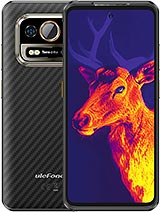
Armor 25T
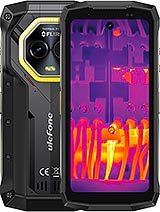
Armor Mini 20T Pro
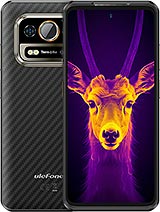
Armor 25T Pro
Armor 27T Pro

Galaxy A07 4G