Ulefone Armor Mini 20 review
The Armor Mini 20 suits outdoor workers, travellers, and anyone who genuinely needs a phone that survives harsh conditions and lasts two days between charges. If you mainly work indoors, prioritize performance or screen quality, or want flagship-grade speeds, look elsewhere—the 720p display and Helio G99 are deliberate sacrifices made to fund the durability and battery, not oversights."
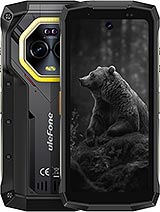
This review is based on Ulefone’s published specifications and public benchmark data for the Ulefone Armor Mini 20, and the rating is spec-based. GoSolo does not physically test devices; where we estimate real-world behaviour such as battery life or charge time, we say so. How we rate phones.
Overview
The Armor Mini 20 is a rugged daily driver built for durability and endurance, not raw power—IP68/IP69K sealing, 6200mAh battery, and a 500-lumen flashlight make it genuinely useful for outdoor work and field situations. The 720p screen and LTE-only connectivity feel dated for 2024, and the Helio G99 is a comfortable workhorse but no performance machine, though at its price that is the honest trade-off you are making.
Design & Build
At 301g and 24.9mm thick, the Armor Mini 20 is substantially heavier and chunkier than a typical modern phone, but that bulk is the whole point: you are buying genuine durability, not fashion. IP68/IP69K certification means full submersion to 2 metres for 30 minutes and resistance to high-pressure water jets, plus a 2-metre drop rating and MIL-STD-810H compliance. The rubberised case is clearly designed to survive jobsites, river trips, and careless handling rather than slip into your shirt pocket. The dedicated 500-lumen flood flashlight is a practical touch that justifies keeping this in a van or rucksack. None of this is novel—Ulefone has been building tough phones for years—but the execution feels solid, and you know exactly what you are paying for.
Display
A 4.7-inch IPS LCD with 720p resolution and 90Hz refresh is a clear compromise. The 373 ppi density means text is noticeably blocky if you read a lot or scroll through small type, but for navigation, messaging, and maps it is perfectly readable. The 90Hz smoothness helps everyday scrolling feel less stuttery than you might expect from a budget phone. Peak brightness of around 700 nits handles direct sunlight reasonably well, though it is not exceptional. Gorilla Glass Victus provides better drop resistance than ordinary glass, which aligns with the phone's durability pitch. The real issue is that even budget phones at this price now often push 1080p, so the 720p screen feels like a deliberate cost-cut rather than a limitation of the chassis constraints.
Performance
The MediaTek Helio G99 with 8GB RAM is a comfortable workhorse for daily apps, light gaming, and multitasking, but do not expect fluid frame rates in graphically demanding games or seamless handling of dozens of background apps. It is the right chip for a rugged phone—efficient, warm-running, and adequate—rather than a step up from last year's budget flagships. Real-world performance is snappy enough for email, social media, and navigation; heavy 3D games will struggle at higher settings. The 256GB storage and microSD expansion (via shared SIM slot) give you room, though the shared slot forces a choice between two SIMs and expandable storage. For its intended use case—outdoor work, reliable connectivity, not streaming gameplay—it is fit for purpose without being exciting.
Software
Android 14 out of the box is current, though Ulefone's update history on rugged lines is often spotty, so do not assume years of OS upgrades. The interface is relatively clean; there is no heavy bloat visible on the spec sheet. For a phone aimed at outdoor users and fieldworkers, the software feels pragmatic rather than trendy. GPS, barometer, and compass are present, which matter for navigation in remote areas. The FM radio with recording is a leftover feature that most phones have dropped, but it could be genuinely useful if you work in areas without mobile signal.
Camera
The dual-rear setup—50MP main with f/2.0 aperture and a 64MP night-vision camera with two infrared lights—is unusual and worth understanding. The 50MP sensor (1.2µm pixels, 1/1.31") is a solid mainstream choice for a phone at this price, and f/2.0 is respectable for low light without being exceptional. The infrared night camera is a gimmick in most contexts but genuinely handy if you work in darkness or need to see without a headlamp: construction sites, wildlife observation, security patrols. Video maxes out at 1440p30fps, which is adequate but behind modern standards—most rivals now shoot 4K. The 32MP selfie is fine for video calls. Overall, the camera is serviceable and the infrared quirk is useful for its niche, but do not expect smartphone photography at the level of phones twice the price.
Battery & Charging
The 6200mAh battery paired with a 720p display should deliver 1.5 to 2 days of typical use, longer with light use or in standby. That is a real strength for a small phone and a major reason to consider this for travel or fieldwork where charging ports are scarce. The downside: 15W wireless charging is slow by 2024 standards—rivals at this price now often hit 33W or higher—and there is no wired charging at all listed, which means a full charge takes 2 to 3 hours. If you regularly run out of power and need a quick top-up, you will feel this limitation. Wireless-only charging is also less flexible on a jobsite where a cable might be easier to rig. For planned, overnight charging, the battery endurance more than makes up for the slow replenishment.
Value & Verdict-Context
The Armor Mini 20 competes in a small niche: rugged, small phones for outdoor work and travel. At that positioning, it delivers what it promises—genuine durability, all-day-plus battery, and a practical toolkit (flashlight, IR camera, GPS, barometer). The 720p screen and LTE-only speeds feel dated compared to mainstream budget phones of 2024, and the lack of wired charging is a real annoyance if you ever need a quick refill. The Helio G99 is not a powerhouse, but for this use case it is more than sufficient. The real question is whether you need all that ruggedness or just want a cheap phone—if the latter, you will get better specs elsewhere at the same price. If you spend time outdoors, rely on a phone in harsh conditions, or want something that will survive a soaking and a drop, the Armor Mini 20 earns its bulk and justifies its feature set.
Verdict
The Armor Mini 20 suits outdoor workers, travellers, and anyone who genuinely needs a phone that survives harsh conditions and lasts two days between charges. If you mainly work indoors, prioritize performance or screen quality, or want flagship-grade speeds, look elsewhere—the 720p display and Helio G99 are deliberate sacrifices made to fund the durability and battery, not oversights."
- IP68/IP69K sealing and 2-metre drop rating with MIL-STD-810H compliance—genuinely robust for outdoor work and travel, not just marketing
- 6200mAh battery delivers 1.5 to 2 days on a single charge, making it reliable for fieldwork or remote trips without a power outlet
- Dual infrared night-vision camera is a practical tool for low-light work, construction sites, or wildlife observation where it matters
- 720p screen is blocky for text-heavy tasks and feels like a cost-cut when budget rivals now push 1080p or higher
- 15W wireless-only charging is slow by 2024 standards and inflexible on a jobsite where a wired cable would be more practical
- No 5G and LTE-only connectivity puts you at a speed disadvantage in areas where faster networks are standard
Ulefone Armor Mini 20 Key Specifications
The essentials at a glance. See the full spec sheet.
| Released | 2024, September |
|---|---|
| Display | 4.7 inches, 53.3 cm2 (~63.1% screen-to-body ratio), IPS LCD, 90Hz |
| Resolution | 720 x 1600 pixels, 20:9 ratio (~373 ppi density) |
| Chipset | Mediatek Helio G99 (6 nm) |
| RAM & storage | 256GB 8GB RAM |
| Main camera | 50 MP, f/2.0, (wide), 1/1.31", 1.2µm 64 MP, f/1.8, (night vision), 2 infrared lights |
| Selfie camera | 32 MP, f/2.5, (wide), 1/2.8", 0.8µm |
| Battery | 6200 mAh |
| Charging | Wireless: Qi Charger power 15 W |
| Software | Android 14 |
| Dimensions | 133.5 x 63.3 x 24.9 mm (5.26 x 2.49 x 0.98 in) |
| Weight | 301 g (10.62 oz) |
| Durability | IP68/IP69K dust tight and water resistant (high pressure water jets; immersible up to 2m for 30 min) Drop resistant up to 2m MIL-STD-810H compliant 500 lumens dedicated flood flashlight |
| Network | GSM / CDMA / HSPA / CDMA2000 / LTE |
| NFC | Yes |
| USB | USB Type-C 2.0, OTG |
Ulefone Armor Mini 20 FAQ
Common questions, answered from the spec sheet.
Does the Armor Mini 20 support 5G?
No. The Armor Mini 20 tops out at GSM / CDMA / HSPA / CDMA2000 / LTE, without 5G.
What chipset does the Armor Mini 20 use?
The Armor Mini 20 runs on the Mediatek Helio G99 (6 nm).
What display does the Armor Mini 20 have?
A 4.7 inches, 53.3 cm2 (~63.1% screen-to-body ratio) IPS LCD, 90Hz, 720 x 1600 pixels, 20:9 ratio (~373 ppi density).
How big is the Armor Mini 20 battery?
The Armor Mini 20 has a 6200 mAh battery. Charging is rated at Wireless: Qi Charger power 15 W.
Does the Armor Mini 20 have NFC?
Yes, the Armor Mini 20 has NFC.
Is the Armor Mini 20 water resistant?
The Armor Mini 20 carries a IP68/IP69K dust tight and water resistant (high pressure water jets; immersible up to 2m for 30 min) Drop resistant up to 2m MIL-STD-810H compliant 500 lumens dedicated flood flashlight rating.
Does the Armor Mini 20 support a microSD card?
Yes, the Armor Mini 20 supports expandable storage (microSDXC (uses shared SIM slot)).
Alternatives to consider
If the Armor Mini 20 isn’t quite right, these are the closest calls.
Armor Mini 20 Pro
Armor Mini 20T Pro

Armor 25T
Armor 27T

Galaxy A07 4G