Ulefone Armor X12 review
This phone suits outdoor workers, construction crews, and users in harsh or wet climates who prioritize durability and reliability over raw speed. Anyone expecting smooth performance, gaming capability, or a modern display experience should look elsewhere—a faster budget phone at the same or lower price will feel less frustrating in everyday use.
This review is based on Ulefone’s published specifications and public benchmark data for the Ulefone Armor X12, and the rating is spec-based. GoSolo does not physically test devices; where we estimate real-world behaviour such as battery life or charge time, we say so. How we rate phones.
Overview
The Ulefone Armor X12 is a rugged, water-resistant workhorse for fieldwork and tough environments, built to survive drops and submersion where other phones would fail. Performance is deliberately modest—a quad-core A22 and 3GB RAM—which is acceptable for calls, texts, and offline work, but this is not a phone for anyone expecting smooth gaming or multitasking.
Design & Build
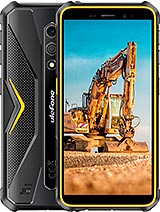
The Armor X12 is heavy and blocky at 257 g and 14.3 mm thick, built to absorb impacts rather than impress with thinness. The rubber bumpers and reinforced frame are obvious to the eye; this is armor-first, style-nowhere. What matters is that it lives up to the spec: IP68 full waterproofing, IP69K high-pressure jet resistance, and MIL-STD-810H compliance are not marketing fluff. The phone will genuinely survive a 1.5 m drop onto concrete and a soak in a river or saltwater pool. For construction crews, fieldwork, or harsh climates, that durability alone justifies the bulk. For city use, the weight gets tiring.
Display
The 5.45 inch IPS LCD at 720×1440 pixels delivers 295 ppi, which is sharp enough for text and photos, but the 60 Hz refresh rate and basic color gamut show budget priorities. Scrolling through feeds or swiping through apps feels noticeably less fluid than phones at a similar or only slightly higher price. Mohs level 4 hardness is below modern standards and the screen will pick up scratches from keys and sand more easily than gorilla glass—not ideal for a phone that will live in pockets and backpacks on worksites. The 63.5% screen-to-body ratio signals thick bezels, which are fine for grip but reinforce the rugged-not-elegant identity.
Performance
The quad-core Helio A22 at 2.0 GHz with 3GB RAM is entry-level. For calls, messaging, email, and light browsing, it is steady enough. Heavy multitasking, gaming, or large downloads will hang noticeably. This is a trade-off: the A22 draws little power, which helps the battery last, and Ulefone has not wasted money on overkill silicon. If your use is offline-heavy (reading PDFs, maps, documents cached to the phone), the shortcoming is less painful. If you expect app responsiveness on par with phones at the same or lower price, you will be frustrated.
Software
Android 13 Go edition is a slim, optimized build designed for low-RAM phones. The OS footprint is smaller, and app install sizes are tighter. Go edition has been refined by now (it launched in 2023), so basic use is not noticeably crippled, but you will notice that some apps—particularly heavy social media and video apps—are simplified or run slower. Updates and support timelines are unclear from the spec sheet, and Ulefone's typical track record on software longevity is spotty. For a phone sold with the premise of durability, the three- to four-year warranty on hardware does not extend meaningfully to software support.
Camera
The 13 MP main camera at f/2.2 and the 8 MP front camera are unremarkable. Daytime photos are acceptable but lack detail and dynamic range. The PDAF helps focus, but the wide aperture does not compensate for the small sensor and basic processing. Video is capped at 1080p 30fps, which is serviceable for proof-of-damage photos or quick clips but not for any creative use. This is a 'grab a photo to file away' camera, not one that encourages you to photograph your day. For fieldwork documentation (damage reports, site photos), it is adequate; for anything else, it is basic.
Battery & Charging
The 4860 mAh cell is reasonably sized and, paired with the Helio A22's modest power draw, delivers roughly one full day on moderate use (calls, messages, some browsing, no gaming). Heavy use or significant video will drain it by evening. The spec sheet does not list charging wattage or time, which is a gap for a rugged phone where you would want to know whether it fast-charges (important if you are out in the field). Without that detail, assume it charges slowly enough to be a practical inconvenience; most rugged phones in this class use 5W or 10W. The dedicated microSD slot means you can store media locally to reduce battery drain from streaming.
Value & Verdict
The Ulefone Armor X12 is not a general-purpose phone; it is a niche tool. At 2023 pricing (and still available in 2026), it costs more than budget candybar phones with faster processors and better screens, but less than flagship rugged alternatives. The cost-benefit flips entirely depending on your use. If you need a waterproof, droppable phone for outdoor work, construction, or travel in wet climates, the IP68/IP69K durability and all-day battery justify the trade-offs in speed and screen quality. If you are looking for everyday performance, a gaming device, or anything demanding, save your money for a faster phone at a similar price. The inclusion of FM radio and the dedicated microSD slot are small nods to simplicity and offline utility that matter in markets with poor network coverage.
Verdict
This phone suits outdoor workers, construction crews, and users in harsh or wet climates who prioritize durability and reliability over raw speed. Anyone expecting smooth performance, gaming capability, or a modern display experience should look elsewhere—a faster budget phone at the same or lower price will feel less frustrating in everyday use.
- IP68 and IP69K durability ratings allow full immersion in water up to 1.5 m for 30 minutes and resistance to high-pressure jets, making it genuinely fit for outdoor work and harsh conditions.
- All-day battery on moderate use; the 4860 mAh cell with conservative hardware manages a full day of calls, messages, and light browsing without aggressive power optimization getting in the way.
- Dedicated microSD slot (supports up to 256 GB) lets you expand storage cheaply, and the 32 GB onboard is sufficient for apps and offline media if you manage it.
- FM radio receiver with recording is built in, a rarity in modern phones and useful for users in areas with poor data coverage.
- The MediaTek Helio A22 and 3GB RAM will stall noticeably on heavier tasks—gaming, large file transfers, and multitasking feel sluggish by 2023 standards, even for a budget phone.
- The 720×1440 display is sharp enough to read, but IPS with no refresh rate beyond 60 Hz makes scrolling feel choppy next to modern rivals, and Mohs 4 protection means it scratches more easily than gorilla glass.
- No indication of charger specs (watts/time) in the data, which is a gap for a rugged phone where you'd want to know fast-top-up capability.
Ulefone Armor X12 Key Specifications
The essentials at a glance. See the full spec sheet.
| Released | 2023, September |
|---|---|
| Display | 5.45 inches, 76.7 cm2 (~63.5% screen-to-body ratio), IPS LCD |
| Resolution | 720 x 1440 pixels, 18:9 ratio (~295 ppi density) |
| Chipset | Mediatek MT6761V/WAB Helio A22 (12 nm) |
| RAM & storage | 32GB 3GB RAM |
| Main camera | 13 MP, f/2.2, (wide), 1.12µm, PDAF |
| Selfie camera | 8 MP, f/2.0, (wide), 1.4µm |
| Battery | 4860 mAh |
| Software | Android 13 (Go edition) |
| Dimensions | 157.2 x 76.8 x 14.3 mm (6.19 x 3.02 x 0.56 in) |
| Weight | 257 g (9.07 oz) |
| Durability | IP68/IP69K dust tight and water resistant (high pressure water jets; immersible up to 1.5m for 30 min) Drop resistant up to 1.5m MIL-STD-810H compliant |
| Network | GSM / HSPA / LTE |
| NFC | Yes |
| USB | USB Type-C 2.0 |
Ulefone Armor X12 FAQ
Common questions, answered from the spec sheet.
Does the Armor X12 support 5G?
No. The Armor X12 tops out at GSM / HSPA / LTE, without 5G.
What chipset does the Armor X12 use?
The Armor X12 runs on the Mediatek MT6761V/WAB Helio A22 (12 nm).
What display does the Armor X12 have?
A 5.45 inches, 76.7 cm2 (~63.5% screen-to-body ratio) IPS LCD, 720 x 1440 pixels, 18:9 ratio (~295 ppi density).
How big is the Armor X12 battery?
The Armor X12 has a 4860 mAh battery.
Does the Armor X12 have NFC?
Yes, the Armor X12 has NFC.
Is the Armor X12 water resistant?
The Armor X12 carries a IP68/IP69K dust tight and water resistant (high pressure water jets; immersible up to 1.5m for 30 min) Drop resistant up to 1.5m MIL-STD-810H compliant rating.
Does the Armor X12 support a microSD card?
Yes, the Armor X12 supports expandable storage (microSDXC (dedicated slot)).
Alternatives to consider
If the Armor X12 isn’t quite right, these are the closest calls.
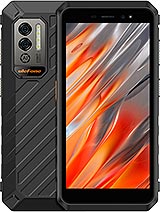
Power Armor X11
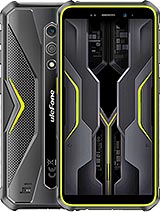
Armor X12 Pro
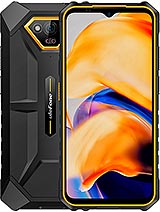
Armor X13
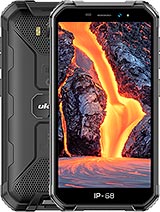
Armor X6 Pro
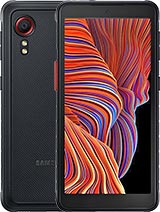
Galaxy XCover 7