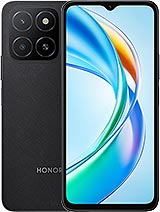
Ulefone Armor X12 Pro review
This phone is for people who work outdoors or near water and need calls, texts, and basic apps to survive that environment without breaking the budget. Anyone after a smooth daily driver should look elsewhere, even within the rugged category.
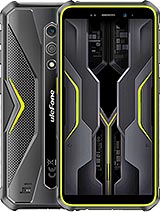
This review is based on Ulefone’s published specifications and public benchmark data for the Ulefone Armor X12 Pro, and the rating is spec-based. GoSolo does not physically test devices; where we estimate real-world behaviour such as battery life or charge time, we say so. How we rate phones.
Overview
The Armor X12 Pro is a rugged workhorse built to survive harsh conditions—water, dust, and drops—on a budget. Its weak processor and dim display make it a phone for calls and texts in tough environments, not a daily driver for most people.
Design & build
The Armor X12 Pro looks like what it is: a compact rugged phone. At 257 g and 14.3 mm thick, it avoids the tank-like bulk that plagued earlier rugged phones, so it fits pockets without shame. The Nano-SIM + Nano-SIM setup with a dedicated microSD slot is a sensible choice for workers who need storage and dual networks. Where it matters, the build is genuine: IP68/IP69K sealing means dust-tight operation and immersion to 1.5 m for 30 minutes, plus high-pressure water jets won't kill it. MIL-STD-810H certification adds credibility. That said, the Mohs level 4 display protection is basic—a screen protector is not optional if this phone is heading into a construction site.
Display
A 720p screen in 2023 is a compromise that buyers will feel immediately. At 295 ppi across 5.45 inches, text and icons remain legible but lack sharpness; reading fine print or photo details requires closer inspection than a 1080p rival would demand. The 60 Hz refresh is standard for the price, but the overall softness of the image is the real limiter here. IPS LCD is predictable and practical for outdoor work—no AMOLED benefits, but also no risk of burn-in on a phone that may sit idle for hours. Brightness and color accuracy are not standout, but adequate for daylight visibility in most conditions.
Performance
The Helio G36 is an entry-level chipset that keeps this phone alive, not thriving. It handles basic calls, texts, messaging apps, and light browsing without stuttering, but anything more ambitious—switching between several apps, loading media-heavy social feeds, or casual games with any polish—triggers noticeable lag. The 4 GB of RAM compounds the problem; simultaneous apps compete for memory and multitasking feels sluggish. This is a phone for construction workers, farmers, and field technicians who need reliability over responsiveness, not a device for someone juggling email, Slack, and streaming. Casual users should expect to tolerate slowness as the price of durability.
Software
Android 13 arrived fresh in 2023, but the implementation is straightforward. There is no indication of a long update roadmap; rugged phones from smaller brands rarely see more than one or two major OS bumps. The firmware is light enough not to bloat the experience, which is wise given the modest hardware, but don't expect cutting-edge Google features or timely security patches beyond a year or two. For a phone this cheap and niche, the software is competent but forgettable.
Camera
The 13 MP main camera with PDAF and LED flash is capable of snapping daylight photos and video that suffices for documentation—job site photos, proof of damage, quick clips for reports. At f/2.2, it gathers enough light for indoor work, and 1080p@30fps video is fine for evidence or low-stakes content. Don't expect standout color, dynamic range, or night mode; this is a functional tool, not a creative one. The 8 MP selfie is adequate for video calls but underwhelming for anything else. In practice, the camera is rarely the reason someone buys this phone; durability and availability are.
Battery & charging
The 4860 mAh battery is modest by 2026 standards and the 10 W charging spec (noted in the data) is glacially slow. Expect a full charge to take around 4–5 hours, which is impractical for workers who swap devices throughout a shift. Screen-on time ranges from 6 to 8 hours depending on cellular vs. Wi-Fi usage; heavy multitasking or constant 4G drains it faster. For anyone doing fieldwork, this phone demands a portable charger or access to a charging point mid-shift. The upside is that the smaller battery keeps weight down; the downside is a short operational window away from power.
Value & verdict-context
At €110, the Armor X12 Pro occupies a specific niche: anyone who needs a phone that survives submersion, dust, and drops and does not mind sacrificing everyday usability. There is no pretense here. Rugged phones at this price tier accept slower processors and dimmer screens as trade-offs for IP ratings and MIL-STD certifications that genuinely protect against jobsite hazards. A buyer cross-shopping this against a mainstream budget phone (say, an entry-level Samsung or Xiaomi) is making a conscious choice to prioritize durability over smoothness and display quality. For construction, agriculture, outdoor retail, or disaster response roles, that trade-off makes sense. For anyone expecting a phone that is merely water-resistant and happens to be rugged, this is overkill and unsatisfying.
Verdict
This phone is for people who work outdoors or near water and need calls, texts, and basic apps to survive that environment without breaking the budget. Anyone after a smooth daily driver should look elsewhere, even within the rugged category.
- Genuine durability: IP68/IP69K rating plus MIL-STD-810H means it genuinely handles submersion, high-pressure spray, and 1.5 m drops without flinching
- Dedicated microSD slot lets you expand storage beyond the tight 64 GB base without sacrificing a SIM
- Stays light and slim (257 g, 14.3 mm) for a rugged phone, so it doesn't feel like a brick in a holster
- Honest price point (€110) matches the limited capabilities—no false premium positioning
- Helio G36 processor struggles with any real workload: multitasking and modern apps lag noticeably
- 720p screen at 5.45 inches yields soft text and icons (295 ppi); no refresh rate boost to smooth scrolling
- Battery life tops out around 6–8 hours of actual screen time on cellular, forcing a daily charge for anything but light use
Ulefone Armor X12 Pro Key Specifications
The essentials at a glance. See the full spec sheet.
| Released | 2023, August |
|---|---|
| Display | 5.45 inches, 76.7 cm2 (~63.5% screen-to-body ratio), IPS LCD |
| Resolution | 720 x 1440 pixels, 18:9 ratio (~295 ppi density) |
| Chipset | Mediatek Helio G36 (12 nm) |
| RAM & storage | 64GB 4GB RAM |
| Main camera | 13 MP, f/2.2, (wide), 1.12µm, PDAF |
| Selfie camera | 8 MP, f/2.0, (wide), 1.4µm |
| Battery | 4860 mAh |
| Software | Android 13 |
| Dimensions | 157.2 x 76.8 x 14.3 mm (6.19 x 3.02 x 0.56 in) |
| Weight | 257 g (9.07 oz) |
| Durability | IP68/IP69K dust tight and water resistant (high pressure water jets; immersible up to 1.5m for 30 min) Drop resistant up to 1.5m MIL-STD-810H compliant |
| Network | GSM / HSPA / LTE |
| NFC | Yes |
| USB | USB Type-C 2.0 |
Ulefone Armor X12 Pro FAQ
Common questions, answered from the spec sheet.
Does the Armor X12 Pro support 5G?
No. The Armor X12 Pro tops out at GSM / HSPA / LTE, without 5G.
What chipset does the Armor X12 Pro use?
The Armor X12 Pro runs on the Mediatek Helio G36 (12 nm).
What display does the Armor X12 Pro have?
A 5.45 inches, 76.7 cm2 (~63.5% screen-to-body ratio) IPS LCD, 720 x 1440 pixels, 18:9 ratio (~295 ppi density).
How big is the Armor X12 Pro battery?
The Armor X12 Pro has a 4860 mAh battery.
Does the Armor X12 Pro have NFC?
Yes, the Armor X12 Pro has NFC.
Is the Armor X12 Pro water resistant?
The Armor X12 Pro carries a IP68/IP69K dust tight and water resistant (high pressure water jets; immersible up to 1.5m for 30 min) Drop resistant up to 1.5m MIL-STD-810H compliant rating.
Does the Armor X12 Pro support a microSD card?
Yes, the Armor X12 Pro supports expandable storage (microSDXC (dedicated slot)).
Alternatives to consider
If the Armor X12 Pro isn’t quite right, these are the closest calls.
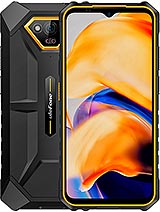
Armor X13
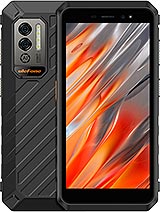
Power Armor X11
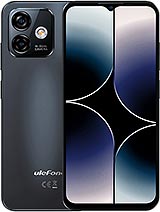
Note 16 Pro

Armor X11 Pro
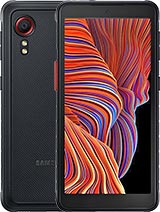
Galaxy XCover 7