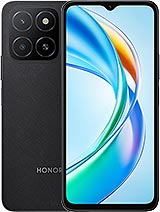
Ulefone Armor X13 review
The Armor X13 is for someone whose phone needs to survive a tough environment—job sites, outdoor work, heavy rain, or accidental drops—and who values battery life and practical durability features over screen quality or gaming performance. If you need a standard budget phone that merely tolerates water splashes and want sharper visuals or faster performance, a conventional midrange rival is the better call."
This review is based on Ulefone’s published specifications and public benchmark data for the Ulefone Armor X13, and the rating is spec-based. GoSolo does not physically test devices; where we estimate real-world behaviour such as battery life or charge time, we say so. How we rate phones.
Overview
The Ulefone Armor X13 is a rugged workhorse built to survive wet and rough conditions, with a 6.52-inch display, 6320 mAh battery, and sturdy IP68/IP69K durability—but its 720p resolution, entry-level Helio G36 chipset, and modest 1080p video capture mean it's not trying to compete on performance or visual polish. For someone who needs a tough phone that won't break on a job site or in heavy rain, the trade-off is sensible; for anyone prioritizing screen sharpness or gaming, look elsewhere.
Design & Build
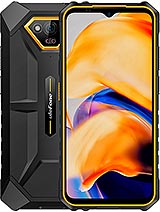
The Armor X13 weighs 300 g and measures 13.6 mm thick, putting it firmly in the tank category. The phone is IP68/IP69K certified, meaning it shrugs off submersion to 1.5 meters for 30 minutes and survives high-pressure jets from cleaning hoses. It also meets MIL-STD-810H standards for drops up to 1.5 m. For a budget rugged phone, this is the core promise, and it delivers it honestly. There's no fussiness here, just materials chosen to survive, not impress. The orange-and-black colorway variant offers a little visual distinction, though most users will treat this as a tool, not a fashion statement.
Display
The 6.52-inch IPS LCD panel runs at 720 x 1600 pixels (20:9 aspect), which works out to roughly 269 ppi. Text is readable, but edges of letters and icons show visible pixelation, especially if you're accustomed to 1080p or higher density screens common in this price range today. There's no refresh-rate smoothing benefit; it's standard 60 Hz. For basic messaging, calling, and reading, the display does its job. For anyone spending hours on video or photos, the lack of sharpness becomes noticeable and tiring. The Mohs level 4 scratch protection is basic, though Ulefone's focus here is impact and water resistance, not screen durability.
Performance
The Mediatek Helio G36 is an entry-level octa-core chip built on a 12 nm process, paired with 6 GB RAM and the PowerVR GE8320 GPU. It handles light 2D titles (Candy Crush, Clash Royale) smoothly, but will stutter on any modern 3D game or intensive app. Android 13 runs without drama for casual use—calls, messages, email, light web browsing—but opening 8–10 apps in succession reveals the limits; the phone will lag when multitasking. For someone using this as a durable phone for fieldwork or outdoor jobs where gaming isn't a priority, it's adequate. Anyone expecting to edit video, run photo apps, or play current titles will be frustrated.
Software
It ships with Android 13, which is reasonable for a phone released in August 2023, though now nearly three years old. There's no indication of long-term update support or promised OS upgrades, which is typical for budget rugged devices. The OS itself is bloat-free compared to carrier variants, and the pure Android experience is straightforward. Over time, security patches and app compatibility will likely slow to a trickle, so lifespan expectations should be conservative.
Camera
The rear setup includes a 50 MP f/1.8 main sensor with PDAF, plus a 24 MP f/1.8 night-vision module with two infrared LED lights. The night-vision camera has no autofocus and serves niche use cases (search and rescue, security, inspection work) more than everyday photos. The main 50 MP sensor is fine for daylight snapshots, though 0.64 µm pixel size means low-light detail suffers compared to phones with larger pixels. Video caps out at 1080p @ 30fps with no stabilization mentioned, which feels dated even in the rugged space. The 8 MP front camera handles basic selfies. Overall, the camera is a work tool, not a creative one.
Battery & Charging
The 6320 mAh battery is substantial and pairs well with the Helio G36's modest power draw. Expect roughly 12–18 hours of mixed use (calls, light browsing, messaging), or up to 2 days with very light traffic and minimal screen-on time. No charging wattage is listed in the spec sheet, which suggests slow charging; for a phone of this durability class, fast charging is rarely prioritized, and users typically trickle-charge overnight. The large capacity is the real win here, and it aligns with the phone's rugged, minimal-fuss positioning.
Value & Verdict
At approximately 130 EUR, the Armor X13 slots into the budget rugged category. You're paying for durability certification and battery longevity, not screen sharpness, performance, or camera quality. If your use case is construction sites, outdoor fieldwork, or just needing a phone that survives being dropped and rained on, the value proposition is solid. The infrared night-vision camera and FM radio are bonuses for specific workflows. By contrast, if you want a phone that's merely water-resistant (like a standard midrange phone with splash protection) and you care about gaming, sharp video, or multitasking speed, a conventional 100–130 EUR budget phone will outpace this in those areas. The Armor X13 is not a "buy it for everything" phone; it's a specialised tool.
Verdict
The Armor X13 is for someone whose phone needs to survive a tough environment—job sites, outdoor work, heavy rain, or accidental drops—and who values battery life and practical durability features over screen quality or gaming performance. If you need a standard budget phone that merely tolerates water splashes and want sharper visuals or faster performance, a conventional midrange rival is the better call."
- IP68/IP69K water and dust resistance rated for 1.5 m submersion and high-pressure spray, with MIL-STD-810H drop certification
- 6320 mAh battery large enough for roughly 1.5–2 days of light use without refueling
- Dedicated microSD slot for storage expansion, useful if you shoot photos or video on the job
- Infrared night vision cameras and FM radio receiver, which most modern phones skip entirely
- 720p resolution on a 6.52-inch screen yields visible pixelation and text fringing; legible but noticeably soft compared to modern midrange phones
- Mediatek Helio G36 chipset only handles light 2D games and basic apps; any demanding app or video editing will feel slow
- 1080p @ 30fps video recording and no autofocus on the 24 MP night-vision sensor; video quality lags behind even budget competition
Ulefone Armor X13 Key Specifications
The essentials at a glance. See the full spec sheet.
| Released | 2023, August |
|---|---|
| Display | 6.52 inches, 102.6 cm2 (~71.5% screen-to-body ratio), IPS LCD |
| Resolution | 720 x 1600 pixels, 20:9 ratio (~269 ppi density) |
| Chipset | Mediatek Helio G36 (12 nm) |
| RAM & storage | 64GB 6GB RAM |
| Main camera | 50 MP, f/1.8, (wide), 0.64µm, PDAF 24 MP, f/1.8, (night vision), 2 infrared night vision lights |
| Selfie camera | 8 MP, f/2.0, (wide), 1.12µm |
| Battery | 6320 mAh |
| Software | Android 13 |
| Dimensions | 173 x 83 x 13.6 mm (6.81 x 3.27 x 0.54 in) |
| Weight | 300 g (10.58 oz) |
| Durability | IP68/IP69K dust tight and water resistant (high pressure water jets; immersible up to 1.5m for 30 min) Drop resistant up to 1.5m MIL-STD-810H compliant |
| Network | GSM / HSPA / LTE |
| NFC | Yes |
| USB | USB Type-C 2.0 |
Ulefone Armor X13 FAQ
Common questions, answered from the spec sheet.
Does the Armor X13 support 5G?
No. The Armor X13 tops out at GSM / HSPA / LTE, without 5G.
What chipset does the Armor X13 use?
The Armor X13 runs on the Mediatek Helio G36 (12 nm).
What display does the Armor X13 have?
A 6.52 inches, 102.6 cm2 (~71.5% screen-to-body ratio) IPS LCD, 720 x 1600 pixels, 20:9 ratio (~269 ppi density).
How big is the Armor X13 battery?
The Armor X13 has a 6320 mAh battery.
Does the Armor X13 have NFC?
Yes, the Armor X13 has NFC.
Is the Armor X13 water resistant?
The Armor X13 carries a IP68/IP69K dust tight and water resistant (high pressure water jets; immersible up to 1.5m for 30 min) Drop resistant up to 1.5m MIL-STD-810H compliant rating.
Does the Armor X13 support a microSD card?
Yes, the Armor X13 supports expandable storage (microSDXC (dedicated slot)).
Alternatives to consider
If the Armor X13 isn’t quite right, these are the closest calls.
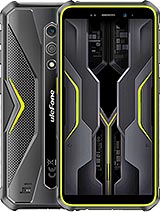
Armor X12 Pro
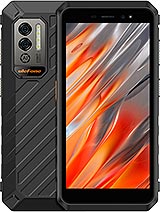
Power Armor X11
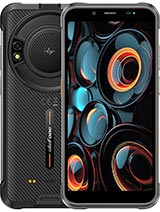
Power Armor 16S

Armor X11 Pro
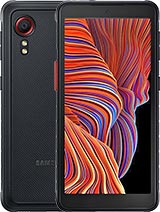
Galaxy XCover 7