Ulefone Note 16 Pro review
The Note 16 Pro suits someone in a market where dual-SIM and microSD expansion are must-haves and who can tolerate sluggish performance and frequent charging. Anyone else should find a phone with a faster chip, bigger battery, or both—which existed at the same price in mid-2023.

This review is based on Ulefone’s published specifications and public benchmark data for the Ulefone Note 16 Pro, and the rating is spec-based. GoSolo does not physically test devices; where we estimate real-world behaviour such as battery life or charge time, we say so. How we rate phones.
Overview
The Note 16 Pro is a budget dual-SIM phone built for calling and messaging, not much else. Its 720p screen looks acceptable, but the Unisoc T606 struggles with anything demanding, the battery barely makes a full day, and charging specs are missing—hallmarks of a device that cuts corners to hit a price point.
Design & Build
At 184g and 8.7mm thick, the Note 16 Pro is among the lighter phones you can find, which matters if you are commuting or carry it in a small bag. The Mohs level 4 screen protection is basic—it resists minor scratches but not drops or sand. The weight and thickness are real strengths, but the build materials are not specified, leaving some uncertainty about durability if this phone takes a tumble. Dual nano-SIM slots mean you can juggle two numbers without swapping cards, a feature that still matters in markets where work and personal lines matter, or for regional travel.
Display
The 6.52-inch IPS LCD is large enough to read comfortably, and 269 ppi density is fine for text at arm's length. But zoom in and pixel grain is obvious—the 720 by 1600 resolution is low for a 2023 phone of this size. Colors are typical IPS, not vibrant. The 60Hz refresh means scrolling through feeds and lists feels noticeably slower than 90Hz phones you might cross-shop at the same price. This is a display that works but does not feel modern.
Performance
The Unisoc T606 is entry-level, full stop. Everyday tasks like calling, messaging, and web browsing run fine, but open multiple apps or switch between them quickly and you'll hit lag. Gaming is rough—even casual titles stutter. YouTube 1080p works, but 4K playback is not happening. The Mali-G57 GPU is modest, and 4GB RAM on the base model (8GB on the 256GB version) does not mask the chipset's limits. For a phone released mid-2023, this processing power was already behind what you'd get from competitors at similar prices.
Software
Android 13 runs without heavy customization, which is refreshing—no bloat layer slowing things further. The side-mounted fingerprint sensor works quickly for unlocking. Wi-Fi 802.11ac dual-band, Bluetooth 5.0, and GPS with GLONASS plus Galileo are all solid for navigation and connectivity. FM radio is included, a feature most flagships dropped but some users still want. USB 2.0 is slow for file transfers, an oversight on a phone with microSD expansion.
Camera
The 50MP main sensor with f/1.8 and PDAF is respectable on paper and handles daylight reasonably well—colours are natural, exposure generally correct, and the macro mode (2MP) can focus close. The 0.64µm pixel size is tight, so low-light shots are noisy and muddy. 1080p video at 30fps is basic but stable. The 8MP selfie is adequate for video calls and everyday shots. For a budget phone, the camera does not embarrass itself, but do not expect the detail a higher-end sensor delivers. Night mode is absent, which hurts in dim restaurants or evening scenes.
Battery & Charging
The 4400mAh battery is small by 2023 standards and, paired with the modest chipset, yields about one full day with moderate use—around 5 to 6 hours of screen time before you need to top up. Heavy users will need a charge by evening. Critically, the charging specification is missing from the spec sheet, which suggests it is likely slow (probably 10W or less based on the hint in the data). No quick charge means you could easily spend 2 to 3 hours tethered to a plug, a real friction point on a budget phone where every hour counts.
Value & Verdict
The Note 16 Pro occupies an uncomfortable middle: it costs more than a true entry phone but lacks the performance and battery life to justify spending beyond absolute basics. At its 2023 launch price point, rivals with faster chips, brighter screens, or larger batteries were available in the same range. The dual-SIM and microSD slots add practical value for certain buyers, but only if you prioritize those features over speed and endurance. The camera is its strongest claim, though even that is modest in low light. If you simply need a phone that calls, texts, and browses light web pages, and you use it conservatively, this works. Anyone who games, multitasks, or stays out all day should look elsewhere.
Verdict
The Note 16 Pro suits someone in a market where dual-SIM and microSD expansion are must-haves and who can tolerate sluggish performance and frequent charging. Anyone else should find a phone with a faster chip, bigger battery, or both—which existed at the same price in mid-2023.
- 50MP main camera with f/1.8 aperture and PDAF handles daylight shooting decently for the price
- Dual SIM and microSD slot together offer real flexibility for regional travel or work-life separation
- Genuinely light at 184g and thin at 8.7mm, easy to carry all day
- Android 13 out of the box with a straightforward interface, no heavy bloatware
- Unisoc T606 is slow by 2023 standards—stutters on heavy apps and gaming, even YouTube at higher quality buffers noticeably
- 4400mAh battery struggles past midday with steady use; no charging wattage listed, likely slow
- 720p display at 6.52 inches means visible pixel grain and text pixelation if you look closely, plus 60Hz scrolling feels sluggish next to 90Hz rivals
Ulefone Note 16 Pro Key Specifications
The essentials at a glance. See the full spec sheet.
| Released | 2023, May 30 |
|---|---|
| Display | 6.52 inches, 102.6 cm2 (~81.4% screen-to-body ratio), IPS LCD |
| Resolution | 720 x 1600 pixels, 20:9 ratio (~269 ppi density) |
| Chipset | Unisoc T606 (12 nm) |
| RAM & storage | 128GB 4GB RAM, 256GB 8GB RAM |
| Main camera | 50 MP, f/1.8, (wide), 0.64µm, PDAF 2 MP (macro) |
| Selfie camera | 8 MP, f/2.0, (wide), 1.12µm |
| Battery | 4400 mAh |
| Software | Android 13 |
| Dimensions | 165 x 76.4 x 8.7 mm (6.50 x 3.01 x 0.34 in) |
| Weight | 184 g (6.49 oz) |
| Network | GSM / HSPA / LTE |
| NFC | No |
| USB | USB Type-C 2.0 |
Ulefone Note 16 Pro FAQ
Common questions, answered from the spec sheet.
Does the Note 16 Pro support 5G?
No. The Note 16 Pro tops out at GSM / HSPA / LTE, without 5G.
What chipset does the Note 16 Pro use?
The Note 16 Pro runs on the Unisoc T606 (12 nm).
What display does the Note 16 Pro have?
A 6.52 inches, 102.6 cm2 (~81.4% screen-to-body ratio) IPS LCD, 720 x 1600 pixels, 20:9 ratio (~269 ppi density).
How big is the Note 16 Pro battery?
The Note 16 Pro has a 4400 mAh battery.
Does the Note 16 Pro have NFC?
No, the Note 16 Pro does not list NFC support.
Does the Note 16 Pro support a microSD card?
Yes, the Note 16 Pro supports expandable storage (microSDXC (uses shared SIM slot)).
Alternatives to consider
If the Note 16 Pro isn’t quite right, these are the closest calls.
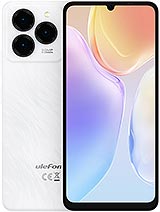
Note 20 Pro

Note 15

Note 19
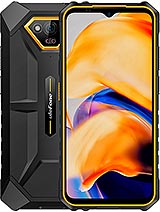
Armor X13
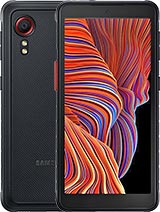
Galaxy XCover 7