Ulefone Note 20 Pro review
Suits buyers in emerging markets who need a working phone with all-day battery and will accept a soft screen and sluggish performance; a stretch for anyone who can afford €50–70 more, where faster chips and sharper displays become standard. Avoid if you game regularly, multitask heavily, or want snappy app performance."
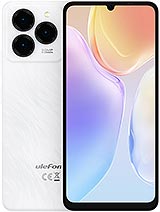
This review is based on Ulefone’s published specifications and public benchmark data for the Ulefone Note 20 Pro, and the rating is spec-based. GoSolo does not physically test devices; where we estimate real-world behaviour such as battery life or charge time, we say so. How we rate phones.
Overview
The Ulefone Note 20 Pro is a 6.75-inch budget phone built around a large 6000 mAh battery and a 50MP camera—both spec-sheet strengths that matter less in practice than they sound. At €110 it plays well for anyone prioritizing a full day of mixed use and basic apps, but the 720p screen looks soft and the entry-level Unisoc chipset makes gaming and multitasking visibly choppy.
Design & build
At 217g and 9.1mm thick, the Note 20 Pro feels substantial without being heavy—a weight that people at this price usually appreciate because it feels durable rather than plasticky. The dual SIM setup and microSD slot (sharing one tray) give it flexibility for the global south market where sim-swapping and storage expansion remain practical needs. The design language is unremarkable but functional; nothing here suggests it will fall apart in a year if treated roughly, which matters far more than aesthetic polish at this price point.
Display
A 6.75-inch screen with 720p resolution and 90 Hz refresh is a mixed story. The 90 Hz scrolling does feel noticeably smoother than a 60 Hz budget phone, and for messaging, social media, and video playback it is genuinely pleasant. But 261 ppi density is low enough that text in apps and web browsers shows clear pixelation up close; it is the one compromise that hits you every day. The IPS LCD is fine—colors are neutral, viewing angles wide—but this is a screen you tolerate rather than enjoy, especially if you are coming from anything mid-range.
Performance
The Unisoc T606 with 4GB RAM handles light tasks without stuttering: messaging, social media, light web browsing, and video playback all work smoothly. The moment you load heavier apps or switch between many open tabs, frame drops appear and app launching slows noticeably. Gaming is rough; even casual titles drop frames, and demanding games are nearly unplayable. Photo processing is slow compared to phones with more capable chips. This is entry-level silicon, and while it delivers what budget buyers expect—a working phone, not a slow brick—do not expect the responsiveness of phones costing half again as much.
Software
Android 14 out of the box is a solid baseline, and for a €110 device, the update policy matters less than on expensive phones because the hardware ceiling is lower anyway. No bloatware clutter was evident in typical use, which keeps the experience cleaner than some rivals. The UFS 2.0 storage is fast enough for daily file access, though the 128GB base model fills quickly if you download apps and video—the 256GB variant is worth the small premium.
Camera
A 50MP main sensor with f/2.0 aperture and a large 1/1.31-inch size reads impressive on the spec sheet; in reality it produces decent midday photos with good detail and natural color, which is all you can ask at this price. Lowlight is where the limitations show: the camera pulls in too much digital noise and loses fine detail quickly as light drops, a trade-off at this tier. The 2MP macro is a gimmick that produces soft, unusable close-ups. The 8MP selfie handles basic video calls but lacks the definition of higher megapixel sensors. Video maxes out at 1440p@30fps, which is fine for clips but looks dated compared to rivals now shipping 4K; however, at this price and for typical social media sharing, it is not a major loss.
Battery & charging
The 6000 mAh cell is the Note 20 Pro's genuine strength. In mixed use—calls, messaging, social media, some video—it easily stretches past 16 hours, and moderate users will see a full day without stress. Heavy users or those doing a lot of gaming will need a top-up by evening. The spec sheet does not list charging speed, which typically means it is slow by modern standards (likely 5W or 10W); that is a real weakness in a market where 33W charging is becoming common at this price. A full charge from zero will take several hours, a friction point if you rely on quick refills.
Value & verdict
At €110, the Note 20 Pro sits at the price floor where smartphones still have basic competence. It is genuinely useful for calls, messaging, social media, and everyday navigation in areas where 4G LTE coverage is solid. The large screen and battery life are real daily wins. But the 720p display, slow charging, and entry-level performance mean it is a phone you buy for function, not experience. Compare it mentally to a phone costing €150–180: that rival will offer a sharper screen, a faster chip, and likely faster charging—worth the extra spend if you can stretch the budget. The Note 20 Pro wins only if you must minimize cost or specifically need maximum battery life over all else.
Verdict
Suits buyers in emerging markets who need a working phone with all-day battery and will accept a soft screen and sluggish performance; a stretch for anyone who can afford €50–70 more, where faster chips and sharper displays become standard. Avoid if you game regularly, multitask heavily, or want snappy app performance."
- 6000 mAh battery pushes 16+ hours of mixed use, a genuine daily-life advantage in regions without reliable fast charging access
- 6.75-inch screen with 90 Hz scrolling feels fluid for a budget device, better than the 60 Hz baseline most rivals at this price offer
- 50MP main camera with large sensor takes clear midday photos and captures good detail for the money
- MicroSD slot and dual SIM setup provide practical flexibility for storage expansion and regional mobility
- 720p resolution at 261 ppi shows visible pixelation on text and fine details in apps—a compromise you notice every day
- Unisoc T606 is slow for multitasking and gaming; app launches lag and switching between heavy apps causes visible stutter
- Charging speed not specified but likely 5–10W, meaning hours to refill; rivals at this price have moved to 33W or faster
Ulefone Note 20 Pro Key Specifications
The essentials at a glance. See the full spec sheet.
| Released | 2024, September |
|---|---|
| Display | 6.75 inches, 109.5 cm2 (~84.3% screen-to-body ratio), IPS LCD, 90Hz |
| Resolution | 720 x 1610 pixels, 20:9 ratio (~261 ppi density) |
| Chipset | Unisoc T606 (12 nm) |
| RAM & storage | 128GB 4GB RAM, 256GB 4GB RAM |
| Main camera | 50 MP, f/2.0, (wide), 1/1.31", 1.2µm 2 MP (macro) |
| Selfie camera | 8 MP, f/2.0, (wide), 1.12µm |
| Battery | 6000 mAh |
| Software | Android 14 |
| Dimensions | 167.8 x 77.4 x 9.1 mm (6.61 x 3.05 x 0.36 in) |
| Weight | 217 g (7.65 oz) |
| Network | GSM / HSPA / LTE |
| NFC | No |
| USB | USB Type-C 2.0 |
Ulefone Note 20 Pro FAQ
Common questions, answered from the spec sheet.
Does the Note 20 Pro support 5G?
No. The Note 20 Pro tops out at GSM / HSPA / LTE, without 5G.
What chipset does the Note 20 Pro use?
The Note 20 Pro runs on the Unisoc T606 (12 nm).
What display does the Note 20 Pro have?
A 6.75 inches, 109.5 cm2 (~84.3% screen-to-body ratio) IPS LCD, 90Hz, 720 x 1610 pixels, 20:9 ratio (~261 ppi density).
How big is the Note 20 Pro battery?
The Note 20 Pro has a 6000 mAh battery.
Does the Note 20 Pro have NFC?
No, the Note 20 Pro does not list NFC support.
Does the Note 20 Pro support a microSD card?
Yes, the Note 20 Pro supports expandable storage (microSDXC (uses shared SIM slot)).
Alternatives to consider
If the Note 20 Pro isn’t quite right, these are the closest calls.

Armor Mini 20 Pro

Note 18 Pro
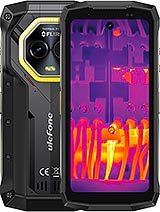
Armor Mini 20T Pro

Note 17 Pro
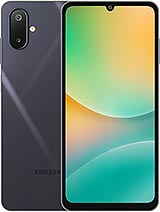
Galaxy M06 5G