Ulefone Power Armor 18T Ultra review
This phone is built for construction workers, field technicians, emergency responders, and anyone who prioritizes survival over style. If you work in harsh conditions and need a phone that will not break, or if thermal imaging adds real value to your job, the durability and battery life justify the weight and price. Anyone chasing a sleek daily driver or a fast gaming phone should look elsewhere.
This review is based on Ulefone’s published specifications and public benchmark data for the Ulefone Power Armor 18T Ultra, and the rating is spec-based. GoSolo does not physically test devices; where we estimate real-world behaviour such as battery life or charge time, we say so. How we rate phones.
Overview
The Ulefone Power Armor 18T Ultra is a rugged workhorse built for harsh environments with serious durability credentials (IP68/IP69K, MIL-STD-810H, drop-tested to 1.5m) and a vast 9600mAh battery. The Dimensity 7050 chipset and 120Hz display handle everyday tasks smoothly, but the phone is heavy (409g), chunky (18.8mm), and wireless-only charging makes it slow to refuel—better suited to field workers and durability-first buyers than those chasing performance or portability.
Design & build
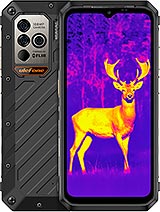
At 409 grams and 18.8mm thick, this is a phone that does not pretend to be sleek. The heft is deliberate: Ulefone engineered the Power Armor line for abuse. IP68 and IP69K ratings mean it survives submersion up to 1.5 metres for half an hour and shrugs off pressurized water jets. It also meets MIL-STD-810H military-grade durability and survives drops from 1.5 metres—all features that matter for construction workers, field technicians, and outdoor enthusiasts, but also mean this phone will never feel light or thin in hand. The 6.58-inch display stretched across this bulky frame makes it tall and awkward for one-handed use. For a $700 phone in 2023, the industrial design is honest and purposeful, not a compromise disguised as a feature, but it is not going to appeal to anyone who values pocket comfort.
Display
The 1080 x 2408 LCD runs at 120Hz and delivers sharp text at 401 ppi. For a device this size and price, the display does its job: colours are neutral (not exaggerated), scrolling is smooth, and brightness is adequate for outdoor work. The narrow 20:9 aspect ratio makes it taller than usual, which exacerbates the already-large frame. Gorilla Glass 5 is respectable protection but not the latest version—fine for this category, which expects scratches and does not prioritize glass durability as heavily as a consumer flagship would. The real story here is that this screen exists to show maps, field data, and camera feeds clearly, not to impress you with contrast or saturation. It succeeds at that role.
Performance
The MediaTek Dimensity 7050 is solid midrange silicon: it will run everyday apps, social media, and light to moderate games without stuttering, thanks in part to the 12GB of RAM. Under sustained heavy workloads—extended gaming, video editing, or demanding AR apps—you will see throttling and slowdowns. For a rugged phone aimed at field use, this is the right compromise: a chip that is efficient enough to help the battery last, but capable enough to handle the tools and apps a worker actually needs. The 512GB of onboard storage is generous and supports microSD expansion up to 2TB, so users who shoot a lot of video on site or need to store large project files have room to grow. Performance is not the headline here; endurance and durability are.
Software
The phone ships with Android 13 and is upgradable to Android 14. Beyond the standard features, Ulefone ships minimal bloatware and the interface is clean. There is nothing remarkable here, but for a rugged phone, the lack of aggressive manufacturer customization is actually a selling point. Updates and support are not historically Ulefone's strongest suit, but for a device that may spend more time in a construction site than in a polished home, the baseline is acceptable. The side-mounted fingerprint sensor works reliably and is better positioned for gloved hands than an in-display option would be.
Camera
The rear setup is unconventional: a 108MP main sensor with f/1.9 aperture and PDAF, a 5MP macro, and a 5MP FLIR thermal camera. The 108MP figure is marketing-friendly but does not translate to dramatically sharper real-world photos than a 48MP or 64MP competitor; the headline benefit is good detail in ideal light. The f/1.9 aperture is respectable for depth. The thermal module is the differentiation—genuinely useful for diagnostics, leak detection, and electrical work, but only if you need that function. Video tops out at 4K@30fps, which is standard but not leading-edge. The selfie camera is 32MP, adequate for video calls. Overall, the camera system is fit-for-purpose: solid stills, practical thermal imaging, but not a strength if you are a photography enthusiast.
Battery & charging
The 9600mAh battery is the phone's greatest asset. In light to moderate use, expect two days away from a wall; even with heavy use, one full day is realistic. This is exceptional endurance for a modern phone. The downside: Ulefone chose wireless (Qi) charging only, with no wired option. Wireless charging is slow—typically 2 to 3 hours or more to fill from empty on a standard Qi pad. For a rugged phone that may be used in remote locations, this is frustrating. You cannot quickly top up before heading back to a job site or into the field. The huge battery almost compensates, but the lack of fast wired charging is a real limitation at this price point.
Value & verdict-context
At about $700 USD equivalent, the Power Armor 18T Ultra is expensive relative to mainstream flagships, but it is not priced for the general market. It is engineered for users who will abuse a phone and expect it to survive. If your phone spends time on building sites, in vehicles, or in harsh weather, or if you need thermal imaging for diagnostics, the durability credentials and battery endurance justify the cost. The Dimensity 7050 is adequate, not blazing, but adequate is exactly what this phone needs—a processor that does not drain the massive battery chasing unnecessary performance. The wireless-only charging and industrial heft are real drawbacks for daily convenience, though. This is not a phone for someone who values slimness, speed, or premium everyday handling.
Verdict
This phone is built for construction workers, field technicians, emergency responders, and anyone who prioritizes survival over style. If you work in harsh conditions and need a phone that will not break, or if thermal imaging adds real value to your job, the durability and battery life justify the weight and price. Anyone chasing a sleek daily driver or a fast gaming phone should look elsewhere.
- Exceptional durability: IP68/IP69K, MIL-STD-810H certified, survives 1.5m drops—industry-leading for this price
- 9600mAh battery with two-day endurance in moderate use, addressing real pain point for field workers
- FLIR thermal camera for diagnostics and inspections—a rare addition that justifies premium rugged pricing
- 512GB storage with microSD expansion up to 2TB, and 12GB RAM suitable for multitasking and large files
- Wireless charging only—slow to refuel (2–3+ hours), impractical for workers needing quick top-ups in remote locations
- 409g weight and 18.8mm thickness make it cumbersome for everyday carry; one-handed use is awkward on a 6.58-inch frame
- Dimensity 7050 is midrange; sustained gaming or video editing will throttle; no flagship performance at this price tier
Ulefone Power Armor 18T Ultra Key Specifications
The essentials at a glance. See the full spec sheet.
| Released | 2023, October |
|---|---|
| Display | 6.58 inches, 104.3 cm2 (~71.4% screen-to-body ratio), IPS LCD, 120Hz |
| Resolution | 1080 x 2408 pixels, 20:9 ratio (~401 ppi density) |
| Chipset | Mediatek Dimensity 7050 (6 nm) |
| RAM & storage | 512GB 12GB RAM |
| Main camera | 108 MP, f/1.9, (wide), 1/1.52", 0.7µm, PDAF 5 MP (macro) 5 MP, f/2.2, (FLIR thermal camera, Lepton module) |
| Selfie camera | 32 MP, f/2.0, (wide), 1.2µm |
| Battery | 9600 mAh |
| Charging | Wireless: Qi |
| Software | Android 13, upgradable to Android 14 |
| Dimensions | 175.2 x 83.4 x 18.8 mm (6.90 x 3.28 x 0.74 in) |
| Weight | 409 g (14.43 oz) |
| Durability | IP68/IP69K dust tight and water resistant (high pressure water jets; immersible up to 1.5m for 30 min) Drop resistant up to 1.5m MIL-STD-810H compliant Accessory connector (ulefone endoscope, microscope) |
| Network | GSM / CDMA / HSPA / CDMA2000 / LTE / 5G |
| NFC | Yes |
| USB | USB Type-C 2.0, OTG, magnetic connector |
Ulefone Power Armor 18T Ultra FAQ
Common questions, answered from the spec sheet.
Does the Power Armor 18T Ultra support 5G?
Yes. The Power Armor 18T Ultra supports 5G networks.
What chipset does the Power Armor 18T Ultra use?
The Power Armor 18T Ultra runs on the Mediatek Dimensity 7050 (6 nm).
What display does the Power Armor 18T Ultra have?
A 6.58 inches, 104.3 cm2 (~71.4% screen-to-body ratio) IPS LCD, 120Hz, 1080 x 2408 pixels, 20:9 ratio (~401 ppi density).
How big is the Power Armor 18T Ultra battery?
The Power Armor 18T Ultra has a 9600 mAh battery. Charging is rated at Wireless: Qi.
Does the Power Armor 18T Ultra have NFC?
Yes, the Power Armor 18T Ultra has NFC.
Is the Power Armor 18T Ultra water resistant?
The Power Armor 18T Ultra carries a IP68/IP69K dust tight and water resistant (high pressure water jets; immersible up to 1.5m for 30 min) Drop resistant up to 1.5m MIL-STD-810H compliant Accessory connector (ulefone endoscope, microscope) rating.
Does the Power Armor 18T Ultra support a microSD card?
Yes, the Power Armor 18T Ultra supports expandable storage (microSDXC (uses shared SIM slot)).
Alternatives to consider
If the Power Armor 18T Ultra isn’t quite right, these are the closest calls.
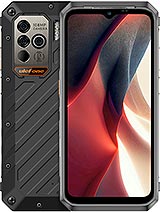
Power Armor 18 Ultra
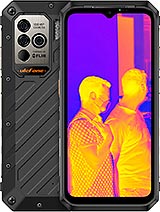
Power Armor 19T

Armor 25T
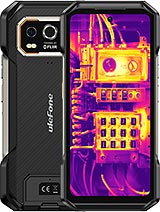
Armor 27T

A2 Pro 5G