Ulefone Power Armor X11 review
Buy this if you work outdoors or in harsh conditions and need a phone that survives water, dust, and impacts without a protective case. For anyone else, even in the budget tier, the performance and screen are too basic to justify the weight and bulk.
This review is based on Ulefone’s published specifications and public benchmark data for the Ulefone Power Armor X11, and the rating is spec-based. GoSolo does not physically test devices; where we estimate real-world behaviour such as battery life or charge time, we say so. How we rate phones.
Overview
The Ulefone Power Armor X11 is a rugged workhorse built to survive water, dust, and drops—not a media phone. For fieldwork or outdoor labor around €140, the 8150 mAh battery and IP68/IP69K rating deliver durability and endurance, but the Helio A22 chipset and 720p screen make it a phone for calls and basic tasks only.
Design & build
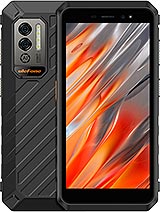
At 330 grams and 19.3 mm thick, this phone feels more like a tool than a daily carry. That weight and heft are intentional. The Ulefone is IP68/IP69K rated for full submersion up to 1.5 meters for half an hour and survives high-pressure water jets—the kind of durability you get from MIL-STD-810H compliance. It also handles drops from 1.5 meters without cracking. For someone doing fieldwork, construction, or outdoor labor in wet or dusty conditions, that ruggedness is not a luxury—it is the point. Compared to mainstream phones at this price, which would shatter or short-circuit immediately, the Power Armor X11 is overbuilt by design.
Display
The 5.45-inch 720p IPS LCD is sharp enough at arm's length (295 ppi density), but there is no brightness figure in the spec sheet, and that is telling. Entry-level IPS panels without proper brightness usually struggle in sunlight. The 60 Hz refresh rate (implied by the lack of mention) means scrolling and swiping feel sluggish beside modern 90 Hz or 120 Hz screens. For a rugged phone meant to be used outdoors in daylight, a brighter, high-refresh display would have been a smarter trade-off than keeping the bezels wide. This screen is functional for reading messages and calls, not for media consumption.
Performance
The MediaTek Helio A22 is a low-power quad-core chipset that handles basic tasks—calling, texting, email, light web browsing—without strain. With 4 GB RAM and the eMMC 5.1 storage, opening many apps at once or loading large files will cause noticeable lag. Video editing, gaming, or real-time streaming are off the table. For a phone in this class at this price, that is standard. If you need to actually work on media or multitask heavily, you are not the audience. The Armor X11 is built for people who need a phone that survives damage and keeps working through a long day, not for people who need computing power in their pocket.
Software
Android 13 is current enough for 2023 and provides access to Google Play and most mainstream apps. The platform is stable and familiar. On a phone with this chipset, the OS feels responsive for light use. There is no word on update support, which is typical for rugged budget phones—do not expect more than one or two years of OS upgrades.
Camera
The 16 MP main sensor with f/1.8 aperture and PDAF is surprisingly good for a rugged phone at this price. The quad-LED flash and 1.12 µm pixels mean it handles outdoor work and low-light scenes better than most budget competitors. Video tops out at 1080p/30fps, which is adequate. The 5 MP selfie camera is basic. For construction sites, inspections, or field documentation, the main camera will do the job. Do not expect the detail or color accuracy of flagship phones, but a rugged phone's camera rarely needs to compete on image quality—it just needs to capture what you need and survive the drop.
Battery & charging
The 8150 mAh cell is the real strength here. At this capacity with a low-power chipset, you can expect 1.5 to 2 days of moderate use. The spec sheet lists no charging power, which is unusual and suggests either 5W or 10W—painfully slow by today's standards, but consistent with rugged phones that prioritize durability over speed. If you are working in the field, you will appreciate a phone that makes it through a full day and partway into the next without hunting for a charger.
Value & verdict
At around €140, the Power Armor X11 targets a specific niche: outdoor workers, fieldwork crews, and anyone whose job puts their phone in water, dust, and danger. Compared to mainstream budget phones at the same price, it sacrifices screen brightness, performance, and charging speed to deliver ruggedness, battery life, and the peace of mind that a drop or rainstorm will not destroy it. If you spend your day on a construction site or in a dusty, wet environment, the Ulefone makes sense. If you want a fast, bright phone for daily life, there are better choices for the money.
Verdict
Buy this if you work outdoors or in harsh conditions and need a phone that survives water, dust, and impacts without a protective case. For anyone else, even in the budget tier, the performance and screen are too basic to justify the weight and bulk.
- 8150 mAh battery delivers 1.5 to 2 days of real use without a charge
- IP68/IP69K rating and MIL-STD-810H compliance handle submersion, high-pressure spray, and 1.5-meter drops
- Dedicated microSD slot (up to 256 GB) means you can actually expand storage without sacrificing the second SIM
- Quad-LED flash and PDAF on the 16 MP main camera handle outdoor work and low-light scenes better than typical budget phones
- Helio A22 with 4 GB RAM stalls under load—no gaming, heavy multitasking, or video editing
- 720p IPS LCD with no brightness spec will be hard to read in direct sunlight despite the rugged build
- 330 g and 19.3 mm thick makes it heavier and bulkier than mainstream phones, noticeable in a pocket
Ulefone Power Armor X11 Key Specifications
The essentials at a glance. See the full spec sheet.
| Released | 2023, June 18 |
|---|---|
| Display | 5.45 inches, 76.7 cm2 (~63.2% screen-to-body ratio), IPS LCD |
| Resolution | 720 x 1440 pixels, 18:9 ratio (~295 ppi density) |
| Chipset | Mediatek MT6761 Helio A22 (12 nm) |
| RAM & storage | 32GB 4GB RAM |
| Main camera | 16 MP, f/1.8, (wide), 1.12µm, PDAF Auxiliary lens |
| Selfie camera | 5 MP, f/2.2 |
| Battery | 8150 mAh |
| Software | Android 13 |
| Dimensions | 158.2 x 76.7 x 19.3 mm (6.23 x 3.02 x 0.76 in) |
| Weight | 330 g (11.64 oz) |
| Durability | IP68/IP69K dust tight and water resistant (high pressure water jets; immersible up to 1.5m for 30 min) Drop resistant up to 1.5m MIL-STD-810H compliant |
| Network | GSM / HSPA / LTE |
| NFC | Yes |
| USB | USB Type-C 2.0, OTG |
Ulefone Power Armor X11 FAQ
Common questions, answered from the spec sheet.
Does the Power Armor X11 support 5G?
No. The Power Armor X11 tops out at GSM / HSPA / LTE, without 5G.
What chipset does the Power Armor X11 use?
The Power Armor X11 runs on the Mediatek MT6761 Helio A22 (12 nm).
What display does the Power Armor X11 have?
A 5.45 inches, 76.7 cm2 (~63.2% screen-to-body ratio) IPS LCD, 720 x 1440 pixels, 18:9 ratio (~295 ppi density).
How big is the Power Armor X11 battery?
The Power Armor X11 has a 8150 mAh battery.
Does the Power Armor X11 have NFC?
Yes, the Power Armor X11 has NFC.
Is the Power Armor X11 water resistant?
The Power Armor X11 carries a IP68/IP69K dust tight and water resistant (high pressure water jets; immersible up to 1.5m for 30 min) Drop resistant up to 1.5m MIL-STD-810H compliant rating.
Does the Power Armor X11 support a microSD card?
Yes, the Power Armor X11 supports expandable storage (microSDXC (dedicated slot)).
Alternatives to consider
If the Power Armor X11 isn’t quite right, these are the closest calls.
Armor X13
Armor X12
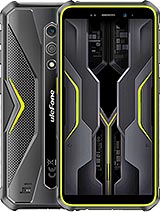
Armor X12 Pro
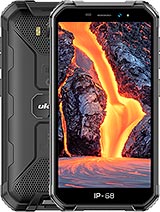
Armor X6 Pro
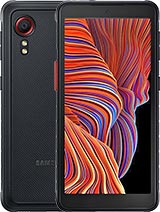
Galaxy XCover 7