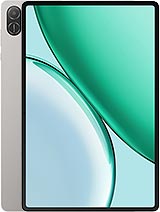
Ulefone Tab A10 review
The Tab A10 suits someone who wants a large, affordable screen for reading, streaming, and light work in regions with good LTE coverage and doesn't mind accepting a soft display and slow performance in exchange. Skip it if you do any serious multitasking, gaming, or photo editing, or if text clarity matters to you."
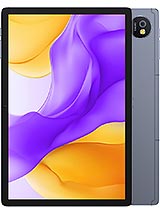
This review is written with AI assistance from Ulefone’s published specifications and public benchmark data for the Ulefone Tab A10, and the rating is spec-based. GoSolo does not physically test devices; where we estimate real-world behaviour such as battery life or charge time, we say so. How we rate phones.
Overview
The Ulefone Tab A10 is a 10.1-inch budget tablet built for reading, streaming, and light work rather than gaming or demanding apps. Its weak processor and low-resolution screen hold it back from feeling modern, but the large form factor, full-day battery, and expandable storage make it a practical choice if you're not pushing it hard.
Design & build
At 7.8 mm thick and 452 grams, the Tab A10 feels light for its size, which is the point: portability over ruggedness. The aluminum-looking frame suggests some durability, though Mohs level 4 screen protection is soft compared to modern glass and will scratch easily. Dual nano-SIM slots are useful for regional travel, though the shared microSD slot means you have to choose between a second SIM and storage expansion. The tablet sits comfortably between a large phone and a small laptop, making it genuinely easier to hold and carry than a full-size iPad, but you sacrifice the polish and finish quality you'd expect at higher price points.
Display
The 10.1-inch IPS LCD is where budget constraints show most clearly. At 800×1280 pixels and 149 ppi, the screen lacks sharpness compared to modern phones or even budget tablets from competitors. Text becomes visibly pixelated at close reading distance, and fine details in photos or web layouts feel coarse. The 400-nit brightness is adequate for indoor use and modestly lit outdoor spaces, but it won't compete with phones that routinely hit 1000 nits. The 16:10 aspect ratio is reasonable for media consumption, and the 79.5% screen-to-body ratio is respectable, but the overall experience feels dated for a 2025 release.
Performance
The Unisoc T615 is a true entry-level chip that handles browsing, email, light streaming, and document work without stuttering. Gaming is out of the question—even modest titles will struggle. Multitasking with 4GB RAM feels cramped on a 10-inch screen; the OS frequently closes background apps to free memory, forcing you to reload them. For what this tablet costs, the performance is adequate, but don't expect snappy responsiveness or the ability to keep multiple heavy apps open simultaneously. Android 15 runs fine, though the experience will feel slower than a smartphone running the same OS on a better chip.
Battery & charging
The 6600 mAh battery is genuinely functional. Expect about 8 to 10 hours of screen-on time with moderate use—reading, light streaming, web browsing, occasional calls—which covers a full day without needing a charger. The 18W charging speed is slow by 2025 standards; a full charge takes several hours. There's no mention of fast-charge technology, so this is straightforward, leisurely charging. If you're leaving it plugged in overnight, it's fine; if you need quick top-ups, plan ahead.
Camera
The 13 MP main camera with f/2.0 and LED flash is adequate for casual snapshots and documents but won't compete with any modern phone camera. 1080p video at 30fps is reasonable for clips, and the inclusion of HDR and panorama modes adds some versatility. The 5 MP front camera is purely functional for video calls or selfies at this size. Neither camera is a strength; they're there because the tablet needs them, not because they excel.
Software & connectivity
Android 15 runs cleanly on this device without heavy skins, which is refreshing for a budget tablet. Wi-Fi 6 is absent—you get Wi-Fi 5 (802.11ac)—but dual-band coverage handles typical household networks. Bluetooth 5.0 is current and pairs reliably. GPS, GLONASS, Galileo, and BeiDou provide solid positioning for navigation. The LTE bands span FDD-LTE 1, 2, 3, 4, 5, 7, 8, 12, 13, 17, 20, 26, 28, 34, 38, 39, 40, 41, 66, and 71, giving good coverage across Asia, the Americas, and Europe, but you'll want to verify your carrier's bands before buying. NFC is absent, but USB Type-C 2.0 with OTG support keeps it practical for file transfer and peripherals.
Value & verdict-context
At this price, the Tab A10 undercuts most branded 10-inch tablets, which is its main appeal. You're not paying for a flagship experience; you're paying for size and battery life at a budget price. The low resolution, weak processor, and minimal RAM are the real costs of that bargain. If you're someone who reads PDFs, watches films, or browses the web for hours daily, and you don't expect buttery gaming or sharp text, this tablet covers that need cheaply. The microSD slot and international LTE bands add practical value. The Unisoc chip feels dated even for budget 2025 hardware, and rivals in the same price range offer slightly faster processors or better screens, so shop around before committing.
Verdict
The Tab A10 suits someone who wants a large, affordable screen for reading, streaming, and light work in regions with good LTE coverage and doesn't mind accepting a soft display and slow performance in exchange. Skip it if you do any serious multitasking, gaming, or photo editing, or if text clarity matters to you."
- 10.1-inch screen is genuinely useful for reading and video without the price of a quality tablet
- 6600 mAh battery delivers a full day of moderate use like reading, web browsing, and streaming
- microSD slot allows you to add hundreds of gigabytes without sacrificing internal memory
- Quad-band LTE covers most international carriers across Asia, Americas, and Europe
- 800×1280 resolution on a 10-inch screen looks noticeably soft and fuzzy compared to modern phones or tablets, especially for text-heavy work
- Unisoc T615 is an entry-level chip that handles light tasks but will lag under any multitasking or modern games
- Only 4GB RAM forces the OS to kill background apps frequently, limiting real multitasking on a larger screen
Ulefone Tab A10 Key Specifications
The essentials at a glance. See the full spec sheet.
| Released | 2025, March |
|---|---|
| Display | 10.1 inches, 295.8 cm2 (~79.5% screen-to-body ratio), IPS LCD, 400 nits |
| Resolution | 800 x 1280 pixels, 16:10 ratio (~149 ppi density) |
| Chipset | Unisoc T615 (12 nm) |
| RAM & storage | 128GB 4GB RAM |
| Main camera | 13 MP, f/2.0, (wide) |
| Selfie camera | 5 MP, f/2.2, (wide) |
| Battery | 6600 mAh |
| Software | Android 15 |
| Dimensions | 237.7 x 156.5 x 7.8 mm (9.36 x 6.16 x 0.31 in) |
| Weight | 452.5 g (1.00 lb) |
| Network | GSM / HSPA / LTE |
| NFC | No |
| USB | USB Type-C 2.0, OTG |
Ulefone Tab A10 FAQ
Common questions, answered from the spec sheet.
Does the Tab A10 support 5G?
No. The Tab A10 tops out at GSM / HSPA / LTE, without 5G.
What chipset does the Tab A10 use?
The Tab A10 runs on the Unisoc T615 (12 nm).
What display does the Tab A10 have?
A 10.1 inches, 295.8 cm2 (~79.5% screen-to-body ratio) IPS LCD, 400 nits, 800 x 1280 pixels, 16:10 ratio (~149 ppi density).
How big is the Tab A10 battery?
The Tab A10 has a 6600 mAh battery.
Does the Tab A10 have NFC?
No, the Tab A10 does not list NFC support.
Does the Tab A10 support a microSD card?
Yes, the Tab A10 supports expandable storage (microSDXC (uses shared SIM slot)).
Alternatives to consider
If the Tab A10 isn’t quite right, these are the closest calls.
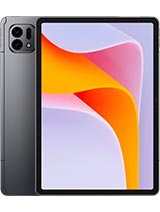
Tab A12 Pro
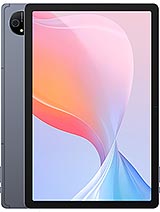
Tab A11
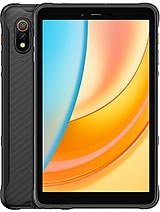
Armor Pad 5 Pro
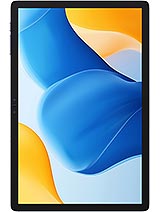
Tab A10 Pro

Black Shark Pad SE