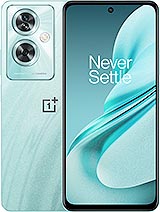
Umidigi A15C review
The A15C suits cost-conscious buyers in markets where long battery life and large screen matter more than display sharpness or processing power. Skip it if you demand a crisp display, fast charging, or any demanding apps; rivals at €150 and up offer vastly better value."
This review is based on Umidigi’s published specifications and public benchmark data for the Umidigi A15C, and the rating is spec-based. GoSolo does not physically test devices; where we estimate real-world behaviour such as battery life or charge time, we say so. How we rate phones.
Overview
The Umidigi A15C is a budget 2023 phone that prioritizes screen size and battery life over brightness and processing power. For its €110 price, it delivers everyday reliability for messaging and video, but the 720p display looks soft on a 6.7-inch screen and the Unisoc T606 stumbles with anything demanding.
Design & build
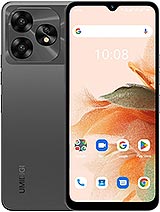
The A15C is slim at 8.6mm and reasonably light at 195g, easy to hold for a 6.7-incher. The side-mounted fingerprint sensor is reliable, though slower to unlock than in-display versions. There is no water or dust rating, so rain and spills are genuine risks. The build feels plasticky but durable enough for the price, and the choice of five colors shows some thought. For a budget phone in 2023, this is unremarkable—it does its job without flair.
Display
The 6.7-inch IPS LCD panel wins on size but loses on clarity. At 269 ppi, the 720p resolution is noticeably soft: text, icons, and edges look fuzzy, and you will see pixelation if you hold it at arm's length. This is a step backward at this price point; rivals including other budget brands have moved to 1080p on 6.5-inch and larger screens. The 500-nit brightness is adequate for sunlight reading and outdoor use, so there's no struggle in daylight. But for a device you will stare at several hours a day, the low pixel density is the real letdown.
Performance
The Unisoc T606 is entry-level and shows its limits. The octa-core processor and Mali-G57 MP1 GPU handle messaging, social media, and video playback without drama, and 8GB of RAM helps with app switching. But demanding games stutter, heavy multitasking causes pauses, and switching between multiple apps feels sluggish. For a 2023 phone, this chipset belongs in budget ranges; it is not a performance phone, and buyers should not expect one. If you stick to light use—browsing, streaming, calls, messaging—it muddles through. Anything more and you will feel the ceiling.
Camera
The main 48MP sensor with f/1.8 aperture and autofocus captures daylight photos with reasonable detail and color balance. Indoors and low light are noisier, as expected from an entry-level setup. The 8MP ultrawide at 118 degrees is wide enough for group shots and landscapes, though it softens at the edges. The 5MP macro is a gimmick that rarely produces usable shots. Video tops out at 1080p@30fps, which is standard low-end recording; there is no 4K or stabilization. For social media uploads and casual snaps, the rear cameras are competent. The 8MP selfie is similarly adequate for video calls and selfies, nothing more.
Battery & charging
The 5000 mAh cell easily lasts about 1.5 to 2 days on mixed use—browsing, messaging, video, some gaming. That is a genuine strength in this price tier, where many rivals are smaller or less efficient. However, the 10W wired charger is painfully slow, taking about 2 to 3 hours to refill from empty. By 2023 standards, even budget phones were reaching 30W or 65W; the A15C feels left behind. If you can live with overnight charging, the battery endurance offsets the slow charging speed. If you need a phone topped up quickly, this is frustrating.
Software & connectivity
Android 13 ships clean and reasonably fast on this hardware, though updates and long-term support are uncertain for a budget brand like Umidigi. LTE is the ceiling for mobile data; there is no 5G, which is fine for most of the global south but worth noting. Wi-Fi 5 (802.11ac) is standard for this class, adequate for home networks. Bluetooth 5.0, NFC, GPS with four-system support (GPS, GLONASS, GALILEO, BDS), and dual nano-SIM make for rounded connectivity. The 3.5mm jack and FM radio are increasingly rare and welcome for buyers who use them. The microSDXC slot shares the SIM tray, so you must choose between dual SIM and expandable storage—a mild annoyance.
Value & verdict
At roughly €110, the Umidigi A15C is honest about its ambitions: a large-screen, long-battery phone for people who do not need raw speed or image quality. The soft display is the biggest compromise, and the glacial 10W charging feels outdated. But for someone who primarily messages, browses, and watches video, and is not bothered by pixelation, the screen real estate and battery life are real wins. The inclusion of a headphone jack, FM radio, and microSD slot also appeals to buyers in markets where these matter. It is not competitive with better-specified rivals in the €150 range, but as a bare-bones budget option, it is a coherent product. Sound judgment requires knowing what you will actually use it for.
Verdict
The A15C suits cost-conscious buyers in markets where long battery life and large screen matter more than display sharpness or processing power. Skip it if you demand a crisp display, fast charging, or any demanding apps; rivals at €150 and up offer vastly better value."
- 5000 mAh battery lasts about 1.5 to 2 days on mixed use, a real advantage in its price bracket
- Large 6.7-inch display is good for reading and video despite the low pixel density
- Includes useful features missing from rivals: 3.5mm jack, FM radio, NFC, and expandable storage via microSD
- 48MP main camera with f/1.8 aperture captures decent daylight photos, and the 118-degree ultrawide covers group shots
- 720p resolution at 269 ppi makes text visibly soft and pixelated; rivals at this price now offer at least 1080p screens
- 10W charging is glacially slow—expect 2 to 3 hours to full, while competitors have moved to 30W or faster
- Unisoc T606 is underpowered for anything beyond basic apps; heavy multitasking and gaming produce lag and stuttering
Umidigi A15C Key Specifications
The essentials at a glance. See the full spec sheet.
| Released | 2023 |
|---|---|
| Display | 6.7 inches, 106.2 cm2 (~84.1% screen-to-body ratio), IPS LCD, 500 nits |
| Resolution | 720 x 1650 pixels (~269 ppi density) |
| Chipset | Unisoc T606 (12 nm) |
| RAM & storage | 128GB 8GB RAM |
| Main camera | 48 MP, f/1.8, (wide), AF 8 MP, f/2.2, 118˚ (ultrawide) 5 MP (macro) |
| Selfie camera | 8 MP, f/2.2, (wide) |
| Battery | 5000 mAh |
| Charging | 10W wired |
| Software | Android 13 |
| Dimensions | 167.6 x 75.3 x 8.6 mm (6.60 x 2.96 x 0.34 in) |
| Weight | 195 g (6.88 oz) |
| Network | GSM / HSPA / LTE |
| NFC | Yes |
| USB | USB Type-C |
Umidigi A15C FAQ
Common questions, answered from the spec sheet.
Does the A15C support 5G?
No. The A15C tops out at GSM / HSPA / LTE, without 5G.
What chipset does the A15C use?
The A15C runs on the Unisoc T606 (12 nm).
What display does the A15C have?
A 6.7 inches, 106.2 cm2 (~84.1% screen-to-body ratio) IPS LCD, 500 nits, 720 x 1650 pixels (~269 ppi density).
How big is the A15C battery?
The A15C has a 5000 mAh battery. Charging is rated at 10W wired.
Does the A15C have NFC?
Yes, the A15C has NFC.
Does the A15C support a microSD card?
Yes, the A15C supports expandable storage (microSDXC (uses shared SIM slot)).
Does the A15C have a headphone jack?
Yes, the A15C has a 3.5mm headphone jack.
Alternatives to consider
If the A15C isn’t quite right, these are the closest calls.
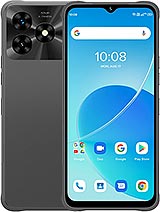
G5 Mecha
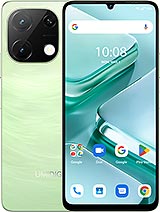
G9T
Bison X20

G100A
Galaxy A06