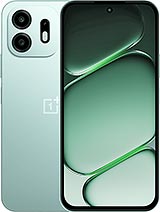
Umidigi A75 review
The Umidigi A75 suits users who prioritize battery life and simplicity over performance or display quality—think occasional smartphone users, kids, or people who travel frequently without reliable charging. Anyone wanting a sharp screen, quick multitasking, or credible photography should look elsewhere; rivals offer better hardware at the same price point.

This review is based on Umidigi’s published specifications and public benchmark data for the Umidigi A75, and the rating is spec-based. GoSolo does not physically test devices; where we estimate real-world behaviour such as battery life or charge time, we say so. How we rate phones.
Overview
The Umidigi A75 is a 6.7-inch budget phone with a large 6600 mAh battery but held back by a 720p display and an entry-level chip that struggles with day-to-day multitasking. It's a sensible choice for light users in markets where the upfront cost matters more than performance, but those expecting smooth gaming or app-heavy workflows should spend a bit more.
Design & Build
At 165.9 x 76 x 8mm and 200 grams, the A75 hits the sweet spot between comfortable to hold and substantial enough not to feel cheap. The glass front and plastic frame-and-back combo is predictable at this price, but it works. IP54 dust and splash protection is a practical bonus—not waterproof, but enough to survive coffee spills and light rain without panic. Dual nano-SIM slots (one shares with the microSDXC card) mean you can carry two networks, though the sacrifice of one slot for storage is a trade-off many budget buyers accepted even years ago. Colors—Black, Blue, Titanium, Silver—are inoffensive choices that won't embarrass you, just won't inspire either.
Display
Here's the sticking point: a 6.7-inch screen in 2026 running 720 x 1604 pixels is a penny-pinch that shows. At 262 ppi, you'll see the pixel grid on text, icons, and web pages if you hold it at a normal viewing distance. Rivals at this price now push 1080p, so the A75 feels dated on the spec sheet and in daily use. The 120Hz refresh rate softens the blow—scrolling through apps and social feeds feels smooth—and the IPS panel handles colors and viewing angles decently, but that low resolution undercuts the whole package. If you spend hours reading, this is the wrong budget phone.
Performance
The Helio G81 is a 2024-era mainstream midrange chip, which in 2026 budgets means capable of basic tasks but no more. Navigation, messaging, YouTube, and casual web browsing run fine. Open five apps, switch between them, and you'll notice lag. Games above simple 2D titles will stutter. Video editing, photo apps with heavy filters, and multitasking hit a ceiling pretty quickly. The 4GB RAM base model compounds this; the 6GB variant helps but doesn't solve the core issue—this chipset is intentionally cost-cut, and you'll feel it if you do more than the absolute minimum. For office work, light content consumption, or as a second phone for someone who doesn't game, it passes. For anything heavier, you're fighting the hardware.
Software
Android 16 is fresh at launch, which is fine, but Umidigi's track record on update pace is spotty. Expect two years of security patches if you're lucky, maybe one meaningful OS upgrade. The UI should be stock or near-stock Android—no bloat is a small mercy at this price—but that depends on your region and carrier variant. Nothing here stands out as notably bad or good; it's what you'd expect from a lesser-known brand playing catch-up with Android's latest version.
Camera
The 48MP sensor is a single module with LED flash and no mention of ultra-wide, macro, or depth cameras. That's a red flag. Modern budget phones at this tier often include a 2MP macro or ultrawide just for the spec sheet; the A75 omits them entirely. The 48MP sensor in good light should produce usable shots for social media and prints up to A5 size, but dynamic range and low-light handling will lag behind phones with more intelligent sensor design. The 1080p video at 30fps is a floor, not a feature—no stabilization mentioned. The 8MP selfie camera is functional for video calls, nothing more. If photography matters to you, the A75 is a step down from competitors; if you need occasional snapshots, it'll do.
Battery & Charging
The 6600 mAh battery is legitimately the A75's strongest point. That capacity, paired with the low-res display and entry-level chip (which idles efficiently), should deliver 1.5 to 2 days of mixed use—substantially longer than the 1-day average in higher-end phones. The spec sheet lists 18W charging, which is slow by today's standards (rivals at this price hit 33W or more), but it's sustainable for the battery's health and means you're not scrambling for a charger every afternoon. USB Type-C is standard; the lack of a charger in the box is disappointingly common and not worth calling out anymore.
Value & Verdict Context
The A75 is an honest budget phone built for users in price-sensitive markets who value simplicity and battery life over performance or image quality. It doesn't pretend to be a workhorse, and that clarity is refreshing. The 720p display is a sore thumb that keeps it from being an easy recommend, though the 120Hz refresh does soften that blow. Compared to what rivals offer at the same price point—usually 1080p screens and better chips—the A75 feels like it's playing a generation behind. That said, if battery endurance and durability (IP54 splash protection) are your priorities, and you're comfortable with a slower, less sharp experience, the value proposition clicks. The thin, light build and dual-band WiFi round it out as a thoughtful device for its class, even if it's not the standout choice.
Verdict
The Umidigi A75 suits users who prioritize battery life and simplicity over performance or display quality—think occasional smartphone users, kids, or people who travel frequently without reliable charging. Anyone wanting a sharp screen, quick multitasking, or credible photography should look elsewhere; rivals offer better hardware at the same price point.
- 6600 mAh battery should deliver 1.5+ days of real-world use, a genuine advantage for users who hate charging constantly
- 120Hz IPS LCD keeps scrolling fluid and responsive, rare at this price point
- Side-mounted fingerprint sensor and IP54 splash protection add practical durability touches
- Thin at 8mm and reasonably light at 200g, comfortable in hand without feeling flimsy
- 720p display at 6.7 inches delivers only 262 ppi—text and apps look noticeably grainy compared to 1080p rivals in the same price bracket
- Helio G81 is entry-level even for 2026 budgets; expect stutter in heavy apps and stuttering gaming
- 48MP camera specs hide a single module with no ultrawide or macro; real-world photo quality lags behind phones with dedicated sensors
Umidigi A75 Key Specifications
The essentials at a glance. See the full spec sheet.
| Released | 2026 |
|---|---|
| Display | 6.7 inches, 108.2 cm2 (~85.8% screen-to-body ratio), IPS LCD, 120Hz |
| Resolution | 720 x 1604 pixels, 20:9 ratio (~262 ppi density) |
| Chipset | Mediatek Helio G81 (12 nm) |
| RAM & storage | 128GB 4GB RAM, 128GB 6GB RAM |
| Main camera | 48 MP Auxiliary lens |
| Selfie camera | 8 MP |
| Battery | 6600 mAh |
| Software | Android 16 |
| Dimensions | 165.9 x 76 x 8 mm (6.53 x 2.99 x 0.31 in) |
| Weight | 200 g (7.05 oz) |
| Build | Glass front, plastic back, plastic frame |
| Durability | IP54 dust protected and water resistant (water splashes) |
| Network | GSM / HSPA / LTE |
| NFC | No |
| USB | USB Type-C 2.0 |
Umidigi A75 FAQ
Common questions, answered from the spec sheet.
Does the A75 support 5G?
No. The A75 tops out at GSM / HSPA / LTE, without 5G.
What chipset does the A75 use?
The A75 runs on the Mediatek Helio G81 (12 nm).
What display does the A75 have?
A 6.7 inches, 108.2 cm2 (~85.8% screen-to-body ratio) IPS LCD, 120Hz, 720 x 1604 pixels, 20:9 ratio (~262 ppi density).
How big is the A75 battery?
The A75 has a 6600 mAh battery.
Does the A75 have NFC?
No, the A75 does not list NFC support.
Is the A75 water resistant?
The A75 carries a IP54 dust protected and water resistant (water splashes) rating.
Does the A75 support a microSD card?
Yes, the A75 supports expandable storage (microSDXC (uses shared SIM slot)).
Alternatives to consider
If the A75 isn’t quite right, these are the closest calls.
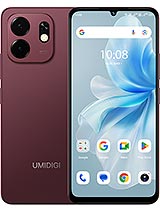
A75s
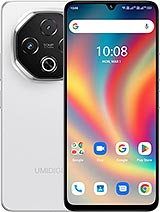
G100 Pro
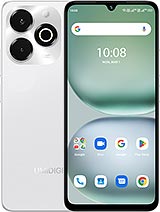
G100x

Note 100A

Play20A