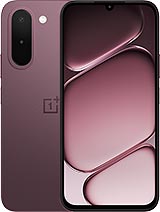
Umidigi A75s review
The A75s suits buyers in markets where large-screen affordability and battery endurance trump performance or camera quality. Skip it if you do any gaming, mobile photography that matters, or expect snappy app performance—you'll find better value in a chipset tier above, even if the screen is smaller.
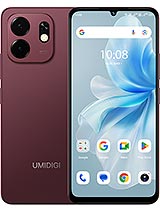
This review is based on Umidigi’s published specifications and public benchmark data for the Umidigi A75s, and the rating is spec-based. GoSolo does not physically test devices; where we estimate real-world behaviour such as battery life or charge time, we say so. How we rate phones.
Overview
The Umidigi A75s is a large-screen, budget-friendly phone built around battery endurance rather than speed. It's a no-fuss device for users who prioritize screen size and all-day usage over performance or camera finesse.
Design & build
At 191 grams and 8.1mm thick, the A75s is comfortably light for its screen size—a real advantage if you plan to use it one-handed or slip it into a pocket. The glass front and plastic back feel unremarkable, but the IP54 rating is the genuine standout here. For a 2026 budget phone, splash and dust protection is rare enough to matter; it means you can use this near water or in dusty conditions without paranoia. The side-mounted fingerprint sensor is responsive, and the chassis feels solid enough for the price, though there's nothing that makes you want to show it off.
Display
A 6.75-inch screen at 260 ppi is a generous canvas, but the resolution compromise is real. 720p on that diagonal means text, icons, and fine details visibly pixelate when you hold the phone at a normal viewing distance. For scrolling social media or watching video, it's passable. For reading small text or doing detailed work, it will irritate you. The 120Hz refresh helps everything feel smoother than it has a right to on these specs, and the IPS LCD panel renders color accurately enough, but brightness isn't exceptional and you'll struggle outdoors in direct sunlight. This is a screen that prioritizes size over sharpness—a deliberate trade-off that works if you value screen real estate over crispness.
Performance
The Helio G81 is a 2024-era mainstream entry-level chip, and in 2026 it feels dated. Apps launch and run, but there's no snappiness. Gaming is feasible at low settings and frame rates, but expect stutters and thermal throttling in anything demanding. Multitasking with five or six apps open will cause lag when you switch between them. The 4GB RAM and modest storage (64GB or 128GB) add to the bottleneck. For calling, messaging, browsing, and casual use, it's adequate. For anything that requires sustained processing power, you'll feel the limits. Android 16 runs on it, but performance-wise this is a phone that asks you to be patient.
Camera
The 13MP rear camera is underdeveloped. It's dim, struggles in anything less than bright daylight, and lacks the computational photography or dedicated night mode that budget phones two to three tiers above now include as standard. Video caps at 1080p@30fps, which is functional but not future-proof given that 4K recording is affordable elsewhere. The 5MP front camera is purely functional for video calls. If photos matter to you at all, this is the phone's weakest link, and there's no secondary lens or depth sensor to work around it. You get what you paid for, literally.
Battery & charging
The 5000 mAh cell is the phone's most defensible feature. For light to moderate daily use—texting, calling, light browsing—expect two days of charge. Even heavy use should yield a full day without stress. The 18W charging is slow by modern standards; you're looking at about 2 to 2.5 hours for a full charge. That's not fast, but it aligns with the overall philosophy: this is a phone designed around longevity of use, not speed of refill. If you use this phone as a secondary device or for travel where outlets are scarce, the battery's endurance is a genuine asset.
Software & connectivity
Android 16 arrives out of the box, which is current and means you're not immediately behind on security patches. Umidigi's skin is light and doesn't intrude much. Network bands cover most global regions on 2G, 3G, and 4G, though 5G is absent—not a dealbreaker for 2026, but worth noting if your region has rolled out 5G extensively. Bluetooth 5.2, dual-band Wi-Fi, and GPS with GLONASS and Galileo are all present and standard. The FM radio is a nice-to-have for markets where it still matters. USB Type-C 2.0 is functional but slow for file transfers compared to USB 3.0, though for a phone this modest, that's a minor concern.
Value & verdict
The A75s is a phone built for people who want a large screen, dependable battery, and low price without pretense. It doesn't aspire to be a flagship killer or a midrange overachiever. It's a straightforward tool: use it for media, messaging, navigation, and utilities, and it will serve you. The camera is a sore spot, the display resolution feels dated on that screen size, and the processor has no headroom for future ambition. But if you're buying this phone, you likely already know those trade-offs fit your needs. It's honest about what it is, and that counts for something in a crowded budget market where every phone oversells itself.
Verdict
The A75s suits buyers in markets where large-screen affordability and battery endurance trump performance or camera quality. Skip it if you do any gaming, mobile photography that matters, or expect snappy app performance—you'll find better value in a chipset tier above, even if the screen is smaller.
- 5000 mAh battery with realistic all-day-plus stamina for modest use
- Large 6.75-inch 120Hz display for media and reading at an accessible price
- Genuine IP54 dust and splash protection, uncommon at this price point
- Modest 4GB RAM and storage options keep cost low without feeling inadequate for daily tasks
- 13MP camera is dim and underdeveloped—video caps at 1080p and low light is a struggle
- 720p resolution on a 6.75-inch screen leaves text and UI visibly pixelated at close range
- Helio G81 is entry-level even for 2026 standards; gaming and heavy multitasking will stutter
Umidigi A75s Key Specifications
The essentials at a glance. See the full spec sheet.
| Released | 2026 |
|---|---|
| Display | 6.75 inches, 110.0 cm2 (~83.8% screen-to-body ratio), IPS LCD, 120Hz |
| Resolution | 720 x 1600 pixels, 20:9 ratio (~260 ppi density) |
| Chipset | Mediatek Helio G81 (12 nm) |
| RAM & storage | 64GB 4GB RAM, 128GB 4GB RAM |
| Main camera | 13 MP Auxiliary lens |
| Selfie camera | 5 MP |
| Battery | 5000 mAh |
| Software | Android 16 |
| Dimensions | 168.3 x 78 x 8.1 mm (6.63 x 3.07 x 0.32 in) |
| Weight | 191 g (6.74 oz) |
| Build | Glass front, plastic back, plastic frame |
| Durability | IP54 dust protected and water resistant (water splashes) |
| Network | GSM / HSPA / LTE |
| NFC | No |
| USB | USB Type-C 2.0 |
Umidigi A75s FAQ
Common questions, answered from the spec sheet.
Does the A75s support 5G?
No. The A75s tops out at GSM / HSPA / LTE, without 5G.
What chipset does the A75s use?
The A75s runs on the Mediatek Helio G81 (12 nm).
What display does the A75s have?
A 6.75 inches, 110.0 cm2 (~83.8% screen-to-body ratio) IPS LCD, 120Hz, 720 x 1600 pixels, 20:9 ratio (~260 ppi density).
How big is the A75s battery?
The A75s has a 5000 mAh battery.
Does the A75s have NFC?
No, the A75s does not list NFC support.
Is the A75s water resistant?
The A75s carries a IP54 dust protected and water resistant (water splashes) rating.
Does the A75s support a microSD card?
Yes, the A75s supports expandable storage (microSDXC (uses shared SIM slot)).
Alternatives to consider
If the A75s isn’t quite right, these are the closest calls.
G100 Pro
G100x

Note 100 4G

Note 100A

Play20A