Umidigi F3 Pro review
The F3 Pro suits budget buyers who prioritize battery life, dual-SIM flexibility, and steady everyday performance over gaming or photography thrills. Those demanding fast charging, serious gaming, or cutting-edge features will find better value in newer rivals at the same price point.
This review is based on Umidigi’s published specifications and public benchmark data for the Umidigi F3 Pro, and the rating is spec-based. GoSolo does not physically test devices; where we estimate real-world behaviour such as battery life or charge time, we say so. How we rate phones.
Overview
The Umidigi F3 Pro is a 2023 budget phone that does its job without pretension: solid midrange internals, a large screen, and 5G support for 160 EUR make it a sensible choice for buyers who want reliability over flash. The Dimensity 700 handles everyday use calmly, but demanding apps and games will show its limits.
Design & Build
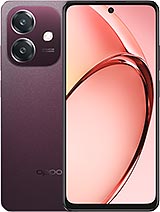
At 195g and 9.6mm thick, the F3 Pro sits in that sweet spot between pocketable and substantial. The dimensions (165.6 x 76.4mm) favor one-handed use on a 6.6-inch phone, and the flat sides and matte finishes (Starry Black and Matte Silver) feel grown-up rather than plasticky. There is no glass sandwich or premium materials to speak of, but the phone doesn't scream budget; it carries itself with quiet competence. The side-mounted fingerprint sensor is fast and reliable, a practical choice over in-display variants that often fumble.
Display
The 6.6-inch IPS LCD runs 1080 x 2408 pixels (20:9) at roughly 400ppi—sharp enough for reading and scrolling without visible grain at arm's length. Colors are neutral and accurate, and the 82.9% screen-to-body ratio means minimal bezels. Where IPS falls short is brightness: indoors, fine; direct sunlight, and you'll strain without an OLED panel's punch. For a budget phone, this is the right call; OLED at this price would bloat the cost and battery drain with no real gain for typical use. Refresh rate is a steady 60Hz, which is entirely adequate for 2023 at this tier.
Performance
The Mediatek Dimensity 700 (7nm, 8GB RAM, UFS 2.1) is a workhorse for everyday apps: messaging, social media, email, light browsing, and video playback all run without lag. Light games play smoothly. Where it hits a ceiling is demanding 3D titles—PUBG Mobile and Genshin Impact require low graphics and frame-rate caps to avoid stuttering, and sustained heavy multitasking can cause brief hangs. For a budget phone, this is the expected compromise; you are not paying for gaming performance, and the Dimensity 700 knows its lane. Android 13 is current and plenty for the hardware; updates are unlikely to be generous, but the chip is old enough that future Android versions should not punish it.
Camera
The 48MP main sensor (f/1.8, autofocus, quad-LED flash) is the standout. Daylight shots are detailed and well-balanced; autofocus snaps to subjects quickly. The 8MP ultrawide at 120° is properly useful for group portraits and landscape sweeps without noticeable barrel distortion creep. The 5MP macro is a spec-sheet afterthought—it struggles in low light, autofocus hunts, and detail collapses beyond a few centimeters. The 16MP front camera (f/2.2) is adequate for selfies and video calls; 720p video caps both it and the main sensor, which is limiting but typical at this price. Night mode is absent, so low-light photography defaults to noise and blur.
Battery & Charging
The 6150mAh battery sustains about 1.5–2 days on light-to-moderate use (messaging, browsing, some video). Heavy use (gaming, streaming, constant screen time) drops it to a single day or less. For a budget phone, that is respectable. Charging at 18W over 1.5–2 hours is where the phone ages badly: rivals at the same price now offer 30W, 50W, or even faster, making the F3 Pro feel slow to refill. There is no wireless charging, which is fine; the USB-C port at least keeps it modern. Plan for a daily charge habit or carry a powerbank if you are out all day.
Software & Connectivity
Android 13 ships clean and near-stock, with minimal bloat. Umidigi's history of slow update cycles means you should expect security patches more than major version jumps. The good news is that the Dimensity 700 is resilient to OS cruft, so a year or two of patchy updates won't cripple the phone. Connectivity is solid: 5G is present (bands 1, 2, 3, 5, 7, 8, 20, 25, 28, 38, 40, 41, 66, 77, 78 SA/NSA) where networks exist, dual nano-SIM lets you juggle carriers or regions, and Wi-Fi 5 handles home and office networks. NFC, GPS, Bluetooth 5.1, and FM radio round out a no-surprises suite. The microSD slot (shared SIM tray) is a genuine plus for storage expansion.
Value & Verdict
At roughly 160 EUR, the F3 Pro competes with entry-level and older-gen budget flagships. It undercuts on charging speed and gaming grunt, but it matches or beats on battery capacity, 5G, and dual-SIM flexibility. For buyers in markets where these features matter—emerging regions, frequent travelers, budget-conscious professionals—the value is there. It is not trendy or feature-rich, but it is honest: a 6150mAh battery and Dimensity 700 do what they promise, no marketing spin. If you need a second phone, work across regions, or simply want reliability without paying for flagship status, the F3 Pro is a sensible pick. If gaming or photography push your buttons, or if you want fast charging to fill dead time, look at rival 2024 models at the same price.
Verdict
The F3 Pro suits budget buyers who prioritize battery life, dual-SIM flexibility, and steady everyday performance over gaming or photography thrills. Those demanding fast charging, serious gaming, or cutting-edge features will find better value in newer rivals at the same price point.
- 6150mAh battery with realistic 1.5–2 days of light-to-moderate use; 5G connectivity future-proofs for network upgrades where available
- Dual nano-SIM and microSD card slot (shared) covers work-and-personal or regional roaming without compromise
- 48MP main camera with f/1.8 aperture and autofocus captures sharp daylight shots; 120° ultrawide is genuinely useful for landscapes and groups
- Audio jack and stereo speakers are still here—useful for wired headphones and decent sound during calls or media
- 18W charging is slow for 2023 (rivals at this price now hit 30–50W); expect 1.5–2 hours to full from empty
- Dimensity 700 is entry-level even for midrange—PUBG and Genshin Impact demand low graphics to stay smooth; heavy multitasking can stutter
- 5MP macro camera is nearly useless; in low light especially, detail falls apart and autofocus hunts
Umidigi F3 Pro Key Specifications
The essentials at a glance. See the full spec sheet.
| Released | 2023 |
|---|---|
| Display | 6.6 inches, 104.9 cm2 (~82.9% screen-to-body ratio), IPS LCD |
| Resolution | 1080 x 2408 pixels, 20:9 ratio (~400 ppi density) |
| Chipset | Mediatek Dimensity 700 (7 nm) |
| RAM & storage | 256GB 8GB RAM |
| Main camera | 48 MP, f/1.8, (wide), AF 8 MP, f/2.2, 120˚ (ultrawide) 5 MP (macro) |
| Selfie camera | 16 MP, f/2.2, (wide) |
| Battery | 6150 mAh |
| Charging | 18W wired |
| Software | Android 13 |
| Dimensions | 165.6 x 76.4 x 9.6 mm (6.52 x 3.01 x 0.38 in) |
| Weight | 195 g (6.88 oz) |
| Network | GSM / CDMA / HSPA / LTE / 5G |
| NFC | Yes |
| USB | USB Type-C, OTG |
Umidigi F3 Pro FAQ
Common questions, answered from the spec sheet.
Does the F3 Pro support 5G?
Yes. The F3 Pro supports 5G networks.
What chipset does the F3 Pro use?
The F3 Pro runs on the Mediatek Dimensity 700 (7 nm).
What display does the F3 Pro have?
A 6.6 inches, 104.9 cm2 (~82.9% screen-to-body ratio) IPS LCD, 1080 x 2408 pixels, 20:9 ratio (~400 ppi density).
How big is the F3 Pro battery?
The F3 Pro has a 6150 mAh battery. Charging is rated at 18W wired.
Does the F3 Pro have NFC?
Yes, the F3 Pro has NFC.
Does the F3 Pro support a microSD card?
Yes, the F3 Pro supports expandable storage (microSDXC (uses shared SIM slot)).
Does the F3 Pro have a headphone jack?
Yes, the F3 Pro has a 3.5mm headphone jack.
Alternatives to consider
If the F3 Pro isn’t quite right, these are the closest calls.
Active T1
A15C
G1 Plus
G5 Mecha
Galaxy M15 5G