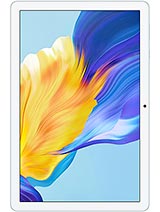
Umidigi G1 Tab Mini review
This tablet suits someone who wants a truly pocketable device for reading, light browsing, and video calls on Wi-Fi, and who does not mind slower performance and lengthy charging times. Anyone doing real work, multitasking, or expecting snappy app performance should look at a comparable mid-range alternative with a faster chipset.
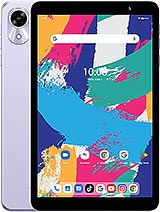
This review is based on Umidigi’s published specifications and public benchmark data for the Umidigi G1 Tab Mini, and the rating is spec-based. GoSolo does not physically test devices; where we estimate real-world behaviour such as battery life or charge time, we say so. How we rate phones.
Overview
The Umidigi G1 Tab Mini is a light, portable 8-inch tablet that handles casual reading and browsing on Wi-Fi, but its aging RK3562 processor and 3GB of RAM make it sluggish for anything beyond basic tasks. It is competent as an affordable second device for media consumption, though it falls behind on charging speed and overall responsiveness for the 2024 market.
Design & build
At 201.6 × 124.5 × 8.9 mm and weighing just 368 grams, the G1 Tab Mini is genuinely portable—one of the few compact tablets that does not feel like a compromise. The slim bezel design delivers a 73.9% screen-to-body ratio, so there is less wasted space around the display than on older budget models. This tablet fits into a large bag or a coat pocket without fuss, which is the whole point of an 8-inch form factor. The body feels light enough to hold one-handed for reading or video calls, a genuine advantage over heavier 10-inch slates that force you back onto a stand or lap.
Display
The 8-inch IPS LCD tops out at 800 × 1280 pixels, delivering roughly 189 ppi. By 2024 standards, this is visibly soft compared to mid-range tablets that routinely hit 1920 × 1200 or higher at this size. Text is legible for reading and email, but edges lack the sharpness of sharper panels, and scrolling through dense content like spreadsheets or web pages reveals the lower resolution quickly. The 16:10 aspect ratio suits content consumption, though the IPS panel's color accuracy and viewing angles are standard for the budget tier—nothing remarkable, but adequate for casual use.
Performance
The RK3562 is a dated choice for 2024. This quad-core 2.0 GHz chip paired with 3GB of RAM handles light browsing, email, and reading apps without issue, but multitasking stalls noticeably. Opening a second heavy app while one runs in the background brings visible lag. Gaming and any graphics work are off the table. The chipset architecture means Android 14 does not run as smoothly as it would on an entry-level Snapdragon 680 or MediaTek Helio G processor, and the modest RAM compounds the problem. For a tablet released in 2024, this feels behind—rivals at the same price point offer measurably snappier performance.
Software
Android 14 ships out of the box, which is current. Umidigi's overlay is typically light, so the software experience is close to stock Android. The bare 3GB of RAM means you will feel memory pressure sooner than on better-equipped devices, but for a tablet used primarily for browsing and reading, this is a minor inconvenience. Security updates and OS longevity are the usual question marks for Umidigi, but this is typical of the brand and price tier.
Camera
Both the 5MP rear and 5MP front cameras are functional but basic. The rear shooter has an LED flash and can capture snapshots in good light, but low-light performance will be mushy and detail is minimal. The front camera is adequate for video calls at 720p, delivering acceptable image quality in bright rooms. Neither camera offers anything beyond the bare minimum, and neither is a reason to pick this tablet over rivals. Do not expect usable photos beyond casual documentation.
Battery & charging
The 5000 mAh cell supplies roughly 8 to 10 hours of screen time on mixed use (reading, light browsing, video streaming). On heavier video playback, you may see closer to 6 to 8 hours. This is respectable for light-duty consumption, but the real weakness is charging. At 10W wired, a full charge takes roughly 3 to 4 hours, and you cannot accelerate that. Many budget tablets today offer 18W or 30W charging as standard. For a device aimed at casual use, slow charging means if you drain it daily, you will need to plan ahead for morning top-ups or overnight recovery time.
Connectivity & value
Wi-Fi 6 and Bluetooth 5.0 are solid features at this price—you get fast wireless performance and good accessory compatibility. The absence of cellular, GPS, and NFC are not surprises on a budget tablet, though the no-GPS limitation means you cannot navigate without an online connection. The dedicated microSD slot is a genuine plus, allowing you to expand storage without trade-offs. At its retail price point as an 8-inch Wi-Fi-only tablet, the G1 Tab Mini occupies a tight niche: affordable, portable, and adequate for light media and reading at home or over Wi-Fi. The RK3562 performance gap and 10W charging are hard trade-offs to swallow in 2024, but if portability and price are your top priorities, it delivers on those fronts.
Verdict
This tablet suits someone who wants a truly pocketable device for reading, light browsing, and video calls on Wi-Fi, and who does not mind slower performance and lengthy charging times. Anyone doing real work, multitasking, or expecting snappy app performance should look at a comparable mid-range alternative with a faster chipset.
- Compact and light at 368g—genuinely pocketable and easy to carry for travel or around the home
- Four speakers with stereo sound, a rarity on budget tablets and useful for media playback and video calls
- Dual-band Wi-Fi 6 and Bluetooth 5.0 ensure solid wireless connectivity for its class
- Dedicated microSD slot allows storage expansion without sacrificing a SIM tray
- 10W charging is among the slowest in the tablet market today, meaning 3 to 4 hours to a full charge
- RK3562 processor struggles visibly with multitasking and any app heavier than light browsing
- 800×1280 resolution on an 8-inch screen feels soft compared to mid-range tablets; text is readable but not crisp
Umidigi G1 Tab Mini Key Specifications
The essentials at a glance. See the full spec sheet.
| Released | 2024 |
|---|---|
| Display | 8.0 inches, 185.6 cm2 (~73.9% screen-to-body ratio), IPS LCD |
| Resolution | 800 x 1280 pixels, 16:10 ratio (~189 ppi density) |
| Chipset | RK3562 (22 nm) |
| RAM & storage | 32GB 3GB RAM |
| Main camera | 5 MP, f/2.2, (wide) |
| Selfie camera | 5 MP, f/2.0, (wide) |
| Battery | 5000 mAh |
| Charging | 10W wired |
| Software | Android 14 |
| Dimensions | 201.6 x 124.5 x 8.9 mm (7.94 x 4.90 x 0.35 in) |
| Weight | 368 g (12.98 oz) |
| Network | No cellular connectivity |
| NFC | No |
| USB | USB Type-C |
Umidigi G1 Tab Mini FAQ
Common questions, answered from the spec sheet.
Does the G1 Tab Mini support 5G?
No. The G1 Tab Mini tops out at No cellular connectivity, without 5G.
What chipset does the G1 Tab Mini use?
The G1 Tab Mini runs on the RK3562 (22 nm).
What display does the G1 Tab Mini have?
A 8.0 inches, 185.6 cm2 (~73.9% screen-to-body ratio) IPS LCD, 800 x 1280 pixels, 16:10 ratio (~189 ppi density).
How big is the G1 Tab Mini battery?
The G1 Tab Mini has a 5000 mAh battery. Charging is rated at 10W wired.
Does the G1 Tab Mini have NFC?
No, the G1 Tab Mini does not list NFC support.
Does the G1 Tab Mini support a microSD card?
Yes, the G1 Tab Mini supports expandable storage (microSDXC (dedicated slot)).
Does the G1 Tab Mini have a headphone jack?
Yes, the G1 Tab Mini has a 3.5mm headphone jack.
Alternatives to consider
If the G1 Tab Mini isn’t quite right, these are the closest calls.
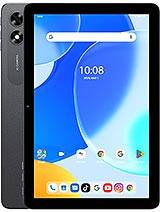
G3 Tab Ultra
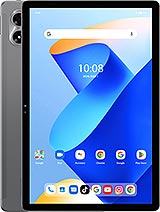
G7 Tab Pro
G9 Tab
G1 Tab
MatePad SE 11