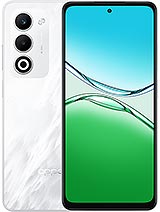
Umidigi G6 5G review
The G6 5G suits someone in a 5G-enabled market who prioritizes network speed and staying off the charger over sharp text and quick top-ups. Skip it if you spend hours reading on screen daily, game regularly, or value snappy charging—you will feel the soft display and glacial 10W charging every time you use it.
This review is based on Umidigi’s published specifications and public benchmark data for the Umidigi G6 5G, and the rating is spec-based. GoSolo does not physically test devices; where we estimate real-world behaviour such as battery life or charge time, we say so. How we rate phones.
Overview
The Umidigi G6 5G is a 220 EUR budget phone that swaps screen clarity for 5G connectivity and a large battery. For the price, it delivers on network speed and all-day endurance, but the 720p display and glacial 10W charging are real friction points in 2024.
Design & Build
At 183g and 8.3mm thick, the G6 5G is slim and light enough for pocket carry without feeling cheap. The build materials are not detailed in the spec sheet, but the phone lands in the typical plastic-frame-and-glass aesthetic of the budget category. It is neither a standout nor a liability in hand. Dual SIM is practical for travellers or those juggling work and personal numbers, and the 90Hz refresh on the display panel is a welcome touch that makes scrolling feel noticeably smoother than the 60Hz budget phones of years past.
Display
The 6.57" IPS LCD screen is large enough for comfortable media and messaging, but the 720p resolution is the real sticking point. At 269 ppi density, text edges are visibly soft and jagged at normal arm's-length reading distance. This is not a dealbreaker for casual use—web browsing and social media remain usable—but it feels dated next to phones that push 1080p or better even in the 200 EUR segment. The 90Hz refresh does help the scrolling feel fluid, but it cannot mask the underlying pixel graininess. If you spend hours reading on screen daily, this will be a daily frustration.
Performance
The Mediatek Dimensity 6100+ is a mainstream midrange chipset with two fast cores and six efficiency cores. It handles messaging, calls, light web browsing, and casual apps without stutter. Heavy multitasking—say, running five apps simultaneously—will trigger slowdowns, and anything demanding, from modern games to video editing, will feel sluggish. The 6GB RAM helps but does not cure the chip's fundamental limits. For a 2024 phone at 220 EUR, this is about par: you get acceptable performance for daily drivers, not a gaming platform. Do not expect to run latest titles at smooth frame rates.
Software
Android 13 is solid, but it is not the latest. Given the release date in 2024, the phone ships two years behind current Android versions. That means fewer security patches in the pipeline and earlier deprecation. Umidigi's update track record is mixed, so expect sporadic OS bumps and security patches rather than the rapid cadence of major brands. For a budget phone, this is typical, but it is worth factoring into long-term use—you may get two years of regular use before feeling left behind on software.
Camera
The 50MP f/1.8 main camera is the standout hardware choice: the wide aperture lets in more light than typical budget sensors, and the resolution allows for detailed crops without quality collapse. Daylight photos are sharp and well-balanced. In dim indoor light, the phone holds its own compared to rivals, thanks to the aperture and 50MP resolution. The 5MP night-vision sensor is marketing fluff—it does not create magical night shots but adds a secondary lens that adds a marginal improvement in low light. Where the phone falters is video: capped at 1080p 30fps, it cannot match the 1080p 60fps or 4K 30fps increasingly common at this price. Front cameras are basic at 8MP and 2MP, fine for video calls but uninspired for selfies.
Battery & Charging
The 5000 mAh cell easily carries the phone through a full day of mixed use—calls, messaging, video, and occasional gaming. With light use (mostly calls and messaging), it can stretch into a second day. However, the 10W charging is a severe limitation. Expect about 2.5 to 3 hours to full capacity, which is slow by 2024 standards when 30W, 65W, and even 120W charging are becoming normal at this price point. If you are always near a charger overnight, this is liveable. If you need quick top-ups before leaving home, you will find it frustrating.
Connectivity & Value
The phone's 5G support across bands 1–78 (including mmWave-adjacent bands 77 and 78) is a genuine differentiator at 220 EUR. Where 5G coverage exists, you will see faster data speeds than LTE. Dual SIM, NFC, FM radio, and a 3.5mm headphone jack round out the feature set—rare extras in this tier that add utility without cost to the manufacturer. Wi-Fi 6 is absent (only Wi-Fi 5 here), but that is normal for budget phones. At 220 EUR, the G6 5G is a pragmatic choice for buyers in regions with established 5G who value battery endurance and network speed over screen clarity or gaming prowess. Rivals at this price offer better displays (1080p) or faster charging (30W+), so the trade-off is explicit: you get 5G and longevity, not refinement.
Verdict
The G6 5G suits someone in a 5G-enabled market who prioritizes network speed and staying off the charger over sharp text and quick top-ups. Skip it if you spend hours reading on screen daily, game regularly, or value snappy charging—you will feel the soft display and glacial 10W charging every time you use it.
- 5G connectivity across broad band support (SA/NSA), meaningful in markets rolling out coverage
- 5000 mAh battery lasts a full day of mixed use without strain, and supports expandable storage via microSDXC
- 50MP main camera with f/1.8 aperture captures sharp daylight shots and handles dim indoor light better than smaller sensors at this price
- 10W charging is painfully slow for a 5000 mAh battery—rivals at this price now push 30W or higher, meaning 2.5+ hours to full when you need it fast
- 720p resolution on a 6.57" screen yields 269 ppi, leaving text visibly soft and pixelated at normal reading distance
- Dimensity 6100+ handles everyday tasks but stammers under gaming and heavy multitasking; no real leap from 2023 budget chips
Umidigi G6 5G Key Specifications
The essentials at a glance. See the full spec sheet.
| Released | 2024 |
|---|---|
| Display | 6.57 inches, 103.5 cm2 (~83.9% screen-to-body ratio), IPS LCD, 90Hz |
| Resolution | 720 x 1616 pixels, 20:9 ratio (~269 ppi density) |
| Chipset | Mediatek Dimensity 6100+ (6 nm) |
| RAM & storage | 128GB 6GB RAM |
| Main camera | 50 MP, f/1.8, (wide), AF 5 MP, f/2.2, (night vision) |
| Selfie camera | 8 MP, f/2.2, (wide) 2 MP, f/2.2, (night vision) |
| Battery | 5000 mAh |
| Charging | 10W wired |
| Software | Android 13 |
| Dimensions | 163.9 x 75.3 x 8.3 mm (6.45 x 2.96 x 0.33 in) |
| Weight | 183 g (6.46 oz) |
| Network | GSM / HSPA / LTE / 5G |
| NFC | Yes |
| USB | USB Type-C |
Umidigi G6 5G FAQ
Common questions, answered from the spec sheet.
Does the G6 5G support 5G?
Yes. The G6 5G supports 5G networks.
What chipset does the G6 5G use?
The G6 5G runs on the Mediatek Dimensity 6100+ (6 nm).
What display does the G6 5G have?
A 6.57 inches, 103.5 cm2 (~83.9% screen-to-body ratio) IPS LCD, 90Hz, 720 x 1616 pixels, 20:9 ratio (~269 ppi density).
How big is the G6 5G battery?
The G6 5G has a 5000 mAh battery. Charging is rated at 10W wired.
Does the G6 5G have NFC?
Yes, the G6 5G has NFC.
Does the G6 5G support a microSD card?
Yes, the G6 5G supports expandable storage (microSDXC (uses shared SIM slot)).
Does the G6 5G have a headphone jack?
Yes, the G6 5G has a 3.5mm headphone jack.
Alternatives to consider
If the G6 5G isn’t quite right, these are the closest calls.
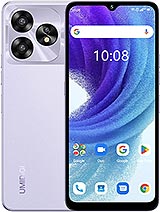
A15T
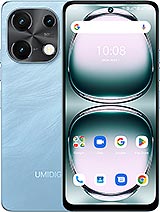
Note 100 4G
G9 5G
Bison X20
Galaxy M06 5G