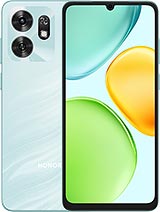
Umidigi G9A review
Suits someone in an emerging market who needs long screen time, values battery longevity, and uses 2–3 SIM cards. Avoid if you charge in bursts, play games, or need sharp text on screen—the charging speed and 720p density will wear on you within weeks.
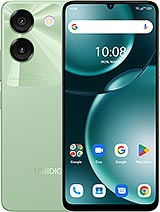
This review is based on Umidigi’s published specifications and public benchmark data for the Umidigi G9A, and the rating is spec-based. GoSolo does not physically test devices; where we estimate real-world behaviour such as battery life or charge time, we say so. How we rate phones.
Overview
The Umidigi G9A is a large-screen budget phone built for calls, messages, and casual browsing on LTE networks. The 5000 mAh battery and 10W charging are undersized for each other, leaving you hunting for a plug every evening.
Design & build
At 189 grams and 7.9 mm thick, the G9A feels substantial but not burdensome. The 6.75-inch screen dominates the front with an 85% screen-to-body ratio, which is genuinely impressive for this segment—most budget phones leave thicker bezels. The frame seems plastic, as expected at this price, but the heft suggests it will survive everyday pocket duty. Dual nano-SIM and a shared microSD slot cater to multi-network users common in South Asia and Africa, a practical nod that mainstream flagships have abandoned.
Display
The 6.75-inch IPS LCD is bright and large enough to make YouTube and messaging comfortable without the harshness of an AMOLED at low brightness. However, 720 x 1600 pixels spread across that expanse yields 260 ppi—noticeably soft for text and small icons, particularly if you read a lot or rely on fine detail in productivity apps. No refresh-rate spec is listed, so assume a standard 60 Hz; it's smooth enough for casual scrolling but offers no advantage for gaming or panning. The screen-to-body ratio is the real win here—more usable space in your hand than the numbers alone suggest.
Performance
The Unisoc SC9863A is a 28 nm octa-core running at up to 1.6 GHz per core—a modest chip purpose-built for low power, not speed. Paired with 4 GB RAM and Android 14 Go edition, it handles calls, messaging, web browsing, and standard social media without noticeable lag on first launch. But open three apps, try to edit a photo, or load a game heavier than Candy Crush and you'll feel the frame rate drop. The Go edition of Android is leaner than the full OS, which helps on this hardware, but it's still a trade: you get simpler system apps and reduced background features in exchange for stability on a weak CPU. For someone checking email and maps daily, it suffices. For anyone doing real work, it's frustrating.
Camera
A single 13 MP rear lens with LED flash and an 8 MP selfie sensor cover the basics without frills. The lack of an ultrawide or telephoto lens means you cannot zoom or capture wide landscapes without stepping back, a real limitation when traveling or photographing groups. 1080p30 video is standard for this tier but feels dated now that rivals offer 1080p60 or higher. In daylight, the 13 MP sensor will produce serviceable snapshots, but low-light performance will be weak—the large LCD and modest aperture (not specified but predictably narrow) offer little help at dusk or indoors. There's no dedicated night mode or computational photography to compensate. The selfie camera is adequate for video calls but won't win at portraits.
Battery & charging
The 5000 mAh cell is genuinely large and, paired with the efficient Unisoc chip, delivers about a full day of light to moderate use—calls, browsing, a few videos. Heavy users will exhaust it by evening. The real stumble is 10W charging: expect over 2 hours from zero to full, which is among the slowest in 2024 for any phone, even budget ones. Rivals in this price bracket typically deliver 18W or 30W, making a real difference if you're catching a charge before leaving the house. Here, you're charging overnight by necessity, not by choice. For markets where power outages are common, the large battery is a genuine asset; the charging speed is a genuine frustration.
Software & connectivity
Android 14 Go edition runs smoothly on 4 GB RAM—it's a thoughtful OS choice for this hardware, and the go-forward update path should be reliable. LTE connectivity covers most populated areas in emerging markets, and the broad band support (16 LTE bands, HSPA fallback) helps across regions. Wi-Fi is capped at 802.11n, not 802.11ac or Wi-Fi 6, so expect slower broadband when at home than a newer phone would pull. No 5G, which is fine for most of the world outside major cities, and no NFC means no mobile payment or contactless features. Dual SIM is practical; the FM radio and 3.5 mm jack remain features worth having if you live outside premium device ecosystems.
Value & verdict
The Umidigi G9A is affordable—likely in the $100–130 USD range based on specs—and that price buys you a large screen, long battery life, and LTE. For someone prioritizing screen real estate and all-day runtime over performance and charging speed, it makes a rational case. But the 10W charging is a real competitive weakness: phones at double the price offer triple the charge speed, and even other budget options have moved to 18W or 30W. The 720p display on a 6.75-inch screen is adequate if you don't stare at text, but softness adds up over hours of reading. The entry-level chipset is honest about its limits—no false expectations of gaming or heavy multitasking. It is what it is: a calls-and-messaging phone with a big screen and a battery that lasts. Nothing more, nothing less.
Verdict
Suits someone in an emerging market who needs long screen time, values battery longevity, and uses 2–3 SIM cards. Avoid if you charge in bursts, play games, or need sharp text on screen—the charging speed and 720p density will wear on you within weeks.
- 6.75-inch screen with 85% screen-to-body ratio fits a lot of content on a slim 7.9 mm frame
- 5000 mAh battery runs a full day of light use without strain
- Dual SIM support and microSD expansion for emerging-market flexibility
- 3.5 mm headphone jack and FM radio preserved, still useful in many regions
- 10W charging is glacially slow—expect 2+ hours from zero, making daytime top-ups impractical
- 720p resolution on a 6.75-inch screen leaves text and icons noticeably soft at 260 ppi
- Entry-level Unisoc SC9863A chipset stutters under multitasking or any gaming demand
Umidigi G9A Key Specifications
The essentials at a glance. See the full spec sheet.
| Released | 2024, September |
|---|---|
| Display | 6.75 inches, 110.0 cm2 (~85.4% screen-to-body ratio), IPS LCD |
| Resolution | 720 x 1600 pixels, 20:9 ratio (~260 ppi density) |
| Chipset | Unisoc SC9863A (28 nm) |
| RAM & storage | 64GB 4GB RAM |
| Main camera | 13 MP, (wide) Auxiliary lens |
| Selfie camera | 8 MP, (wide) |
| Battery | 5000 mAh |
| Charging | 10W wired |
| Software | Android 14 (Go edition) |
| Dimensions | 167.2 x 77 x 7.9 mm (6.58 x 3.03 x 0.31 in) |
| Weight | 189 g (6.67 oz) |
| Network | GSM / HSPA / LTE |
| NFC | No |
| USB | USB Type-C, OTG |
Umidigi G9A FAQ
Common questions, answered from the spec sheet.
Does the G9A support 5G?
No. The G9A tops out at GSM / HSPA / LTE, without 5G.
What chipset does the G9A use?
The G9A runs on the Unisoc SC9863A (28 nm).
What display does the G9A have?
A 6.75 inches, 110.0 cm2 (~85.4% screen-to-body ratio) IPS LCD, 720 x 1600 pixels, 20:9 ratio (~260 ppi density).
How big is the G9A battery?
The G9A has a 5000 mAh battery. Charging is rated at 10W wired.
Does the G9A have NFC?
No, the G9A does not list NFC support.
Does the G9A support a microSD card?
Yes, the G9A supports expandable storage (microSDXC (uses shared SIM slot)).
Does the G9A have a headphone jack?
Yes, the G9A has a 3.5mm headphone jack.
Alternatives to consider
If the G9A isn’t quite right, these are the closest calls.
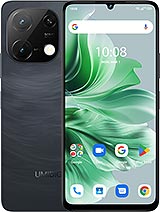
G9C
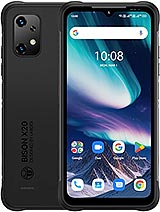
Bison X20
G9T
G100A
Y50 5G