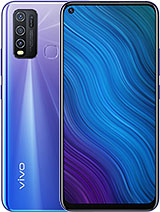
Umidigi G9C review
This phone suits someone who lives on messaging, calls, and long video sessions, has access to reliable power, and does not play demanding games. Anyone who values screen sharpness, needs to charge quickly during the day, or wants solid gaming performance should look elsewhere at this price.
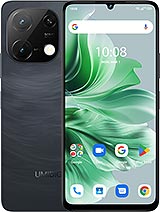
This review is based on Umidigi’s published specifications and public benchmark data for the Umidigi G9C, and the rating is spec-based. GoSolo does not physically test devices; where we estimate real-world behaviour such as battery life or charge time, we say so. How we rate phones.
Overview
The Umidigi G9C is a straightforward budget phone with a massive 6.75-inch screen, big 5000mAh battery, and dual SIM flexibility. It excels at all-day messaging and video on a budget, but the 720p display is grainy, the Helio G36 struggles with modern games, and 18W charging feels slow in 2024.
Design & build
At 189 grams and 7.9mm thick, the G9C is substantial but not awkward for a 6.75-inch phone. The plastic construction is predictable for the price, and Umidigi has kept the sides clean: a power button, volume rocker, fingerprint sensor, and dual SIM tray. The 85% screen-to-body ratio means the bezels are slim enough that the phone feels modern, though the sheer size means one-handed use is a stretch. Grip is decent and it doesn't feel cheaply made, just unremarkable. Rock Black and Grass Green colorways are safe and practical.
Display
The 6.75-inch IPS LCD is where the budget compromise hits hardest. At 720 x 1600 pixels, the pixel density sits at 260 ppi, and that translates to visible grain if you look at small text or icons closely. The larger the screen, the more obvious this becomes; on a 6.75-inch panel, it is hard to ignore. The 90Hz refresh rate keeps scrolling and swiping smooth, which helps the overall feel, but there is no brightness spec in the sheet, so real-world sunlight legibility remains a question mark. For someone used to a mid-range phone, stepping to this screen will feel like a step backward.
Performance
The Mediatek Helio G36 is entry-level silicon for 2024, sitting well below the performance tier of phones costing double. It handles messaging, calls, browsing, and streaming video without hiccups. Where it falters is gaming: modern 3D titles will drop frames at high settings, and demanding apps may lag during heavy multitasking. This is not a phone for PUBG, Genshin Impact, or running 20 browser tabs. For someone playing older games, using WhatsApp, or shuffling between light productivity apps, it is adequate. Expect about what you would get from a phone from two to three years ago.
Software
Android 14 comes out of the box, which is current as of late 2024. Umidigi has not removed the bloat bloat entirely—FM radio and a few preloads are present—but the phone is not weighted down with layers of custom skin either. Updates are a question mark; Umidigi has a patchy track record, so do not expect years of timely patches if security is a priority.
Camera
The 50MP main camera captures adequate daytime shots with decent detail, and the wide focal length works well for general snapshots. The high megapixel count means you can crop and still retain usable resolution, but that is its main advantage; there is no ultra-wide, macro, or zoom lens. Video tops out at 1080p30, which is standard mobile footage without slow-motion or 4K options. The 8MP selfie camera is basic but fine for video calls and group shots. Night shots will be noisy, and low-light performance is unremarkable. For a budget phone, it punches at its weight, but do not expect the sophistication of a mid-range competitor.
Battery & charging
The 5000mAh battery is the phone's strongest card. In casual use—messaging, browsing, social media—you will stretch to 1.5 to 2 days before needing a charge. Heavy gaming or video streaming will cut that to a single day or less. The 18W charging speed is the weak link. Most rivals in this segment now offer 30W or faster, so a full charge takes roughly 2 to 2.5 hours. That is not catastrophic if you charge overnight, but if the phone dies midday, you are looking at a meaningful wait. Fast charging would have lifted this phone noticeably; as it stands, you need to plan around the charging window.
Value & verdict
The G9C is a phone built for a specific person: someone who values battery life and screen size over sharpness and power, and who is willing to trade fast charging and gaming muscle for a low price. It sits in a crowded segment of budget phones, many of which offer similar specs at a similar cost. Where it stands out is the battery capacity and the straightforward feature set—dual SIM, microSD, headphone jack, FM radio, NFC. For someone in a region with unstable power or who does not want to charge daily, the 5000mAh is genuinely useful. The 720p display is a sore point, though; if you spend a lot of time reading text or looking at photos, you will notice and dislike it. Charging speed is not a dealbreaker for overnight users but is falling behind the market norm.
Verdict
This phone suits someone who lives on messaging, calls, and long video sessions, has access to reliable power, and does not play demanding games. Anyone who values screen sharpness, needs to charge quickly during the day, or wants solid gaming performance should look elsewhere at this price.
- 5000mAh battery easily lasts 1.5–2 days of casual use, cutting charging hassle
- 6.75-inch screen with 85% body ratio gives you real screen real estate without a bloated phone
- Dual SIM + microSD card slot (shared) lets you run two carriers or add storage on the same phone
- Headphone jack, FM radio, and side-fingerprint sensor cover basics without fuss
- 720p on a 6.75-inch display is visibly pixelated for text and icons up close
- 18W charging takes roughly 2–2.5 hours to full, slow by 2024 standards when rivals at this price hit 30–50W
- Helio G36 is entry-level; handles light apps and older games, but will stutter in modern 3D titles and heavy multitasking
Umidigi G9C Key Specifications
The essentials at a glance. See the full spec sheet.
| Released | 2024, September |
|---|---|
| Display | 6.75 inches, 110.0 cm2 (~85.4% screen-to-body ratio), IPS LCD, 90Hz |
| Resolution | 720 x 1600 pixels, 20:9 ratio (~260 ppi density) |
| Chipset | Mediatek Helio G36 (12 nm) |
| RAM & storage | 128GB 6GB RAM |
| Main camera | 50 MP, (wide) Auxiliary lens |
| Selfie camera | 8 MP, (wide) |
| Battery | 5000 mAh |
| Charging | 18W wired |
| Software | Android 14 |
| Dimensions | 167.2 x 77 x 7.9 mm (6.58 x 3.03 x 0.31 in) |
| Weight | 189 g (6.67 oz) |
| Network | GSM / HSPA / LTE |
| NFC | Yes |
| USB | USB Type-C, OTG |
Umidigi G9C FAQ
Common questions, answered from the spec sheet.
Does the G9C support 5G?
No. The G9C tops out at GSM / HSPA / LTE, without 5G.
What chipset does the G9C use?
The G9C runs on the Mediatek Helio G36 (12 nm).
What display does the G9C have?
A 6.75 inches, 110.0 cm2 (~85.4% screen-to-body ratio) IPS LCD, 90Hz, 720 x 1600 pixels, 20:9 ratio (~260 ppi density).
How big is the G9C battery?
The G9C has a 5000 mAh battery. Charging is rated at 18W wired.
Does the G9C have NFC?
Yes, the G9C has NFC.
Does the G9C support a microSD card?
Yes, the G9C supports expandable storage (microSDXC (uses shared SIM slot)).
Does the G9C have a headphone jack?
Yes, the G9C has a 3.5mm headphone jack.
Alternatives to consider
If the G9C isn’t quite right, these are the closest calls.
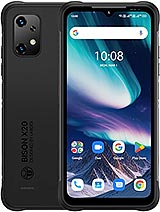
Bison X20
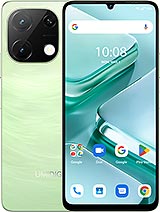
G9T
G100A
G6 5G
Galaxy M06 5G