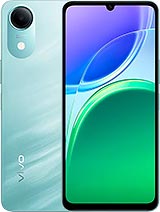
Umidigi G9x review
The G9x suits users prioritizing battery life and basic reliability over performance or screen quality, and those in emerging markets where LTE and a full-day charge matter more than speed. Anyone expecting smooth gaming, snappy multitasking, or a sharp display should look at mid-range alternatives; the G9x isn't built for that.
This review is written with AI assistance from Umidigi’s published specifications and public benchmark data for the Umidigi G9x, and the rating is spec-based. GoSolo does not physically test devices; where we estimate real-world behaviour such as battery life or charge time, we say so. How we rate phones.
Overview
The G9x is a straightforward budget phone built to last a full day on battery, not speed. At around 100 EUR, it trades screen sharpness and performance punch for a large 5000 mAh battery and enough CPU grunt for messaging and social media—but don't expect smooth gaming or snappy multitasking.
Design & build
At 190 grams and 8.1 mm thick, the G9x is pleasantly light and pocketable. The frame is plastic, the back is plastic, and the front is glass—exactly what you'd expect at this price. It doesn't pretend to be premium, and there's honesty in that. The side-mounted fingerprint sensor works well for one-handed unlock, and dual Nano-SIM slots give flexibility for work and personal lines or roaming. The 83.8 percent screen-to-body ratio is decent; bezels are visible but not excessive. Sand Black, Silver, and Green colorways are restrained and sensible.
Display
The 6.75-inch IPS LCD panel is where the budget shows most clearly. At 720 x 1600 pixels, the pixel density sits at 260 ppi—legible for everyday use but visibly grainy if you're accustomed to sharper displays. Text will read clearly enough, and colors won't look wrong, but you'll notice the pixelation in small fonts or detailed images. The 90 Hz refresh rate smooths scrolling noticeably compared to 60 Hz, which helps mask the resolution deficit slightly, but it's a cosmetic trade-off; the underlying sharpness doesn't improve. For the price, this is acceptable, but anyone upgrading from a mid-range phone will feel the step down.
Performance
The Unisoc SC9863A1 is a decade-old design refreshed for 2025; it's built for efficiency, not speed. With 4 GB of RAM and the Go edition of Android 14, everyday tasks—email, messaging, web browsing, social media, video playback—run smoothly without hitches. Apps launch on time, scrolling is fluid, and nothing will frustrate you in daily use. The moment you push harder—heavy multitasking, gaming, video editing, large file transfers—the chipset's age becomes obvious; you'll see stuttering, frame drops, and load times that feel sluggish by modern standards. It's a single-task-focused processor, and if you accept that ceiling, it's fine.
Software
Android 14 Go edition is tailored for lower-end hardware: simpler animations, fewer background processes, lighter apps. It feels optimized here, not crippled. Google Play Store works normally, and mainstream apps install and run without drama. The Go suite (Go Gmail, Go Chrome, Go Maps, Go Assistant) is streamlined but functional, though full Android feels slightly more responsive on systems with better CPUs. Security patches will depend on Umidigi's track record; budget brands often lag on long-term support, so don't plan on three years of guaranteed updates. The software isn't a highlight, but it won't hold you back.
Camera
The main 13 MP camera captures acceptable daylight shots with decent color and detail for social media and messaging. Video recording works, though bitrate and stabilization are basic. The 0.3 MP macro lens is nearly a joke—it's not usable in any meaningful sense; treat it as absent. The 5 MP selfie camera is fine for calls and casual self-portraits. Low light is where this camera struggles: images turn soft and grainy, with muted colors and visible noise. There's no night mode to rescue shots in dimly lit rooms. For a phone at this price, the camera is ordinary—it won't embarrass you in daylight, but it won't impress you either. If photography matters, spend more.
Battery & charging
The 5000 mAh battery is genuinely the phone's strength. In light to moderate use—messaging, social media, calls, occasional video—expect to comfortably clear a full day and into the evening of the next day. Heavy use (constant navigation, streaming, gaming) will drain it by early evening, but that's expected. Compared to competing budget phones with smaller packs, this is one of the few areas where the G9x punches above its price. Charging is the weakness: 10W is leisurely by any standard. A full charge from empty takes about 3 to 4 hours, so you're plugging it in overnight, not grabbing a quick midday boost. There's no fast charging, no wireless charging—just time and patience.
Value & verdict-context
At around 100 EUR, the G9x occupies a narrow niche: people who need a calling and messaging device with genuine battery endurance, not a gaming machine or a photography tool. In markets where network speed is inconsistent and users value a phone that lasts all day, this makes sense. The trade-offs are real—screen sharpness is low, performance is basic, charging is slow—but they're transparent. You're not paying flagship prices and then being disappointed; you're getting exactly what the spec sheet promises: a durable, long-lasting budget phone that handles straightforward tasks without fuss.
Verdict
The G9x suits users prioritizing battery life and basic reliability over performance or screen quality, and those in emerging markets where LTE and a full-day charge matter more than speed. Anyone expecting smooth gaming, snappy multitasking, or a sharp display should look at mid-range alternatives; the G9x isn't built for that.
- 5000 mAh battery comfortably stretches past a full day of typical use
- Large 6.75-inch display on a phone under 100 EUR
- Side-mounted fingerprint sensor and dual SIM for basic travel flexibility
- Android 14 Go edition keeps the OS lean and responsive on modest hardware
- Charging takes 3 to 4 hours at 10W—overnight-only pace
- 720p resolution on a 6.75-inch screen leaves text and icons noticeably pixelated
- Unisoc SC9863A handles daily apps but falters under any real load
Umidigi G9x Key Specifications
The essentials at a glance. See the full spec sheet.
| Released | 2025, June |
|---|---|
| Display | 6.75 inches, 110.0 cm2 (~83.8% screen-to-body ratio), IPS LCD, 90Hz |
| Resolution | 720 x 1600 pixels, 20:9 ratio (~260 ppi density) |
| Chipset | Unisoc SC9863A1 (22 nm) |
| RAM & storage | 64GB 4GB RAM, 128GB 4GB RAM |
| Main camera | 13 MP, (wide) 0.3 MP |
| Selfie camera | 5 MP, (wide) |
| Battery | 5000 mAh |
| Charging | 10W wired |
| Software | Android 14 (Go edition) |
| Dimensions | 168.3 x 78 x 8.1 mm (6.63 x 3.07 x 0.32 in) |
| Weight | 190 g (6.70 oz) |
| Build | Glass front, plastic frame, plastic back |
| Network | GSM / HSPA / LTE |
| NFC | No |
| USB | USB Type-C, OTG |
Umidigi G9x FAQ
Common questions, answered from the spec sheet.
Does the G9x support 5G?
No. The G9x tops out at GSM / HSPA / LTE, without 5G.
What chipset does the G9x use?
The G9x runs on the Unisoc SC9863A1 (22 nm).
What display does the G9x have?
A 6.75 inches, 110.0 cm2 (~83.8% screen-to-body ratio) IPS LCD, 90Hz, 720 x 1600 pixels, 20:9 ratio (~260 ppi density).
How big is the G9x battery?
The G9x has a 5000 mAh battery. Charging is rated at 10W wired.
Does the G9x have NFC?
No, the G9x does not list NFC support.
Does the G9x support a microSD card?
Yes, the G9x supports expandable storage (microSDXC (uses shared SIM slot)).
Does the G9x have a headphone jack?
No, the G9x does not have a 3.5mm headphone jack.
Alternatives to consider
If the G9x isn’t quite right, these are the closest calls.

Note 100A
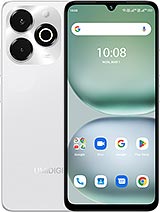
G100x
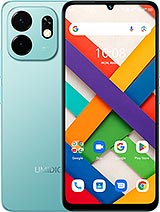
A75x

Note 100 4G

Play20A