Umidigi Note 100A review
This phone suits people in markets with strong LTE who need massive battery life and screen size and are willing to forgive soft pixels and slow charging. Anyone chasing sharpness, speed, or modern charging tech should save a bit more or look at last year's flagship."

This review is written with AI assistance from Umidigi’s published specifications and public benchmark data for the Umidigi Note 100A, and the rating is spec-based. GoSolo does not physically test devices; where we estimate real-world behaviour such as battery life or charge time, we say so. How we rate phones.
Overview
The Umidigi Note 100A is a budget 6.8-inch phone with a 120Hz display, 5000mAh battery, and an older chipset—it trades raw performance and camera sharpness for all-day battery and a familiar headphone jack, which is useful enough for the price if you don't demand speed or photo quality.
Design & build
The Umidigi Note 100A is unremarkable but functional. At 190 grams and 7.7mm thick, it sits in the expected range for a budget phone with a 6.8-inch display, and won't feel like a brick in your pocket. The glass front and plastic back are standard fare at this price, and the build doesn't scream durability or longevity—expect scuffs and eventual creaking—but it's nothing worse than dozens of competitors in the 120 EUR bracket. Dual nano-SIM and a shared microSDXC slot give you flexibility if you need to expand the 256GB, though pulling one SIM to add a card is old-school friction.
Display
The 6.8-inch IPS LCD offers generous real estate for reading and video, and the 86% screen-to-body ratio keeps bezels minimal. The 120Hz refresh is a genuine welcome at this price; scrolling feels noticeably smoother than the 60Hz that still plagues many budget rivals. The problem is pixel density. At 258 ppi, text and icons look soft and slightly blurry up close—nowhere near the sharpness of phones costing just 20 to 30 euros more. Colors are decent but not punchy, and brightness is likely adequate indoors and daylight but nothing you'd brag about. For casual use, reading, and streaming it works; for photo editing or design the low density becomes frustrating.
Performance
The Unisoc T615 is an entry-level chipset that handles WhatsApp, email, social media, and light web browsing without obvious lag. Video playback is smooth, and everyday multitasking doesn't cause the UI to stutter. The Mali-G57 GPU is weak, so any game beyond light titles (Candy Crush level) will either demand low settings or suffer frame drops. Only 4GB of RAM means that running multiple apps at once will force background processes to close, and you'll notice refresh hangs if you're juggling Spotify, a messaging app, and Chrome. If you're watching video and texting, you're fine; if you're trying to edit a photo, play a 3D game, and take a call at the same time, you'll hit ceilings fast. This is not a phone for power users, but it works for the use case of a working parent who needs a big screen and battery, not speed.
Software
Android 14 out of the box is current enough, and there's no reason to expect major bloatware from Umidigi at this price point. The software story is largely unremarkable, which in budget phones means it's acceptable. You get the core Google apps and a functional interface. Longevity is unclear—Umidigi has not historically committed to years of updates, so plan for Android 15 or 16 if you're lucky, not a multi-year cadence. For a 120 EUR phone, this is normal.
Camera
The 13MP main sensor captures adequate daylight shots if there's good light and the subject is still, but crops and zooms reveal lack of sharpness quickly. The sensor is small and lacks optical stabilization, so video is shaky without a tripod. At 1080p and 30fps, footage looks choppy during pans and movement compared to 60fps rivals at the same price. The 8MP selfie is fine for video calls and social posts, but don't expect flattering detail. Night mode is absent, so low-light photos are grainy. This is a camera for proof-of-life snapshots, not someone who cares about photography.
Battery & charging
The 5000mAh battery is the standout feature. With the modest 120Hz display and entry-level CPU, expect about 1 to 1.5 days of heavy use (6 to 8 hours of screen time in mixed browsing, video, and chat). A working day of moderate use stretches to evening, and light users might hit two days. The pain point is charging: 20W is slow by 2025 standards, and rivals at this price now offer 65W or higher. Expect 60 to 90 minutes to full from dead, which is frustrating if you need a quick top-up before leaving the house. There is no wireless charging, of course.
Value & verdict-context
At 120 EUR, the Note 100A occupies a narrow zone. It has a legitimately large display, a huge battery, and a 3.5mm jack—all things vanishing from phones even at this price. But the screen is low-density, the chip is basic, charging is slow, and the camera is forgettable. For buyers in regions with solid LTE coverage who prioritize a week of light use before needing to hunt for a charger and who value a headphone jack for wired earbuds, the tradeoffs are defensible. For anyone who edits photos on their phone, plays modern games, or expects fast top-ups, this is too much compromise for the money.
Verdict
This phone suits people in markets with strong LTE who need massive battery life and screen size and are willing to forgive soft pixels and slow charging. Anyone chasing sharpness, speed, or modern charging tech should save a bit more or look at last year's flagship."
- 5000mAh battery delivers solid all-day runtime and margins for moderate use
- 120Hz display feels smoother than the 60Hz standard at this price
- 3.5mm headphone jack still present, unusual even in budget phones now
- Large 6.8-inch screen with 86% screen-to-body ratio leaves little bezel
- 20W charging takes over an hour from empty, slower than rivals which now hit 65W or more
- Unisoc T615 is entry-level; heavy apps, games, and multitasking will stall
- 258 ppi makes text and icons noticeably soft compared to competitors in the same bracket
Umidigi Note 100A Key Specifications
The essentials at a glance. See the full spec sheet.
| Released | 2025, February 13 |
|---|---|
| Display | 6.8 inches, 111.6 cm2 (~86.0% screen-to-body ratio), IPS LCD, 120Hz |
| Resolution | 720 x 1600 pixels, 20:9 ratio (~258 ppi density) |
| Chipset | Unisoc T615 (12 nm) |
| RAM & storage | 256GB 4GB RAM |
| Main camera | 13 MP, (wide) Auxiliary lens |
| Selfie camera | 8 MP, (wide) |
| Battery | 5000 mAh |
| Charging | 20W wired |
| Software | Android 14 |
| Dimensions | 167.8 x 77.4 x 7.7 mm (6.61 x 3.05 x 0.30 in) |
| Weight | 190 g (6.70 oz) |
| Build | Glass front, plastic back, plastic frame |
| Network | GSM / HSPA / LTE |
| NFC | No |
| USB | USB Type-C, OTG |
Umidigi Note 100A FAQ
Common questions, answered from the spec sheet.
Does the Note 100A support 5G?
No. The Note 100A tops out at GSM / HSPA / LTE, without 5G.
What chipset does the Note 100A use?
The Note 100A runs on the Unisoc T615 (12 nm).
What display does the Note 100A have?
A 6.8 inches, 111.6 cm2 (~86.0% screen-to-body ratio) IPS LCD, 120Hz, 720 x 1600 pixels, 20:9 ratio (~258 ppi density).
How big is the Note 100A battery?
The Note 100A has a 5000 mAh battery. Charging is rated at 20W wired.
Does the Note 100A have NFC?
No, the Note 100A does not list NFC support.
Does the Note 100A support a microSD card?
Yes, the Note 100A supports expandable storage (microSDXC (uses shared SIM slot)).
Does the Note 100A have a headphone jack?
Yes, the Note 100A has a 3.5mm headphone jack.
Alternatives to consider
If the Note 100A isn’t quite right, these are the closest calls.

Note 100 4G

Note 100
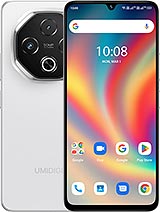
G100 Pro
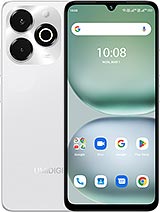
G100x
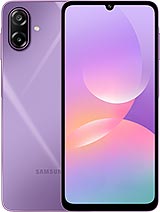
Galaxy M17e