Vivo G2 review
The Vivo G2 suits people prioritising battery longevity and straightforward reliability over display polish or camera ambition—typically first-time buyers or those in markets where dual-SIM and all-day endurance matter most. If you're upgrading from a 2021 midrange phone or expect sharp display text and fast charging, look at alternatives in the €180–220 band with newer chipsets and 1080p screens.
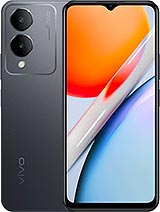
This review is based on Vivo’s published specifications and public benchmark data for the Vivo G2, and the rating is spec-based. GoSolo does not physically test devices; where we estimate real-world behaviour such as battery life or charge time, we say so. How we rate phones.
Overview
The Vivo G2 is a straightforward, no-nonsense budget phone that prioritises battery life and dual-SIM connectivity over display sharpness or gaming grunt. At about €160, it delivers a full day of mixed use and solid everyday performance, but the 720p screen and modest 13MP camera mean you're paying for longevity, not visual polish.
Design & build
At 186g and 8.1mm thick, the G2 feels compact and pocketable—a rarity in the 6.56-inch class. The plastic back and frame are honest materials for the price, though the glass front hints that Vivo isn't cutting every corner. The IP54 rating (light dust and splash resistance, no heavy immersion) is a practical addition; you won't worry about coffee spills, but it's not waterproof. The side-mounted fingerprint reader works fast and reliably, a sensible choice over an in-display sensor that would add cost and complexity here. Build quality sits where it should for the money: sturdy enough for daily knocks, without the feel of something truly premium.
Display
The 6.56-inch IPS LCD runs at 90Hz and 840 nits peak (HBM mode), which sounds promising until you hit the 269ppi density. At 720 x 1612 pixels, text and small icons appear noticeably soft at reading distance; if you've used a modern mid-range phone with a 1080p or higher density screen, the difference is visible and slightly fatiguing for extended reading. The 90Hz refresh makes scrolling feel smoother than 60Hz competitors, and the brightness handles outdoor daylight without fading into invisibility. For the price, it's honest—not good, not bad, but a clear trade-off: smoother motion over sharper text. Buyers coming from an older 720p device won't notice; those upgrading from a 2022 budget phone will.
Performance
The Dimensity 6020 is a solid mainstream chip for 2024, handling everyday apps, messaging, light browsing, and even mid-tier games without stuttering. The 2x2.2GHz Cortex-A76 cores and 6x2.0GHz efficiency cores strike a practical balance. In daily use—social media, navigation, photography—you won't feel left behind. Heavy gaming at high settings is where it falters; 3D titles demand compromises on graphical detail or frame rate. For a first-time smartphone buyer or someone who doesn't game hard, this is entirely fit for purpose. Paired with up to 8GB RAM, multitasking remains fluid even with several apps running. UFS 2.2 storage is serviceable, not fast by today's standards, but adequate for loading apps.
Software
Android 13 with OriginOS 3 on top means you get Vivo's customisations layered onto Google's base. OriginOS is more intrusive than pure Android but less bloated than some skins; it offers reasonable home screen flexibility and customisation options. Updates and long-term support details aren't specified here, which is a weakness for a budget phone where you'd want clarity on how long security patches will arrive. The Mediatek chipset has solid driver support in the Linux kernel, so updates are typically less of a bottleneck than with some older Qualcomm chips, but Vivo's track record on budget handsets is inconsistent. What you get out of the box is clean enough for daily use, but expect minimal future-proofing compared to larger manufacturers.
Camera
The 13MP rear shooter with f/2.2 and PDAF is adequate in good light, capturing recognisable detail and reasonable colour. The f/2.2 aperture is narrow, which means indoor or low-light shots will need more light or higher ISO, introducing grain. Video is capped at 1080p@30fps, fine for casual clips but noticeably behind phones that shoot 4K now. The 5MP selfie camera is perfectly usable for video calls and casual selfies but lacks the detail for large-format printing or serious content creation. There's no ultrawide, no macro, no zoom—just a single, straightforward sensor. For the price, the camera does its job; for social media and casual memories, it's fine. Anyone expecting smartphone photography beyond the basics should look elsewhere.
Battery & charging
The 5000mAh battery is the G2's strongest card. In mixed use—messaging, browsing, some video playback—you'll comfortably reach end of day and into the next morning, often with 10–20% remaining. Light users can push two full days. The downside is charging speed: the spec sheet lists 15W, which means a full charge from dead takes around two hours. That's slow by modern standards; rivals in this price range now push 30–50W. There's no mention of reverse wireless charging or ultra-fast turbocharging, so patience is the price of all-day battery. For people who can charge overnight and don't power-drain through a day, this is fine. Road warriors or frequent travellers should note the weakness.
Value & verdict
At about €160, the Vivo G2 occupies a specific niche: the buyer who wants reliable everyday performance and a phone that lasts past sunset without reaching for a charger, and who's willing to accept a soft display and basic camera to get there. It's not built to impress; it's built to work. The dual-SIM slot is genuinely useful in markets where it matters (multiple carriers, work and personal lines). The lack of a microSD slot is annoying for a budget device storing only up to 256GB, especially at 4GB RAM on the base model. Compared to last year's budget offerings, the Dimensity 6020 and 90Hz display are modest step-ups, but nothing that screams "upgrade." The main rival territory is other sub-€200 phones from Xiaomi, Realme, and others; Vivo's OriginOS skin may feel heavier than pure Android alternatives, which some will prefer and others will resent.
Verdict
The Vivo G2 suits people prioritising battery longevity and straightforward reliability over display polish or camera ambition—typically first-time buyers or those in markets where dual-SIM and all-day endurance matter most. If you're upgrading from a 2021 midrange phone or expect sharp display text and fast charging, look at alternatives in the €180–220 band with newer chipsets and 1080p screens.
- 5000mAh battery routinely delivers a full day and into the next morning on mixed use
- Compact, light build (186g, 8.1mm) and practical IP54 durability rating
- Smooth 90Hz display and snappy Dimensity 6020 chipset for everyday tasks, apps, and light gaming
- Dual-SIM support and FM radio add utility in emerging markets
- 15W charging is noticeably slow; rivals at this price now hit 30–50W, meaning two-hour charge times
- 720p display softness is visible and fatiguing for reading; a significant step down from 1080p midrange phones
- No microSD slot and base model stuck at 4GB RAM limits upgrade headroom for storage and multitasking
Vivo G2 Key Specifications
The essentials at a glance. See the full spec sheet.
| Released | 2024, January 19 |
|---|---|
| Display | 6.56 inches, 103.4 cm2 (~83.8% screen-to-body ratio), IPS LCD, 90Hz, 840 nits (HBM) |
| Resolution | 720 x 1612 pixels, 20:9 ratio (~269 ppi density) |
| Chipset | Mediatek Dimensity 6020 (7 nm) |
| RAM & storage | 128GB 4GB RAM, 128GB 6GB RAM, 128GB 8GB RAM, 256GB 8GB RAM |
| Main camera | 13 MP, f/2.2, (wide), PDAF Anti-stroboscopic sensor |
| Selfie camera | 5 MP, f/1.8, (wide) |
| Battery | 5000 mAh |
| Software | Android 13, OriginOS 3 |
| Dimensions | 163.7 x 75.4 x 8.1 mm (6.44 x 2.97 x 0.32 in) |
| Weight | 186 g (6.56 oz) |
| Build | Glass front, plastic frame, plastic back |
| Durability | IP54 |
| Network | GSM / HSPA / LTE / 5G |
| NFC | No |
| USB | USB Type-C 2.0, OTG |
Vivo G2 FAQ
Common questions, answered from the spec sheet.
Does the G2 support 5G?
Yes. The G2 supports 5G networks.
What chipset does the G2 use?
The G2 runs on the Mediatek Dimensity 6020 (7 nm).
What display does the G2 have?
A 6.56 inches, 103.4 cm2 (~83.8% screen-to-body ratio) IPS LCD, 90Hz, 840 nits (HBM), 720 x 1612 pixels, 20:9 ratio (~269 ppi density).
How big is the G2 battery?
The G2 has a 5000 mAh battery.
Does the G2 have NFC?
No, the G2 does not list NFC support.
Is the G2 water resistant?
The G2 carries a IP54 rating.
Does the G2 support a microSD card?
No, the G2 does not support expandable storage.
Alternatives to consider
If the G2 isn’t quite right, these are the closest calls.
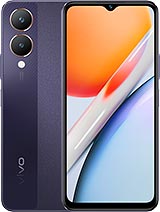
Y28 5G
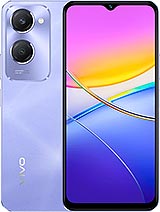
Y37 5G
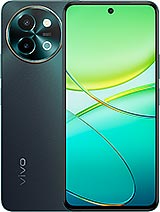
Y38 5G
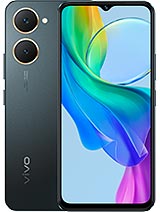
Y03
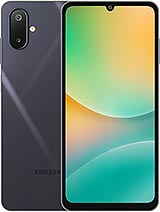
Galaxy M06 5G