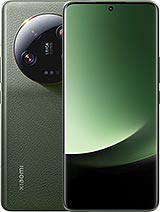
Vivo iQOO 11S review
The iQOO 11S is a solid choice for someone in an Asian or European market who wants a 144Hz, gaming-ready phone with absurdly fast charging and does not need two days of battery life. Skip it if you prioritize zoom range, wireless charging, or a smaller phone—it is wide and demanding of frequent top-ups.
This review is based on Vivo’s published specifications and public benchmark data for the Vivo iQOO 11S, and the rating is spec-based. GoSolo does not physically test devices; where we estimate real-world behaviour such as battery life or charge time, we say so. How we rate phones.
Overview
The iQOO 11S is a 2023 Snapdragon 8 Gen 2 phone built for gamers and speed enthusiasts, with a 144Hz display, 200W charging, and competent cameras, all for around €500. It delivers genuine performance and charging that feel ahead of its price, though the ultrawide camera and battery size are modest for a 6.78-inch flagship.
Design & build
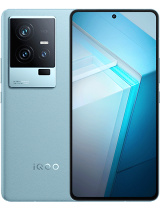
The iQOO 11S is thin and light for its size—8.4mm thick, 207g—which makes it feel nimble in hand. The 6.78-inch body is wide by modern standards, so single-hand reach can be awkward if you have smaller hands. Build feels solid, with Gorilla Glass Victus on the front and a metal frame, but there is no official IP rating listed, so durability against water and dust is a question mark. The phone ships in black or sky blue; BMW M branding on the white version is cosmetic flourish for a niche audience.
Display
LTPO4 AMOLED at 1440×3200 (518 ppi) is sharp and colour-accurate, with no visible grain even at close viewing. The 144Hz refresh rate makes scrolling and gaming visibly smoother than 120Hz; the difference is real, not marketing hype. Peak brightness of 1800 nits means the screen stays legible in direct sunlight, a rarity at this price. HDR10+ and 1B colours add visual depth in content that supports it. For a €500 phone, this is a standout—most rivals stop at 120Hz or save the high-end display for pricier models.
Performance
The Snapdragon 8 Gen 2 and Adreno 740 are near-flagship silicon; they were flagship-class a year before this phone launched. Everyday multitasking—email, social media, web browsing—feels instant, with no stutters or app-reloading delays. Gaming is where this chip shines: Genshin Impact, Honkai Star Rail, and Call of Duty Mobile all run at high or ultra settings without meaningful frame drops. Synthetic benchmarks (Geekbench, AnTuTu) are strong, though by mid-2024 this chipset has been superseded by the Gen 3. For 2023, though, there is no real complaint about everyday or gaming performance. The 12GB base RAM is tight for heavy multitasking; 16GB tiers are worth the extra cost if you plan to keep the phone three years.
Camera
The 50MP main sensor with f/1.9 aperture and OIS is the star: it captures bright, detailed shots in daylight and handles low-light scenes better than many rivals at this price. The 2x telephoto (13MP, f/2.5) is useful for framing distant subjects without obvious crop loss, but anything beyond 2x starts to feel digital-zoom-soft. The 8MP ultrawide at f/2.2 is where the phone stumbles—it is dim, soft-focused at the edges, and noticeably behind the main lens in usable detail. Video stabilization works well for handheld recording; 8K@30fps is a spec-sheet feature, not practical for most users given file sizes and storage. The 16MP selfie is ordinary but sufficient for video calls and casual portraits. Overall, the main camera is excellent, the telephoto is functional, and the ultrawide is a compromise.
Battery & charging
The 4700mAh battery lasts a full day if you are a moderate user (messaging, browsing, some video). Heavier use—gaming for 2+ hours, continuous video recording, navigation—drains the battery by evening. This is not a 2-day phone, even if you dial back the 144Hz to 60Hz. Where the iQOO 11S excels is charging speed. At 200W wired (with a compatible adapter), a near-empty charge hits 100% in roughly 10–15 minutes. That is legitimately useful; you can top up during a coffee break before work or gaming. There is no wireless charging, which is now standard on rivals at this price point. The 200W charging makes up for the smaller-than-ideal battery, but only if you are near a power outlet often.
Software
The iQOO 11S runs Android 13 with Vivo's OriginOS 3 on top (in China-market units) or Funtouch OS elsewhere. OriginOS is fairly close to stock Android with added customization options and cloud services; Funtouch adds more bloat but is still manageable with debloating. Neither skin is a barrier to daily use, but neither is as clean as stock Android on a Pixel. The phone shipped in mid-2023, so software support is a question: Vivo typically promises two to three years of OS updates, which means you will likely see Android 14 and 15 before the phone stops receiving security patches. For a €500 device, that is acceptable if not generous.
Value & verdict
At €500, the iQOO 11S is a confident mid-to-upper-range Android phone that plays to clear strengths: gaming performance, display fluidity, and charging speed. It is not the cheapest way to get a Snapdragon 8 Gen 2, and by late 2024, fresher Gen 3 chips are available at similar prices. The camera system is uneven—great main lens, weak ultrawide, modest telephoto. The battery is small for the frame size, and the lack of wireless charging is a miss. That said, if you value 144Hz fluidity, 200W charging convenience, and genuine gaming chops, the trade-offs are worth it. The phone is best suited to 5G markets (Asia, Europe, Korea) where Vivo has solid service infrastructure and fast cellular is reliably available. If you prefer longer battery life, prefer zoom range, or do not game, look elsewhere.
Verdict
The iQOO 11S is a solid choice for someone in an Asian or European market who wants a 144Hz, gaming-ready phone with absurdly fast charging and does not need two days of battery life. Skip it if you prioritize zoom range, wireless charging, or a smaller phone—it is wide and demanding of frequent top-ups.
- 200W wired charging fills a 4700mAh battery in roughly 10–15 minutes, a convenience genuinely scarce at this price point
- Snapdragon 8 Gen 2 and Adreno 740 handle gaming and heavy multitasking without throttle; Genshin Impact runs high-settings smoothly
- 6.78-inch LTPO4 AMOLED at 1440×3200 with 144Hz stays bright in sunlight (1800 nits peak) and scrolling feels fluid
- 50MP main with f/1.9, 2x optical zoom, and OIS covers everyday shots, low light, and distant subjects without obvious cropping
- 4700mAh battery only gets you through a full day of moderate-to-heavy use; heavy gamers will hunt for a charger by evening
- 8MP ultrawide is functional but soft and dim compared to what rivals offer at this price; telephoto is 2x only, leaving a gap to wider zoom
- Optical fingerprint sensor is slower and less reliable than in-display capacitive alternatives now standard elsewhere
Vivo iQOO 11S Key Specifications
The essentials at a glance. See the full spec sheet.
| Released | 2023, July 04 |
|---|---|
| Display | 6.78 inches, 111.0 cm2 (~87.3% screen-to-body ratio), LTPO4 AMOLED, 1B colors, 144Hz, HDR10+, 1800 nits (peak) |
| Resolution | 1440 x 3200 pixels, 20:9 ratio (~518 ppi density) |
| Chipset | Qualcomm SM8550-AB Snapdragon 8 Gen 2 (4 nm) |
| RAM & storage | 256GB 12GB RAM, 256GB 16GB RAM, 512GB 16GB RAM, 1TB 16GB RAM |
| Main camera | 50 MP, f/1.9, 23mm (wide), 1/1.49", 1.0µm, PDAF, OIS 13 MP, f/2.5, 47mm (telephoto), PDAF, 2x optical zoom 8 MP, f/2.2, 16mm (ultrawide) |
| Selfie camera | 16 MP, f/2.5, (wide) |
| Battery | 4700 mAh |
| Charging | 200W wired, PD3.0, UFCS |
| Software | Android 13, OriginOS 3 (China) |
| Dimensions | 164.9 x 77.1 x 8.4 mm or 8.7 mm |
| Weight | 207 g or 210 g (7.30 oz) |
| Network | GSM / CDMA / HSPA / CDMA2000 / LTE / 5G |
| NFC | Yes |
| USB | USB Type-C 2.0, OTG |
Vivo iQOO 11S FAQ
Common questions, answered from the spec sheet.
Does the iQOO 11S support 5G?
Yes. The iQOO 11S supports 5G networks.
What chipset does the iQOO 11S use?
The iQOO 11S runs on the Qualcomm SM8550-AB Snapdragon 8 Gen 2 (4 nm).
What display does the iQOO 11S have?
A 6.78 inches, 111.0 cm2 (~87.3% screen-to-body ratio) LTPO4 AMOLED, 1B colors, 144Hz, HDR10+, 1800 nits (peak), 1440 x 3200 pixels, 20:9 ratio (~518 ppi density).
How big is the iQOO 11S battery?
The iQOO 11S has a 4700 mAh battery. Charging is rated at 200W wired, PD3.0, UFCS.
Does the iQOO 11S have NFC?
Yes, the iQOO 11S has NFC.
Does the iQOO 11S support a microSD card?
No, the iQOO 11S does not support expandable storage.
Does the iQOO 11S have a headphone jack?
No, the iQOO 11S does not have a 3.5mm headphone jack.
Alternatives to consider
If the iQOO 11S isn’t quite right, these are the closest calls.
iQOO Neo8 Pro
iQOO 12 Pro
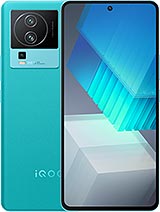
iQOO Neo7 Racing
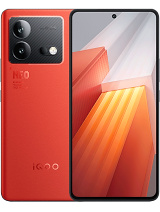
iQOO Neo8
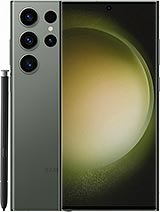
Galaxy S23 Ultra