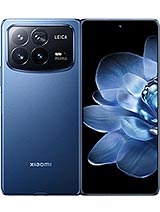
Vivo iQOO 12 review
Buy this if you live for ultra-fast charging and play demanding games on a large screen; the Snapdragon 8 Gen 3 and 120W charge speed are genuine strengths. Everyone else should compare it head-to-head against OnePlus 12, Samsung Galaxy S24, or regional flagships at the same price—the iQOO 12 is well-rounded but doesn't clearly win on any front to justify the money.
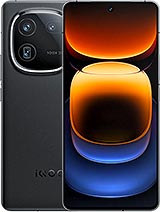
This review is based on Vivo’s published specifications and public benchmark data for the Vivo iQOO 12, and the rating is spec-based. GoSolo does not physically test devices; where we estimate real-world behaviour such as battery life or charge time, we say so. How we rate phones.
Overview
The iQOO 12 is a 2023 flagship that pairs the Snapdragon 8 Gen 3 with a genuinely large display and 120W charging, making it feel ambitious and eager to prove its worth. It's a capable all-rounder with no gaping holes, but it doesn't quite justify its €640 price over proven rivals in the same year.
Design & build
The iQOO 12 feels solid in hand at 198.5 to 203.7 grams—not light, but not a brick either. Glass front and back with an aluminum frame is now expected at this price, and the 8.1–8.4 mm thickness is slim for a 5000 mAh battery. IP64 rating on the China version means dust-tight and splash-resistant, though not submersion-safe; elsewhere, water resistance is not guaranteed. The BMW M branding and color options add visual flavor, but substance-wise, this is a familiar flagship formula. Daily use with a case is sensible to protect the glass surfaces.
Display
The 6.78-inch LTPO AMOLED is the iQOO 12's headline. A 1260 × 2800 resolution yields 453 ppi, which is sharp enough at typical viewing distance, and the 20:9 ratio keeps the phone tall without being unusable. 144Hz refresh is smooth for scrolling and gaming, though outside animation-heavy tasks, the difference from 120Hz is subtle. LTPO intelligently drops refresh when static content is on screen, helping battery life. Peak brightness hits 3000 nits, which keeps the screen legible in direct sunlight, though sustained brightness during normal use is lower. HDR10+ support rounds out a strong panel.
Performance
The Snapdragon 8 Gen 3 is flagship silicon for its year, and the iQOO 12 runs it cleanly. AnTuTu scores sit around 1.57 million (v9), confirming this is a performance-class phone—games like Genshin Impact and Honkai Star Rail hold high frame rates with stable rendering, and heavy multitasking shows no lag. Adreno 750 GPU is reliable for sustained gaming without thermal throttling, and 12 or 16 GB RAM keeps apps in memory. The 256GB base storage is measly for the price, but 512GB and 1TB options exist. UFS 4.0 read/write speeds are quick, though not a day-to-day revelation. Thermals stay reasonable even during longer sessions.
Software
Android 14 ships with Funtouch 15 (international markets) or OriginOS 4 (China). Both skins add features but also bloat—notification management and customization are intuitive, yet you will find pre-installed apps and services vying for attention. The promise of four major Android upgrades is solid by current standards, though execution varies regionally. Circle to Search is a nice addition for quick web lookups without leaving an app. Day-to-day performance feels responsive, but the overlay is not as clean as stock Android or some competitors' lighter skins.
Camera
Three cameras on the back sound ambitious, but the execution is competent rather than exceptional. The 50MP main shooter has an f/1.7 aperture, OIS, and a 1/1.3-inch sensor—solid fundamentals that yield sharp daytime shots and acceptable low-light photos thanks to the wide aperture and stabilization. The 64MP 70mm telephoto offers 3x optical zoom with OIS, useful for framing distant subjects without obvious crop degradation. The 50MP ultrawide at 119 degrees captures broad landscapes, though the f/2.0 aperture means night shots are softer than the main. Colors are accurate, and HDR processing avoids heavy-handed blending. A 16MP selfie camera is adequate for video calls and casual portraits. Video maxes at 8K 30fps, but most users will find 4K 60fps a practical floor. Nothing here feels cutting-edge for the price; larger 1-inch sensors or superior computational photography exist in this tier.
Battery & charging
The 5000 mAh battery, paired with LTPO refresh adjustment, should sustain a full day on moderate use—browsing, messaging, and brief video. Heavy gaming, social-media scrolling, or a bright-screen day shortens that to eight or nine hours, requiring a top-up before evening. That's acceptable but not exceptional for the size; today's flagship standards have climbed higher. The real party piece is 120W wired charging, which fills the battery to full in roughly 15–20 minutes. Convenience is genuine if you live near a charger, though the phone warms noticeably during the process, and long-term battery health under repeated rapid charging cycles is an unknown. Wireless charging is absent, which is a mild miss at this price.
Value & verdict-context
At roughly €640, the iQOO 12 prices itself among the flagship pack. The Snapdragon 8 Gen 3 is real and handles everything thrown at it, but so do rivals—many at the same cost, some cheaper. The 120W charging is genuinely fast and appeals to impatient users, yet it does not compensate for a camera that is solid but not lead-sled, a battery that demands a midday refill on heavy days, or a software layer that feels busier than it should. The large, bright display is the phone's strongest draw for daily enjoyment. Vivo's brand presence varies by market; in regions where iQOO has weak support or no local service, resale value and warranty claims matter, and that context shifts the value proposition downward. This is a capable machine, but it asks flagship pricing without delivering a flagship's differentiation.
Verdict
Buy this if you live for ultra-fast charging and play demanding games on a large screen; the Snapdragon 8 Gen 3 and 120W charge speed are genuine strengths. Everyone else should compare it head-to-head against OnePlus 12, Samsung Galaxy S24, or regional flagships at the same price—the iQOO 12 is well-rounded but doesn't clearly win on any front to justify the money.
- 120W charging fills the 5000 mAh battery in under 20 minutes—genuinely useful for anyone who can't leave a phone alone for an hour
- Snapdragon 8 Gen 3 handles demanding games and video work without strain, and AnTuTu scores back that up without gimmick
- 6.78-inch LTPO AMOLED with 144Hz refresh and 3000 nits peak brightness reads as generously bright and smooth in daily scrolling
- €640 asks a lot for a phone that has no standout advantage over Snapdragon 8 Gen 3 rivals already on the market—it's well-rounded but not distinctly better
- One day of battery life on moderate use means travel, work trips, or days away from power will push you to ration screen time
- 50MP main camera is competent but not exceptional for the price tier; rivals offer larger sensors or sharper detail at the same cost
Vivo iQOO 12 Key Specifications
The essentials at a glance. See the full spec sheet.
| Released | 2023, November 07 |
|---|---|
| Display | 6.78 inches, 111.0 cm2 (~89.6% screen-to-body ratio), LTPO AMOLED, 1B colors, 144Hz, HDR10+, 1400 nits (HBM), 3000 nits (peak) |
| Resolution | 1260 x 2800 pixels, 20:9 ratio (~453 ppi density) |
| Chipset | Qualcomm SM8650-AB Snapdragon 8 Gen 3 (4 nm) |
| RAM & storage | 256GB 12GB RAM, 512GB 12GB RAM, 512GB 16GB RAM, 1TB 16GB RAM |
| Main camera | 50 MP, f/1.7, 23mm (wide), 1/1.3", 1.2µm, multi-directional PDAF, OIS 64 MP, f/2.6, 70mm (periscope telephoto), 1/2.0", PDAF, OIS, 3x optical zoom 50 MP, f/2.0, 15mm, 119˚ (ultrawide), AF |
| Selfie camera | 16 MP, f/2.5, (wide) |
| Battery | 5000 mAh |
| Charging | 120W wired |
| Software | Android 14, upgradable to Android 15, up to 4 major Android upgrades, Funtouch 15 (International), OriginOS 4 (China) |
| Dimensions | 163.2 x 75.9 x 8.1 mm or 8.4 mm |
| Weight | 198.5 g or 203.7 g (7.02 oz) |
| Build | Glass front, aluminum frame, glass back |
| Durability | IP64 dust tight and water resistant (water splashes) - China only |
| Network | GSM / CDMA / HSPA / CDMA2000 / LTE / 5G |
| NFC | Yes |
| USB | USB Type-C 2.0, OTG |
Vivo iQOO 12 FAQ
Common questions, answered from the spec sheet.
Does the iQOO 12 support 5G?
Yes. The iQOO 12 supports 5G networks.
What chipset does the iQOO 12 use?
The iQOO 12 runs on the Qualcomm SM8650-AB Snapdragon 8 Gen 3 (4 nm).
What display does the iQOO 12 have?
A 6.78 inches, 111.0 cm2 (~89.6% screen-to-body ratio) LTPO AMOLED, 1B colors, 144Hz, HDR10+, 1400 nits (HBM), 3000 nits (peak), 1260 x 2800 pixels, 20:9 ratio (~453 ppi density).
How big is the iQOO 12 battery?
The iQOO 12 has a 5000 mAh battery. Charging is rated at 120W wired.
Does the iQOO 12 have NFC?
Yes, the iQOO 12 has NFC.
Is the iQOO 12 water resistant?
The iQOO 12 carries a IP64 dust tight and water resistant (water splashes) - China only rating.
Does the iQOO 12 support a microSD card?
No, the iQOO 12 does not support expandable storage.
Does the iQOO 12 have a headphone jack?
No, the iQOO 12 does not have a 3.5mm headphone jack.
Alternatives to consider
If the iQOO 12 isn’t quite right, these are the closest calls.
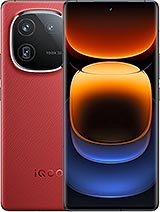
iQOO 12 Pro
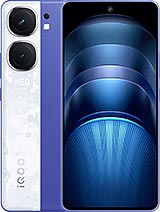
iQOO Neo9S Pro+
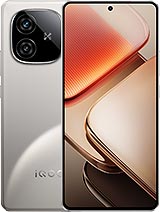
iQOO Z9 Turbo
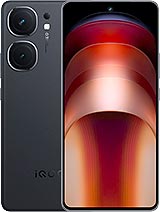
iQOO Neo9 Pro
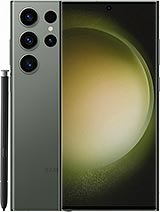
Galaxy S23 Ultra